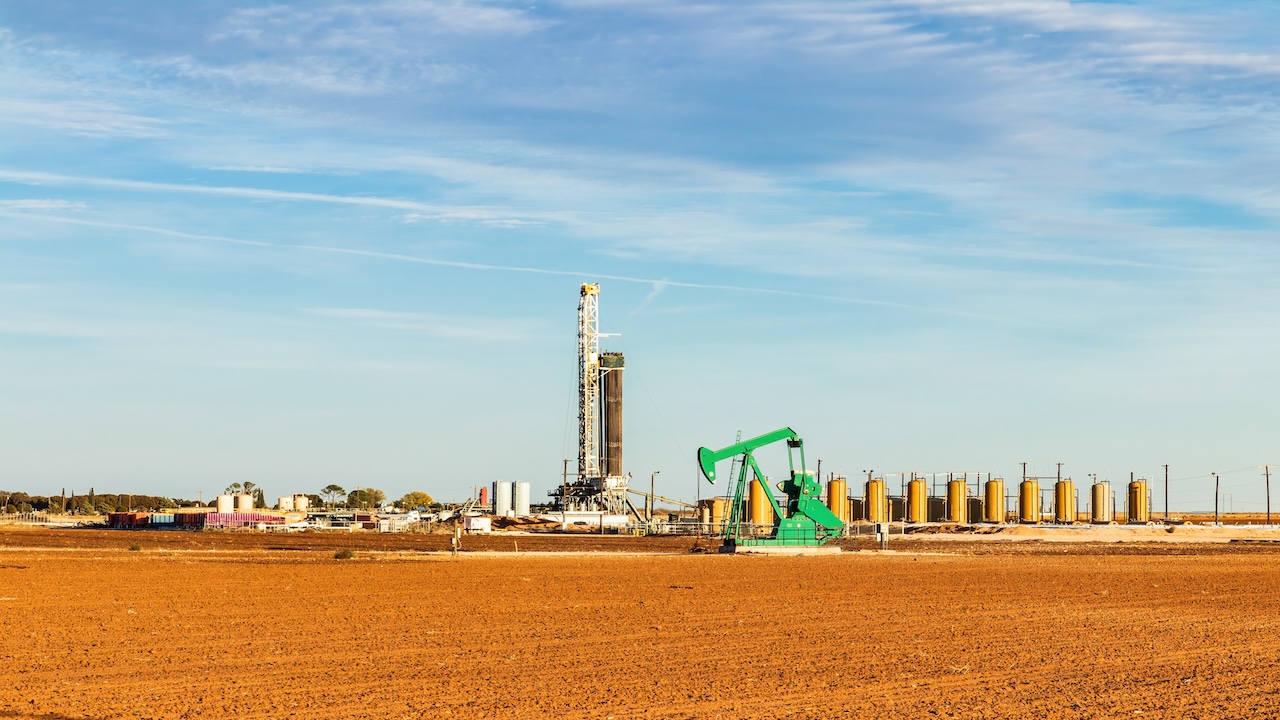
Regulatory acceleration is driving US upstream growth, but long-term licensing is needed to ultimately secure investor confidence and achieve energy dominance.
The American energy market is currently going through a critical phase. Wind energy advocates remain reactive, yet for natural gas upstream investors, there is an almost celebratory atmosphere.
President Donald Trump has sharply criticized the wind sector, saying that wind turbines distort the landscape and do not provide energy security. Is President Trump right? That is open to debate. What is clear, however, is that the administration views energy sources capable of providing baseload capacity and that can be exported as a strategic priority. On the upstream side, this has created opportunities.
President Trump’s Executive Order, “Protecting American Energy From State Overreach,” along with decisions by the Department of Energy (DOE), has significantly accelerated gas exploration and drilling activities. Permitting processes have been simplified and uncertainties have been reduced—allowing investors to clearly see where and when they will drill wells.
From the Marcellus and the Haynesville, to the Permian and other associated gas fields, production plans have been reshaped. Although controversial for the wind sector, on the gas front, these steps brought long-awaited opportunities to the field.
These developments are not limited to the domestic US market. Europe made major investments in renewable energyfollowing the energy crisis triggered by the Ukraine-Russia war, and offshore wind and solar projects were supported. However, recent experience has shown that these sources are not yet able to fully meet energy demand. Especially during cold winter days or peak demand periods, electricity and heating supplies can fall short. For this reason, diplomacy still revolves around fossil fuels.
Regulatory Acceleration Under the American Energy Dominance Vision
The goal of American Energy Dominance is to accelerate permitting processes and streamline federal bureaucracy. Three main steps stand out.
First, time limits and page limits have been introduced for National Environmental Policy Act (NEPA) reviews. The aim is to prevent environmental impact assessments from becoming multi-year technical documents and to speed up decision-making.
Second, interagency coordination is encouraged to be conducted under a single lead agency. This reduces parallel and repetitive reviews by different federal institutions for the same project.
Third, policy signals have been given to increase leasing auctions on federal lands and offshore blocks. In particular, Gulf of Mexico offshore fields and federal lands in western states have reentered the investment radar.
Secretary of Energy Chris Wright has expressed this approach clearly: America’s energy power depends on the speed at which underground resources are converted into producible reserves. This is the framing for the 2026 US energy policy. The issue is not the size of the reserve, but how quickly and at what cost it can be brought to market.
Upstream Expansion in Key Basins
On the natural gas side, the field picture is quite dynamic. In the Permian, Haynesville, and Appalachian basins, production growth continues through horizontal drilling and multi-stage hydraulic fracturing techniques. Major players, especially ExxonMobil and Chevron, are optimizing associated gas production in the Permian. In Appalachia, companies such as EQT Corporation and Chesapeake Energy have extended their production programs in the Marcellus and the Haynesville into 2026 and beyond. These projects do not have a specific end year, because the shale gas model is based on a continuous drilling and production cycle.
Technically, the US gas upstream sector is now able to produce more with fewer rigs. Horizontal well lengths have increased, fracturing stages have been optimized, and production efficiency per well has risen. When combined with improvements in permitting processes, this means a shorter payback period for investors.
With the removal of barriers to upstream investments, the US natural gas sector has experienced significant production growth and market transformation during the 2023 to 2026 period. As of 2023, dry natural gas production was around 103.6 billion cubic feet (Bcf) per day, indicating a strong recovery following the slowdown caused by the pandemic and uncertain regulatory processes in previous years.
The simplification of regulations and the acceleration of investment processes have directly affected production capacity: drilling programs accelerated, and new wells came online. In 2024, production remained nearly flat at 103.2 Bcf per day. However, according to US Energy Information Administration (EIA) projections, production was expected to reach approximately 107.1 Bcf per day in 2025 and around 107.4 Bcf per day in 2026.
This increase demonstrates that upstream investments, combined with technical efficiency gains, have strengthened production capacity. Horizontal drilling, multi-stage fracturing, and advanced basin modeling techniques have increased output per production unit, enabling growth that is not solely dependent on rig count.
Export and Domestic Dynamics
On the export side, significant developments have also occurred. Liquefied Natural Gas (LNG) exports reached 11.9 Bcf per day in 2024 and are expected to rise to approximately 14.7 Bcf per day in 2025 and around 16.3 Bcf per day in 2026.
This increase shows that upstream production capacity not only meets domestic demand but also forms an export network integrated into global markets. These numerical increases in production and exports have enabled natural gas to become a tool that strengthens the strategic role of the United States in both energy security and global markets.
Domestic consumption has also continued its upward trend. While daily consumption was approximately 90.5 Bcf per day in 2024, projections for 2025 and 2026 indicate a range of 91 to 92 Bcf per day. Thus, production growth has reached a level sufficient to meet domestic demand, provide a surplus for export channels, and maintain market balance. The permitting processes that opened the way for upstream investments have provided strong short-term production growth and rising LNG exports in the US natural gas sector. However, the critical factor here is the sustainability of these facilitation measures and legal stability. Once the legal framework changes, operational and financial risks for upstream investors may increase.
Legal Stability as the Foundation of Upstream Investment
Upstream projects generally require long-term investments; bringing drilling and production facilities online can take 3 to 10 years, depending on project complexity. During this period, legal uncertainty can lead investors to postpone capital allocation or increase risk premiums. For example, if permits are suddenly tightened or environmental litigation risks increase, the production capacity of newly commissioned wells may not materialize as planned. This could affect both domestic supply and LNG exports, leading to price volatility.
At this point, long-term licenses play a critical role. In the US federal oil and gas leasing system, companies generally secure leases with an initial primary term of up to 10 years, which can continue beyond this term as long as oil or gas is produced in paying quantities. These long-term licenses allow investors to implement field production plans and capital allocations in a predictable manner. In other words, investors can continue their projects without putting them at risk due to administrative changes, regulatory revisions, or temporary political uncertainties.
Long-Term Licensing as a Market Stabilizer
Long-term licensing not only ensures that production capacity is realized as planned but also increases investor confidence and strengthens financial predictability. Risk is never completely eliminated in upstream projects, as environmental regulations, local objections, and litigation processes can still cause operational and financial delays.
However, long-term licenses function as a secure framework and risk buffer for investors, enabling field potential to be utilized at maximum levels. While permitting facilitation during President Trump’s second term has accelerated upstream growth, long-term investor security is ensured through license agreements and field contracts.
This structure protects US energy supply security while also creating a competitive advantage in the global LNG market. Political uncertainties will always be a factor, but long-term licensing structures serve as a strong buffer and a tool for market stability for investors.
About the Author: Gökçe Ataman
Gökçe Ataman is an energy analyst and columnist specializing in natural gas, LNG markets, hydrogen economics, and US energy markets. She conducts academic research on the impact of hydrogen on industrial transformation, with a particular focus on Europe and Turkey. Her work analyzes global LNG trade dynamics, contract architecture, energy security, and geopolitical risk, particularly in relation to US LNG strategy, Henry Hub pricing structures, and transatlantic energy relations. Ataman’s research explores the intersection of energy markets and strategic policy, with a focus on supply security, long-term contracting models, and the evolving global energy order.