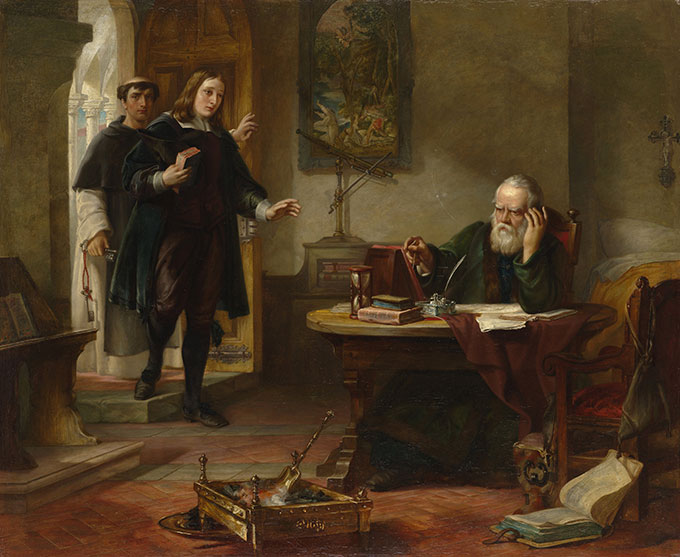
In 1638, John Milton left his plague-ridden homeland on horseback, embarking on the Grand Tour. Later that year, he reached the Florentine hills, where he was to meet one Galileo Galilei. The Italian astronomer was aged, blind, and under house arrest in the Villa il Gioiello (“the Jewel”) at Arcetri. Galileo had studied the stars and discovered the moons of Jupiter, now named in his honor. His findings led him to Copernican heliocentrism, whereby Earth moved around the sun. This was heretical, given that the Vatican believed that Earth was fixed at the center of creation. Threatened with torture, the astronomer recanted on his knees but, as the legend goes, murmured, “And yet it moves.”
Milton never forgot Galileo, referring to his pilgrimage to the scientist in his monumental defense of free speech, Areopagitica (1644): “There it was I found and visited the famous Galileo, grown old, a prisoner to the Inquisition, for thinking in Astronomy otherwise than the Franciscan and Dominican licensers thought.” Decades later, a blind Milton spent grim, uncertain days dictating the epic Paradise Lost to his amanuensis daughters. The only contemporary of Milton’s to appear in the text, alongside archangels and demons, Galileo is referred to explicitly once, “As when by night the Glass / Of Galileo, less assur’d, observes / Imagind Lands and Regions in the Moon.” He appears again, at least once, allusively, via a description of Satan’s shield, which “hung on his shoulders like the moon, whose orb / Through optic glass the Tuscan artist views.”
Finally, a reason to check your email.
Sign up for our free newsletter today.
The conversation between Milton and Galileo went unrecorded, yet its significance is unmistakable. Milton would become one of Britain’s great champions of free speech, joining a lineage that includes Defoe, Locke, Mill, Wollstonecraft, Orwell, Hitchens, and others. Something is poignant but heroic in two old blind men, ostracized and threatened by enemies, still dedicated to the pursuit of truth and the free expression of thought. In the dark of their blindness, there was a shared light: the allegory of Plato’s Cave. In this thought experiment, prisoners are chained to the walls of a cavern, watching shadows cast by an unseen fire behind them. Mistaking these shadows for reality, they are ignorant of the world that exists outside, in the light of the sun. Escape, then, becomes essential—for only by leaving the cave can we see and live life as it truly is. For the “Tuscan artist,” this was literal: empirical observation of the universe would set us free from our ignorance and its exploitation. Galileo trusted not the desires and vagaries of men but the light of stars. This ancient tale and its dangers—how do we know that we haven’t simply escaped, via ideology, into another chamber?—remains the abiding allegory of our age, whether one is “woke” or “red-pilled.”
It is tempting to believe in Britain as an incubator of free speech. It stood in defiance of papal absolutism and its Index Librorum Prohibitorum. It is the country of Magna Carta, Speaker’s Corner, and “the mother of parliaments.” It has largely remained immune to the totalitarian movements of the continent. Yet historically, it has seen waves of repression of various groups, whether Catholics, Lollards, or Chartists. Writers of the highest caliber have found themselves imprisoned. The author of Pilgrim’s Progress, John Bunyan, for example, was jailed for over 12 years for preaching, and the author of The Spanish Tragedy, Thomas Kyd, never recovered from the torture he received on the orders of the infamous Star Chamber. Journalists, under various governments, were charged with offenses such as seditious libel. Playwrights, too, came under the scrutiny of the Lord Chamberlain, whose censorship powers lasted from 1737 until the 1960s. The gravest assaults on civil liberties, however, took place far from the British public’s view—in the hidden machinery of the security services and the shadowlands of empire, where entire languages were brutally suppressed.
Even in Milton’s day, free speech was heavily contested. One of the chief inspirations for his Areopagitica was John Lilburne, or Freeborn John, who was flogged, pilloried, and imprisoned during the reign of King Charles I for criticizing the Church of England. Intending to make an example of him, his tormentors saw their efforts backfire when Freeborn John endured his punishment with eloquence and courage. Instead of reveling in his suffering, the public was drawn to his pamphlets. Lilburne went on to fight bravely for the Roundheads against the monarchy, serving alongside Cromwell in the pivotal Battle of Marston Moor in 1644. The regime that he helped bring to power repaid him with imprisonment. A visitor to his Tower of London cell reported that Freeborn John said he would rather live seven years under the now-decapitated king than one year under the new protectorate.
Lilburne had discovered a truth of authoritarianism. Though its particularities are important, they are not the most vital component. When a society is forced to adopt the diktats of one book, one creed, one dogma, it is largely incidental what that dogma is. Often, they are interchangeable, so that one extreme follows another, but nothing really changes. What endures is the oneness—the drive to reduce complexity, ambiguity, contradiction, divergence, and resistance to a single, cyclopean view, enforced if necessary. As Shakespeare reminds us in Hamlet, “There are more things in heaven and earth, Horatio, / than are dreamt of in your philosophy.” It is no accident that the endlessly various Shakespeare is periodically denounced and bowdlerized.
A figure like Freeborn John would be a rebel, troublemaker, and conscience in any society. It is on such modest, embattled, Atlas-like figures that so much ultimately rests. Lilburne’s case would later exert a profound influence on the U.S. Constitution, Supreme Court, and Bill of Rights. It was to his example that Milton turned in Areopagitica, appalled that his fellow Puritans were closing the theaters as “spectacles of pleasure, too commonly expressing lascivious mirth and levity” in order “to appease and avert the wrath of God.” In doing so, they were becoming everything they once claimed to oppose.
Rarely has freedom of speech on this island, or in the West, approached the precipice that it now teeters on. In the U.K., in 2023 alone, more than 12,000 people were arrested for messages they posted online, a figure that any tyrannical regime would envy but an abject disgrace for a democracy. A troubling share of these cases involved nothing more than dissenting opinions. This has poured fuel on a growing public fury over “two-tier” policing, in which law enforcement is seen as indulgent toward violent or sexual offenders—especially those of favored political or social standing—while coming down far harder on the perceived wrongthink of outspoken citizens.
It is startling to scan through suspended sentences and see the reprieved in possession of child rape images, or guilty of an assault on an emergency responder or the torture of a cat, or to discover an assailant who stamped on his victim’s head 20 times; whereas a social-media post, even if hastily deleted, can bring a prison sentence of several years. There are growing suspicions that the police and judiciary have been turned against the “wrong” kind of protesters, with such defendants rushed through an otherwise sluggish legal process. As the old saying goes, “For my friends, anything; for my enemies, the law.”
The law is a confusing realm. In 2026, British jails are anticipated to reach “total gridlock,” a crisis used to justify early releases and reduced sentences for many serious offenders. Perhaps the newly emptied cells will be filled by unlucky online scribes guilty of expressing disapproved ideas. (It’s a prospect imaginable in New York, too, where the city’s new mayor, Zohran Mamdani, has dismissed the rationale for jails, asking, “What purpose do they serve?” while proposing an 800 percent increase in funding for hate-crime prevention.) Since its inception, the bar for hate crimes in the U.K. has steadily fallen, now encompassing subjective “insults,” “inconvenience,” “annoyance,” or even silent prayer—offenses that can result in a home raid or imprisonment. Meantime, those filmed urging throat-cutting or shouting “kill them all” often walk free or go uncharged. When a man who swings a knife at someone burning a Koran receives no custodial sentence and is even praised by the judge for his character, we have moved beyond confusion into intent. Such rulings set an alarming precedent, effectively reintroducing blasphemy law by proxy. Those wielding these intoxicating powers fail to see that the same powers and inequities, once unleashed, could one day be used against them. Tyranny is often described as systematic, but it can just as easily be exercised through arbitrariness.
At times, these proceedings verge on the absurd, resembling a Monty Python sketch: a man hauled off to a police station for calling someone a “muppet.” Such episodes unfold in the unreliable, bad-faith realm of online signs, where videos can be edited, photos doctored, contexts rearranged, and truth endlessly disputed. What stands out is the condescending dismissal by the mainstream media—once the fourth estate charged with speaking truth to power, now too often an establishment mouthpiece. Taste and decorum are elevated above principle, yet free speech depends on defending tasteless fools and rogues, for these easy scapegoats become the precedents that justify what the state can do to everyone else.
There comes a point when the joke isn’t funny anymore. In Brazil, a comedian who “jokes about everything and everyone” gets eight years in jail. In Germany, many shrugged when a journalist was sentenced for sharing a meme mocking the nation’s lack of free speech, thus proving his point. This is the same country where a rape victim received a longer sentence than her rapist after calling him a pig. The notion that such things could never happen in England has long been disproven by the Muslim grooming-gang scandals, where institutional fear and negligence led police, the mainstream media, and civil authorities to erase thousands of rape victims. It took centuries of struggle to establish the social contract; it takes very little time to destroy it.
These foul deeds tend to fall on those long discarded, far from the well-insulated and well-remunerated intellectual classes. When the working classes failed to meet bourgeois left-liberal expectations, seeking better lives rather than serving as compliant mascots, Labour and its allies embraced the Brechtian solution: to elect a new people. They chose impressionable students, the echo-chambered chattering class, and migrants—the last courted for votes just as the Tories had once embraced them for cheap labor. Labour’s “Red Wall” working-class backbone was recast almost overnight as a bloc of racist deplorables, much like the residents of America’s Rust Belt, giving license for latent snobbery to be directed at those on whom the party had long depended. The cost of maintaining an elite class is borne by the public through lower living standards and rising crime—realities whose honest description is punished and stigmatized, both professionally and personally. Having once pledged to be “tough on crime, tough on the causes of crime,” Labour has instead become tough on the reporting of crime. The resulting protests are then slandered by the press and political parties alike.
If you are not sufficiently insulated, these concerns become real. Two years ago, I received unprovoked death threats against myself and my partner from a “former” drug-addict writer, who left several recorded messages describing his intent to stab us both with a screwdriver and boasting of once holding a knife to a drug dealer’s throat. Given his history and unhinged tirade—and as the father of a young child—I reported the matter to the police. If ever there were a textbook case of “malicious communication,” this was it. Yet no arrests were made. The bar, I discovered directly, is high for threats of double murder, even as it has become absurdly low for disapproved opinions online. But then, charging people for “offensive” posts on X or Facebook is easy work, diverting attention from the failure to address soaring rates of burglary, rape, theft, and knife crime.
Having grown up in Troubles-era Northern Ireland, my expectations of the police were low. In my community, they were widely seen as a force of injustice and disorder, though their absence created a vacuum quickly filled by thugs and gangsters. Having also witnessed how compromised the venerable state broadcaster became during the conflict, and later in scandals such as Operation Yewtree, my expectations of mainstream journalism were equally low. My hopes were higher for my fellow writers. I wasn’t prepared for their reaction when I told them about the threats and the police’s failure to act. Most were dismissive, as though the grotesqueness of the incident were somehow contagious—or worse, I met with a kind of body-snatcher indifference. “That’s not my world,” went one particularly revealing response.
Literature and the court cases that fought to publish transgressive works spearheaded the expansion of free-speech rights in the twentieth century. Lolita. Lady Chatterley’s Lover. Ulysses. Tropic of Cancer. Howl. The Well of Loneliness. These victories marked a social maturation, a growing confidence that we could confront with candor the more secretive sides of ourselves and our society. Over the past two decades, however, the tide has turned. Given that freedom of expression is their very raison d’être, it is puzzling that so many authors now support speech restrictions. Yet many do. There were early warnings—the Rushdie fatwa and stabbing, the cases of Ayaan Hirsi Ali and Theo van Gogh—that offered writers a chance to show solidarity and proclaim, “If you come for one, you come for all.” Whether from callousness or cowardice, many leading figures failed that test, as seen in the shameful petition signed by dozens of writers opposing PEN’s decision to honor Charlie Hebdo after the massacre of its staff.
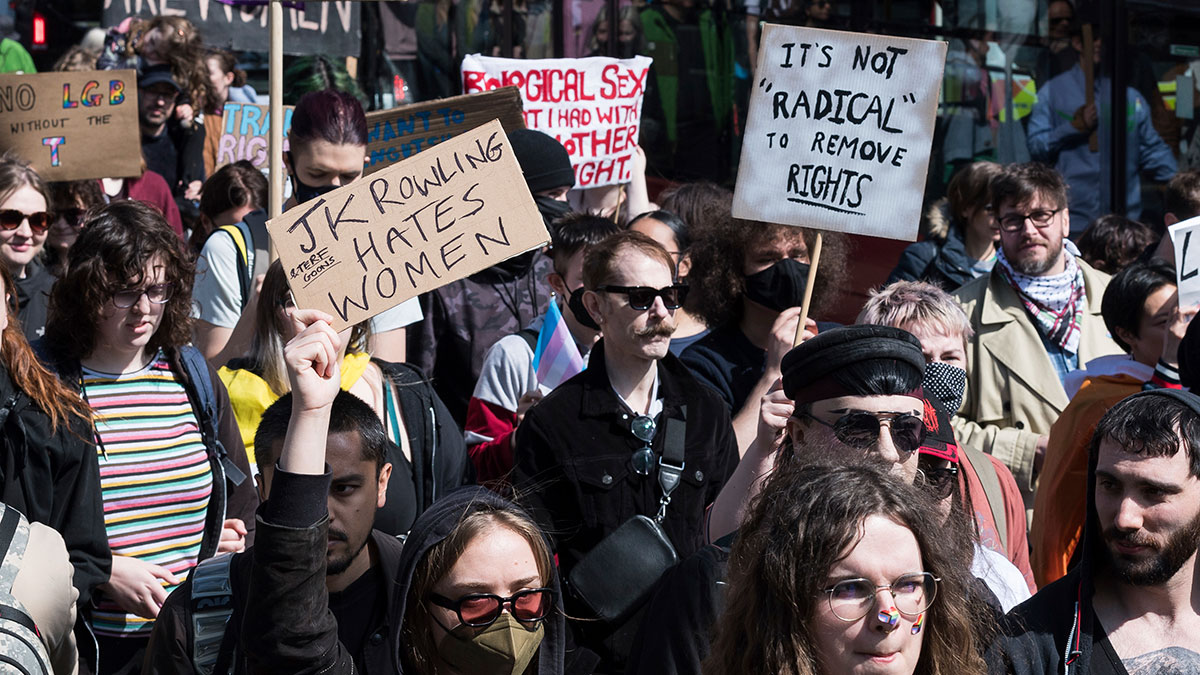
Since then, we’ve witnessed authors launching denunciation campaigns against other authors. Often, these target particular issues—gender, for instance, in the cases of J. K. Rowling, Chimamanda Ngozi Adichie, and others—but they can also touch subjects once considered sacrosanct, such as child safeguarding. These campaigns are deliberately aimed at high-profile writers to create a chilling effect on everyone else.
Ulterior motives, such as “tall poppy syndrome,” are never remote. What passes for progressivism is often little more than Hobbesian competition. Whisper networks and mutual surveillance among writers are lamentably common, performing the censors’ work for them. Writing for the wrong publication or liking the wrong post can render one persona non grata. This coercive atmosphere drives many into silence—while, with a touch of cruelty, they are told that silence itself is complicity in the world’s evils. Those who have lived under tyrannies know the value of strategic evasiveness—consider the Misty Poets of Communist China or the anticolonial “right to opacity” championed by Édouard Glissant—as opposed to being lured or goaded into purges like those that followed the Hundred Flowers Campaign. Earlier writers warned us: Czesław Miłosz’s The Captive Mind is a master class in how intellectuals compromise themselves under such regimes, whether from cowardice or avarice, and Arthur Miller’s The Crucible remains regrettably prophetic.
Those who depart from scripture and put their heads above the parapet may see their books canceled, events de-platformed, livelihoods ruined. Again, conformity goes only so far as an explanation. Sometimes, it is a case of the mediocre rigging a system and preventing any attempt at a meritocracy in which they would fall short. “Censorship is not an occupation that attracts intelligent, subtle minds,” J. M. Coetzee notes. “Censors can and often have been outwitted. But the game of slipping Aesopian messages past the censor is ultimately a sterile one, diverting writers from their proper task.” While censors sometimes perform an inadvertent service by showing us which books are worth reading, their intrusions remain corrosive—wasting time, draining energy, and inflicting lasting damage. Some prominent writers have pushed back: in 2020, 153 writers and cultural figures signed an open letter in Harper’s warning that “The free exchange of information and ideas, the lifeblood of a liberal society, is daily becoming more constricted. . . . We uphold the value of robust and even caustic counter-speech from all quarters.” That such a statement now feels countercultural is itself an indictment of the literary world.
To understand why writers would champion their own irrelevance and extinction, we must look beyond politics or rights-based arguments. The Right may insist that Marxism is marching through the institutions, but the reality is less coherent. The contradictions are glaring and revealing: illiberal liberals and reactionary progressives who preach diversity while punishing any deviation from orthodoxy; self-styled transgressives who obsessively categorize and police difference; anticapitalists who are ruthlessly competitive, transactional, and eager to commodify everything, from trauma to identity; antipolice activists who oppose the carceral state except when it jails their political opponents; radicals against hierarchy, save for the ones they build and enforce. These are not the heirs of Mary Wollstonecraft but rather of the censorious Mary Whitehouse. Instead of Virginia Woolf’s shape-shifting Orlando, these are creatures of mortifying fixity.
The persecution of writers demonstrates that writing matters as a moral force. This was true from the stabbing of Cicero’s tongue to the presence of authors’ names in the Nazis’ Black Book of intended targets pending the invasion of Britain. With its solipsistic novels of bourgeois relationships, the contemporary publishing world is such that little would need banning; outside the West, the stakes are higher.
If the past decade teaches us anything, it is that, for all the talk of the decline of religion, we haven’t lost our habit of theological thinking. We merely create new theocracies, however secular they claim to be, with a new elect, priests, rituals, heresies, compelled and forbidden speech, demons, catechisms, icons, and iconoclasts. We are living through a godless, redemptionless, graceless puritan revival. The teleological “right side of history” is invoked like the divine right of kings. Sin is everywhere: everything from mathematics to rural life is periodically declared problematic, though crime itself is often not. Through the return of essentialism, original sin has reappeared in secular form.
All this pseudo-religious fervor is supercharged by social media and economics. We live in turbulent times, with younger generations facing greater precarity and uncertainty than their parents, fueling the generational warfare seen online and on campuses. At the same time, they use every available means to survive in an ever more competitive world; hence the rise of a kind of LinkedIn identitarianism and the impulse to take down high-profile figures. This makes them easy prey for older cynics—few of them genuine Marxists, but rather establishment liberals convinced of their own benevolence—who believe that an elite, their elite, can remedy every social ill through the universal application of Human Resources principles to life itself. The need to punish and censor reveals their complete lack of faith in the persuasive power of their own beliefs—rigging a game that they do not believe they could otherwise win.
For all the social engineering, there is little sign of any utopian outcomes amid the managed decline and workplace struggle sessions, fiscal black holes, and sensitivity readers. In this brave new world, everything is contentious, purity spirals abound, and anything older than a mayfly must be crushed or hollowed out. Cosmopolitanism has given way to balkanization. Authoritarianism now arrives cloaked in Nurse Ratched–like tones of “concern.” Progress has lurched not toward a better world but toward an untrue one—hence, the apparent need to arrest 12,000 people a year for deviations or simple honesty. Social justice has become personal rather than structural, demanding ever more sacrificial victims for the rain and harvest that never come. The road to hell is the road to hell, no matter what it is paved with.
To the progenitors of this realm, any criticism of protected groups is phobia or hate. Any divergence, even to their left, is fascism. While practicing the acrobatics of moral relativism to excuse their own behavior, they apply a rigid moral absolutism to their opponents, for whom words and actions are not merely wrong but evil. Language is deemed violence, yet violence itself is not—at least when directed at the “right” targets. Words lose their meaning, serving only as weapons or camouflage, and are deployed to justify the unjustifiable, as in the orchestrated trawling through Charlie Kirk’s speeches used to legitimize his murder.
Since Elon Musk took over Twitter, now X, many intellectuals have fled to the echo chamber of Bluesky, where they indulge nostalgia for the old Twitter of shadow bans and active censorship. X may be a snake pit, but it remains one of the few places where unpalatable truths can be spoken and raw footage shared. History shows that free speech—and more of it—is the most powerful tool of the truly marginalized, as the campaigns of Ida B. Wells demonstrated. Without such avenues, truth is determined by the mainstream media, whose biases are not just active but passive: controlling what you can and can’t see. Without social media, it is debatable whether the senseless murder of Ukrainian refugee Iryna Zarutska allegedly by a repeat offender would have become nationally visible. Without X, the news would be left to the likes of CNN, whose commentator Van Jones revealed his sympathies when he said of Zarutska’s accused killer, “This man was hurting.” Yet, astonishingly, many intellectuals now yearn for a world without this public square.
The trade-off is protection in exchange for freedom of speech; yet the state is incapable and unwilling to deliver the first and all too eager to remove the second. Some governments have lapsed into Orwellian satire with the appointment of “truth tsars.” Much hysteria surrounds “misinformation,” the etymology of which derives not from “untrue” or “wrong” but from “divergent.” The problem is that truth is always inconvenient for someone in power. In the U.K., we have a state that effectively ran death squads in Northern Ireland, allowed the security services to infiltrate activist groups (impregnating women therein), sent armed police to arrest a television comedy writer at an airport for his tweets, arrested (among others) an Irish hip-hop musician and an Oxford professor of poetry under legislation designed for terrorists, and takes out super-injunctions against its own citizenry to hide its ineptness and corruption. This is a state that judges itself worthy of controlling the words of the people whom it is supposed to serve, a state keen to introduce digital IDs as it dreams of a CCP-style social credit system.
To silence is to make reality disappear. Yet reality persists. Ideologues merely blind themselves in the process of censoring—hence why book bans are not only egregious but also futile and self-defeating. The more that ideologues engineer the world to fit their delusions, the greater the gap between illusion and reality becomes, until it can no longer be sustained. That is their fatal flaw, though they can do immense damage in the meantime.
Freedom of speech is not a lone right. It is the common denominator of all the others. It is the freedom to be different, to disagree, to doubt and question, to notice, to cry out, to insult and annoy, to be a whistleblower, to grieve, to be autonomous, to deviate, to exist. Writers can betray literature (and the Socratic and scientific methods) by stunting free speech, but they cannot destroy literature, which exists beyond one life span. In the future, such strictures will be seen as stifling, conformist, and boring to younger generations. For literature, like life, is drama, conflict, surprise, dialectical tension, asymmetry, transgression, glamour, danger—all the imperfections and differences that make us human. Earth keeps moving, and no priest or philosopher can halt it, even for a moment. There will always be an outside, where the sun never betrays us, no matter how much we betray ourselves.
Top Photo: A protest against Harry Potter author and transgenderism critic J. K. Rowling—such campaigns are deliberately aimed at high-profile writers to create a chilling effect on others. (WIktor Szymanowicz/NurPhoto/AP Photo)
Source link