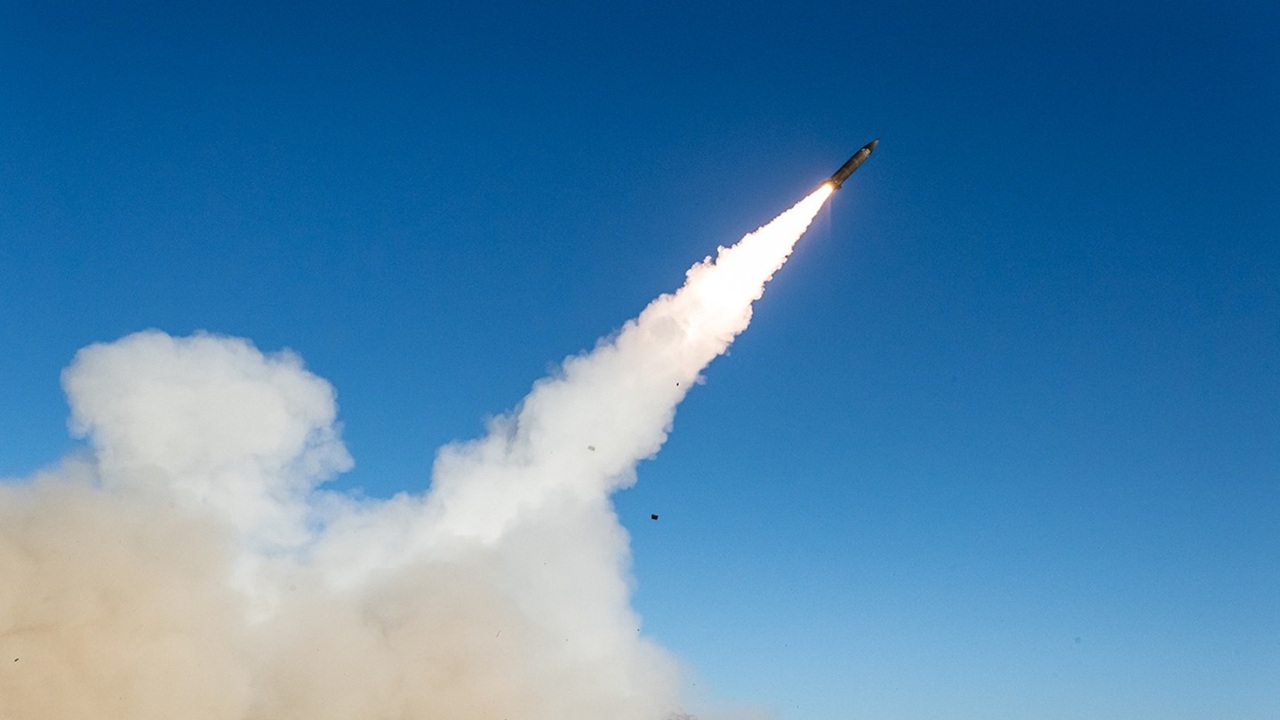
The precision-strike missile can be fired from existing M142 HIMARS launchers, but has a range well beyond its usual payload.
The new Precision Strike Missile (PrSM) short-range ballistic missile has been employed in the opening phase of Operation Epic Fury against Iran. Since entering service two years ago, Epic Fury is likely the first time the PrSM has ever been used in combat, representing a quiet milestone and a major leap in Army long-range fire capability.
Introducing the PrSM Missile
PrSM is a successor to the Army Tactical Missile System (ATACMS); it was designed to exceed the 500-kilometer (300-mile) range cap set out in the INF Treaty, which the United States withdrew from in 2019.
The baseline range for the new system is at least 500 kilometers. The Army targeting goal is pushing further, toward 400-plus miles, with future variants likely pushing beyond 600 miles. The outgoing ATACMS max range, by contrast, was just 300 kilometers (186 miles). In other words, the PrSM system effectively doubles the reachable battle space from the same launch site, while using the same launchers.
Easing the transition to PrSM is the fact that the missile is compatible with existing HIMARS and M270 platforms. Using a standardized pod concept, the PrSM features two missiles per pod, whereas the ATACMS features only one. This allows for a higher density of firepower per vehicle while retaining the mobility and deployability of HIMARS. The wheeled HIMARS is easier to reposition, conceal, and disperse, allowing for greater survivability through mobility.
From a technical perspective, PrSM is a solid-fuel short-range ballistic missile with a quasi-ballistic trajectory. PrSM has a high terminal velocity and relies on GPS for precision guidance. The system is optimized for fixed high-value targets. Technical specifics about the PrSM’s warhead have been publicly withheld, but the system was designed for hardened target penetration.
How the US Army Used the PrSM Missile in Operation Epic Fury
PrSM makes its known combat debut against Iran. The system’s speed reduces enemy reaction time, and its steep terminal dive complicates interception efforts. PrSM has greater kinetic energy on impact relative to a cruise missile and is useful against air defense nodes, radar installations, missile launchers, command facilities, and hardened bunkers—explaining the system’s use in the opening phase of Epic Fury.
PrSM’s extended range allows for deeper inland strikes from peripheral bases, an increased target envelope without forward basing. PrSM launch points could include the Gulf states or Iraq. This reduces reliance on penetrating aircraft during first-wave strikes, which reduces aircraft exposure to IADS systems while they are still intact. And because HIMARS can be moved quickly after firing, Iran’s counter-battery response is complicated.
PrSM employment also sends a signal to China and Russia. The Indo-Pacific was the primary context for PrSM development, given the Pacific’s geography, with limited basing, and islands spread far apart. PrSM’s extended range reduces the need for forward exposure, which is especially helpful in the Pacific geography, strengthening the Army’s role in maritime denial missions.
The PrSM’s combat debut seems to validate what was a long investment cycle, with the Army increasingly central in high-end strike operations, and land forces no longer confined to short-range battlefield fires. The PrSM system blurs the line between tactical and theater-level strike options and reinforces the trend towards distributed, mobile missile forces.
About the Author: Harrison Kass
Harrison Kass is a senior defense and national security writer at The National Interest. Kass is an attorney and former political candidate who joined the US Air Force as a pilot trainee before being medically discharged. He focuses on military strategy, aerospace, and global security affairs. He holds a JD from the University of Oregon and a master’s in Global Journalism and International Relations from NYU.