The United States must build its own domestic battery supply chain to support the AI data center boom and reduce reliance on Chinese energy storage technologies.
Data centers are being built at an extraordinary pace, driven by demand for artificial intelligence (AI) training, cloud computing, and national security applications. They have already changed US electricity demand to a growth paradigm for the first time in generations.
As stated in the recent State of the Union Address, President Donald Trump has mandated that new data centers provide their own power to protect local communities and ensure grid stability. That directive provides an opportunity for modern, large-scale battery systems.
Batteries Are Emerging as Critical Infrastructure for Data Centers
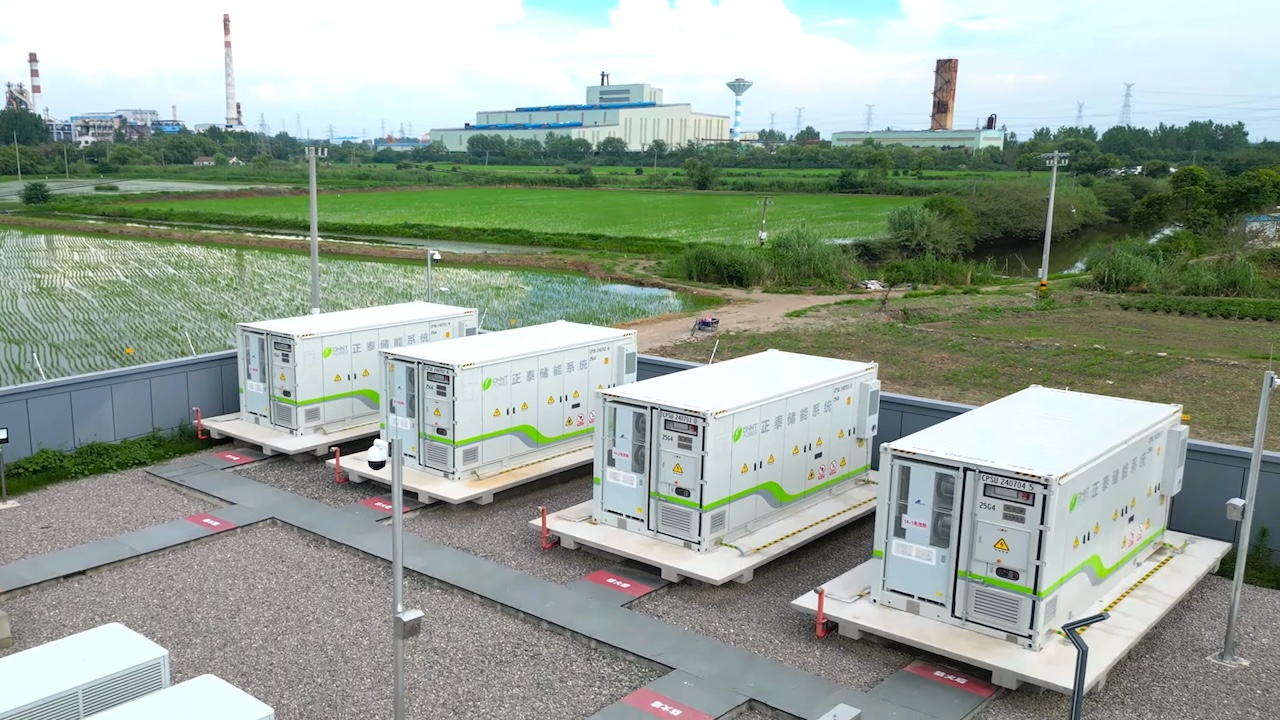
Batteries have become essential to modern data centers, filling a variety of key roles. They provide reliable short-duration backup power and ride-through capability—bridging utility disturbances until generators or other backups engage. Increasingly, they also enable grid stability, renewable integration, and on-site power management. While emerging technologies such as sodium-ion, iron-air, and zinc-based systems may find market opportunities, lithium-ion batteries continue to improve in cost, safety, and performance—making them the preferred battery chemistry for most of this industrial buildout, and therefore, the most critical supply chain to secure.
The emerging demand signal for battery energy storage from data centers comes at a pivotal moment for the US battery industry. Electric vehicle (EV) sales have softened, the only tax credit with strict domestic sourcing requirements was cancelled (30D), and tariff policy has been volatile. Last year was the first year this decade that US battery investment declined, with roughly $21 billion in related projects cancelled or delayed—most citing policy uncertainty.
There is increasing awareness that lithium-ion batteries and their related supply chains—lithium extraction and refining, cathode and anode manufacturing, and cell production—are cornerstones of energy and national security. Yet building a resilient domestic battery ecosystem requires investment confidence that durable domestic demand will exist for sourced and made-in-USA batteries and components.
Global battery capacity is expanding rapidly, with hundreds of gigawatt-hours under development. In the United States alone, more than 180 gigawatt-hour (GWh) of battery storage projects are planned or under construction by 2027. That represents over 130,000 tonnes of battery-grade lithium carbonate or around 400,000 tonnes of lithium iron phosphate (LFP) cathode.
Currently, the only meaningful domestic sourcing requirement for batteries applies to the Department of Defense. The 2026 National Defense Authorization Act (NDAA) mandates that US batteries and components be used in all military applications by January 2028. While the Department of Defense is an important customer, it is relatively small (China will persist.
Absent explicit domestic sourcing requirements, most facilities will default to cheaper and more readily available Chinese batteries. Overlooking this opportunity to build a vertically integrated battery ecosystem in the United States would create unnecessary supply chain and national security risks, while forfeiting substantial economic development opportunities.
Battery Supply Chain Dominance Is a Strategic Priority for China
China’s commanding global position in lithium-ion battery supply chains is the direct result of deliberate, top-level state strategy. Since at least 2012, Beijing has treated dominance of the battery value chain as a national priority. Over the past decade, it has aggressively subsidized across the value chain in domestic mining, refining, and battery manufacturing.
Today, China controls roughly 70–80 percent of global lithium-ion battery cell production, as well as >80 percent of cathode, 90 percent of anode, and >85 percent of electrolyte manufacturing. This dominance extends upstream to critical minerals: over 70 percent of global lithium refining capacity (and more than 90 percent of graphite processing) is concentrated in China.
A combination of strong subsidies, lower operating costs (electricity, labor, and environmental compliance), increasing vertical integration among major firms such as CATL and BYD, sustained research and development investment, and unfair market practices has cemented this position. A bipartisan investigation by the US House Select Committee on the Chinese Communist Party concluded that Beijing actively manipulates critical mineral markets like lithium—raising or lowering prices to secure geopolitical leverage and crowd out Western competition. In October 2025, China’s Ministry of Commerce issued new export controls on lithium and cathode-processing technologies, echoing earlier restrictions on rare earths and underscoring Beijing’s willingness to weaponize supply chains for strategic advantage.
On average, Chinese battery cells and components are reported to be at least 30 percent cheaper than American or European alternatives. While Chinese products were once viewed as inferior, focused state-backed efforts over the past decade have largely erased that perception as manufacturing processes have been optimized to improve quality, efficiency, and consistency.
US Data Centers Could Anchor Domestic Battery Buildout
Executive guidance on AI and national security makes clear that AI-enabled warfare and digital infrastructure will redefine military and economic competition over the next decade. The data centers supporting these capabilities are, therefore, foundational national infrastructure and should be treated as such.
Industry forecasts suggest stationary storage for data centers could drive the next major lithium demand boom. Without policy direction, however, most developers will default to Chinese batteries due to cost and availability advantages. This creates several risks.
First, reliance on Chinese batteries for strategic digital infrastructure presents national security vulnerabilities. Supply disruptions, embedded cybersecurity risks, or even theoretical sabotage concerns cannot be ignored when critical infrastructure depends on foreign-controlled energy storage systems.
Second, failing to require domestic sourcing would squander a rare opportunity to build a complete US battery ecosystem. Data centers represent one of the few applications where the incremental cost of domestic batteries—perhaps 20–30 percent higher—would have only a marginal impact on overall project economics. Batteries typically account for less than one percent of a data center’s total capital cost. By contrast, in electric vehicles, batteries can represent 30–40 percent of the total vehicle cost. This cost dynamic makes domestic sourcing requirements far more economically manageable in data centers than in transportation.
Third, requiring US batteries for strategic data centers would catalyze investment across the full supply chain: lithium extraction, chemical processing, cathode and anode manufacturing, cell production, and recycling. It would provide the long-term demand certainty investors—particularly from allied nations—have been seeking.
Finally, a domestic sourcing requirement for batteries used in strategic data centers would likely enjoy bipartisan support. Data center developers frequently frame their investments as essential to America’s technological leadership and national security. Supporting domestic battery supply chains aligns directly with that narrative, while insulating developers from criticism related to energy use, water consumption, and limited long-term job creation.
Without intentional, muscular policy and investment alignment, the United States risks deepening its dependence on Chinese battery supply chains at the very moment that digital infrastructure becomes central to national security, rather than building a domestic energy storage ecosystem that strengthens economic competitiveness, energy security, and strategic autonomy for decades to come.
About the Authors: Jesse R. Edmondson and Morgan Bazilian
Jesse R. Edmondson is a professional geologist and the director of government relations at Standard Lithium, with over 14 years of experience helping to build sustainable and secure domestic critical mineral supply chains. Jesse leads the company’s engagement with federal and state policymakers on critical minerals, energy security, and domestic battery supply chains. His work focuses on advancing policies that strengthen US lithium production and support resilient battery manufacturing for emerging technologies and national defense.
Morgan D. Bazilian is the director of the Payne Institute and professor at the Colorado School of Mines, with over 20 years of experience in global energy policy and investment. A former World Bank lead energy specialist and senior diplomat at the UN, he has held roles at NREL and in the Irish government, and advisory positions with the World Economic Forum and Oxford. A Fulbright fellow, he has published widely on energy security and international affairs.