Iran’s air force was the most powerful in the Middle East in 1979, and nothing about it has changed since then. That’s a big problem for Tehran.
Operation Epic Fury has exposed the limitations of Iran’s aging air force. Within the first days of the campaign, US and Israeli forces achieved air superiority over Iranian air space—a contest during which Iranian fighters were largely absent from the skies.
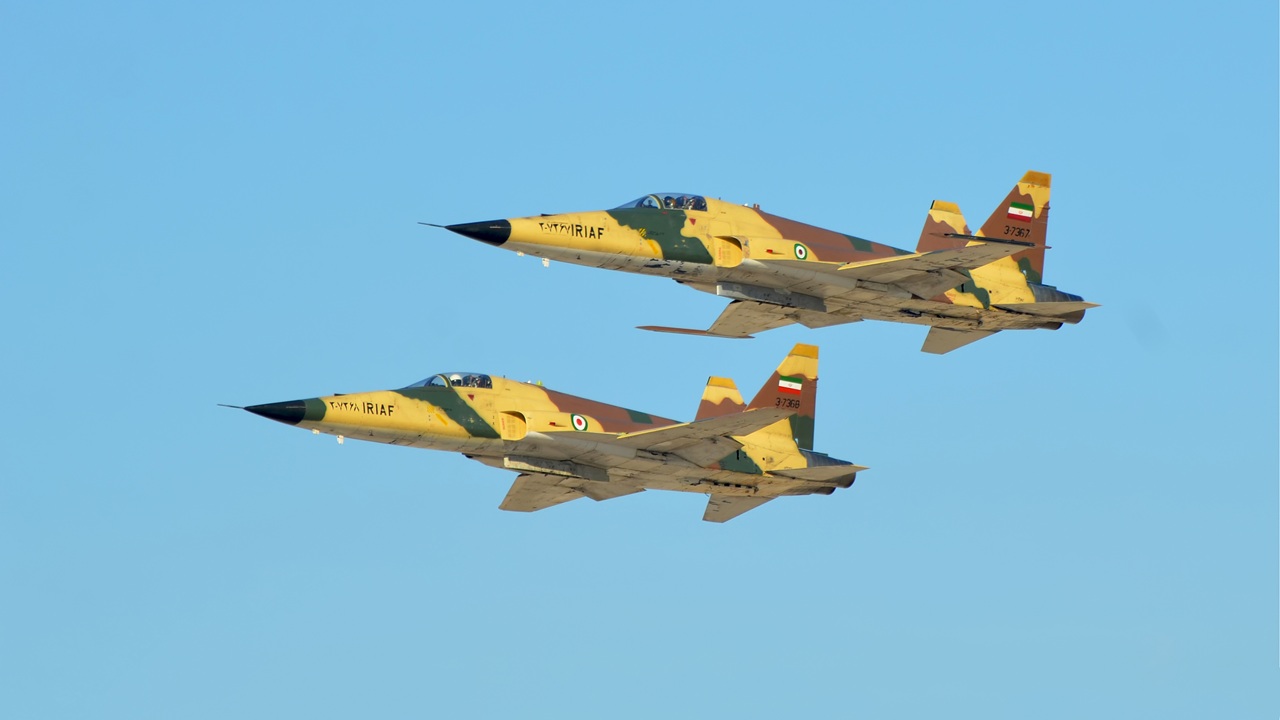
The Islamic Republic of Iran Air Force (IRIAF) has sometimes been described as a “flying museum,” as much of it dates back to the pre-1979 era. Following the 1979 revolution, Western nations blocked Iran’s attempts to buy new aircraft, leaving the country reliant on 50-year-old American jets and a small number of Soviet aircraft. As a result, the IRIAF has struggled to match modern fifth-generation fighters such as the F-35 and the F-22.
The Iranian Air Force’s Origins
Prior to the 1979 revolution, Iran operated one of the most advanced air forces in the Middle East. The Shah’s government purchased vast quantities of US aircraft—including the F-14 Tomcat, F-4 Phantom II, and F-5 Tiger II. Notably, Iran was the only foreign country ever allowed to operate the F-14—and is today the last remaining operator of the venerable jet.
After the revolution, Iran’s relations with the United States collapsed, and Tehran’s access to spare parts ended abruptly. In the decades since, Iran has managed to keep many aircraft flying through a combination of reverse engineering, domestic counterfeiting, smuggling, and cannibalization. Still, over time, the fleet has fallen further into disrepair, with a widening gulf between Iran and more modern contemporary air forces.
Before the launch of Operation Epic Fury on February 28, the IRIAF possessed roughly 250 to 300 aircraft, at least on paper. In practice, only a portion of these aircraft were combat-ready, due to maintenance challenges and spare parts shortages. Operational readiness rates were unknown, but presumed to be abysmal—likely explaining why so few Iranian aircraft have contested American and Israeli airpower over Iranian airspace in the week since the war began.
Which Fighter Jets Did Iran Fly Last Week?
Iran’s core airfleet is still American in make, albeit older third- and fourth-generation planes:
- The cream of Iran’s airfleet are its F-14 Tomcats (of Top Gun fame)—around 40 of which are still thought to be in service. Originally delivered by the United States in the 1970s, the F-14 is a long-range air superiority interceptor. Iran has managed to upgrade some of the aircraft to the F-14AM standard with domestic avionics and the Fakour-90 air-to-air missile. The jet’s primary mission was to intercept hostile aircraft and protect key cities such as Tehran. Still, despite its upgrades, the F-14 fleet is still outdated relative to modern US fighters. (For comparison’s sake, the US Navy retired its F-14s 20 years ago, although that decision was—and remains—somewhat controversial.)
- Iran still operates around 60 F-4 Phantom IIs. Originally a US multirole fighter-bomber, these jets have been modified with Chinese radars and domestically produced electronics. Primarily used for ground attack and strike missions, Iran used these jets during the Iran-Iraq War, but they still form the core of Iran’s strike capability a generation later.
- Iran also operates the F-5 Tiger II, of which it has about 35 in service. The F-5 is a lightweight fighter that Iran has used to derive multiple domestic aircraft projects. The jet’s primary role includes pilot training, light air defense, and limited strike missions.
Iran also operates some older Soviet aircraft, including:
- Roughly 24 MiG-29 Fulcrums
- 20 Su-24 Fencers
- A handful of Yak-130 trainer aircraft—one of which was shot down in the skies over Tehran by an Israeli F-35I Adir, marking the first ever air-to-air combat victory for the F-35.
Which Fighter Jets Does Iran Still Fly This Week?
Iran has kept most of its fighter jets on the ground this week.
During the opening days of Operation Epic Fury, many IRIAF aircraft were destroyed on the ground. Iranian airfields and command centers were heavily targeted. The US and Israel are now understood to have air superiority over Iranian airspace, with Iranian air defense systems largely suppressed. The remaining Iranian aircraft appear to be avoiding taking off to prevent further losses.
So while Iran’s air force once represented one of the most advanced forces in the Middle East, today it is largely composed of aging aircraft kept flying through extreme resourcefulness. Operation Epic Fury has highlighted the gap between Iran and modern air power—and the limitations of attempting to keep an antiquated air force flying through shoestring efforts.
About the Author: Harrison Kass
Harrison Kass is a senior defense and national security writer at The National Interest. Kass is an attorney and former political candidate who joined the US Air Force as a pilot trainee before being medically discharged. He focuses on military strategy, aerospace, and global security affairs. He holds a JD from the University of Oregon and a master’s in Global Journalism and International Relations from NYU.