President Donald Trump has embraced the military hubris in the Middle East that he once condemned.
President Donald Trump has plunged the United States into an open-ended war with Iran, lacking clearly defined and achievable objectives, a discernible endgame, or a viable exit plan. This is a war of choice—Iran posed no imminent threat to the United States, and the White House is now scrambling to devise a strategy for a war already underway and proving more difficult than anticipated.
The war will likely escalate as Iran digs in and hawkish voices push Trump toward maximalist—and largely unachievable—aims. By setting this crisis in motion, the Trump administration is repeating the same failures that have long defined US Middle East policy. Absent a course correction, the United States is on the path to another forever war.
Trump’s ostensible justifications for this war have shifted repeatedly, as have the stated objectives.
Prior to the initiation of Operation Epic Fury, the stated casus belli for military action provided by the Trump administration was fluid and contradictory. They oscillated between targeting Iran’s nuclear program (which Trump insisted he had destroyed last year during Operation Midnight Hammer), destroying its ballistic missile program, and liberating the Iranian people. Despite polling showing that the vast majority of Americans opposed and still oppose such a war, Trump proceeded undeterred.
The stated rationales have been no less fluid and contradictory since the war began. When announcing the war, Trump claimed Iran posed an “imminent threat” to the United States and openly embraced regime-change in Tehran as his objective, urging the Iranian people to “take back” their country. Since then, the Trump administration initially walked back its intentions, rhetorically distancing itself from regime-change—even after the killing of Ayatollah Ali Khamenei—but recently claimed Trump needed to be personally involved in selecting Iran’s next leader.
The stated justifications from the Trump administration do not withstand scrutiny, and the lack of clearly defined, achievable objectives has led to strategic incoherence in Washington. Advancing American interests did not necessitate this war—the threat posed by Iran to the United States has been greatly inflated inside Washington for decades. Neither Iran’s nuclear nor ballistic missile program posed an imminent threat to the United States. Iran was not pursuing a nuclear weapon, and its missiles were nowhere near capable of targeting the American homeland.
After the war began, the Pentagon acknowledged that Iran was not planning to strike US forces stationed in the region unless Israel attacked them first. If Trump’s objective was nuclear non-proliferation, Iran was offering concessions to the United States that were objectively better than the 2015 Joint Comprehensive Plan of Action (JCPOA), which Trump scrapped in 2018. War has now made that objective far more difficult to achieve.
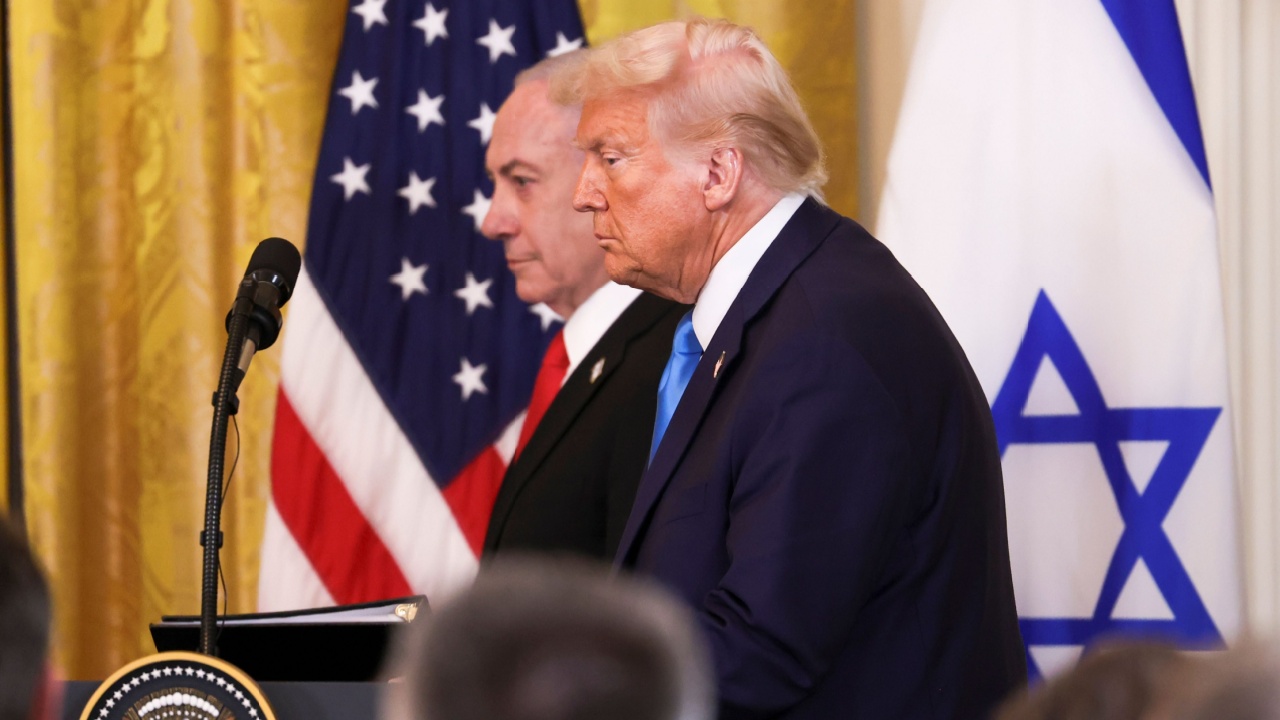
The principal catalyst for this war was not American strategic interests, but Israeli priorities. Israel was instrumental in blocking a nuclear agreement between Trump and Tehran, inserting a series of “poison pills” to collapse negotiations while pushing Washington toward war. Their objective was regime-change—Israeli Prime Minister Benjamin Netanyahu has personally lobbied Washington for US military actions against Iran for more than three decades.
Israel wanted to capitalize on the series of blows it delivered to Tehran’s strategic position following Hamas’ terror attack on October 7, 2023, Israel’s subsequent wars in Gaza and Lebanon, and its direct military confrontation with Iran. Fearing changes in American public opinion about the US-Israel relationship, Netanyahu pushed Washington to pursue this war while Israel possessed the political capital to do so. Trump played into his hands.
With no coherent strategy and entrenched special interests driving policy, Washington has committed itself to another open-ended war in the Middle East that shows no sign of abating soon.
Iran appears determined to fight—it is preparing for a prolonged war of attrition. Airpower alone will not collapse the regime, and killing Khamenei is not sufficient to collapse the Islamic Republic. The regime remains deeply entrenched and had established contingency plans before the war to sustain the fight in the event of Khamenei’s death. The core of the regime’s coercive apparatus—the Islamic Revolutionary Guards Corps (IRGC)—remains the strongest political, economic, and military actor inside the country. The IRGC is already tightening its control over decision-making inside Tehran, and benefits from a fiercely divided Iranian opposition.
The United States also appears determined to escalate. Washington intends to increase the intensity of its bombing campaign, and Trump refuses to rule out the possibility of US ground troops inside Iran. After the United States and Israel failed to secure regime collapse following Khamenei’s death, it appears that, in the absence of their ability to install a new client government inside Tehran, they are now aiming to collapse the Iranian state.
Trump is considering supporting various ethnic militias inside Iran—the CIA is reportedly already working to arm different groups, and US-armed Kurdish forces from Iraq are allegedly poised to enter Iran soon. Igniting a proxy war inside Iran risks inciting a prolonged insurgency, empowering extremist factions, and triggering further regional instability.
There have already been negative consequences for the United States. At least six US servicemembers have been killed during this war. Shipping through the Strait of Hormuz has plummeted, and oil and gas prices have already spiked due to the war and are likely to rise further as the conflict continues.
Racing to prevent this, Trump is now contemplating offering military escorts and political risk insurance for oil and gas tankers moving through the strait. However, the United States is facing significantly depleted missile-interceptor stockpiles, raising concerns about how long it can maintain this pace of operations. The administration has provided the American people with no clear timeline on how long this war will last—it continues to shift, and now stands at potentially eight weeks.
Trump thrust the United States into war, believing it would not incur considerable political, economic, and human costs in the process. It epitomizes the hubris that has guided US Middle East policy for decades, producing neither greater regional stability nor tangible benefits for the United States. Trump must now decide whether to change direction in the interest of the American people or commit the country to another potential forever war.
About the Author: Jon Hoffman
Jon Hoffman is a research fellow in defense and foreign policy at the Cato Institute. His research interests include US foreign policy in the Middle East, Middle East geopolitics, and political Islam. Hoffman’s work has been featured in a number of academic and policy-oriented platforms, including Foreign Policy, The Washington Post, The National Interest, Middle East Policy, and more. Hoffman holds a PhD in political science, an MA in Middle East and Islamic Studies, and a BA in Global Affairs, all from George Mason University.