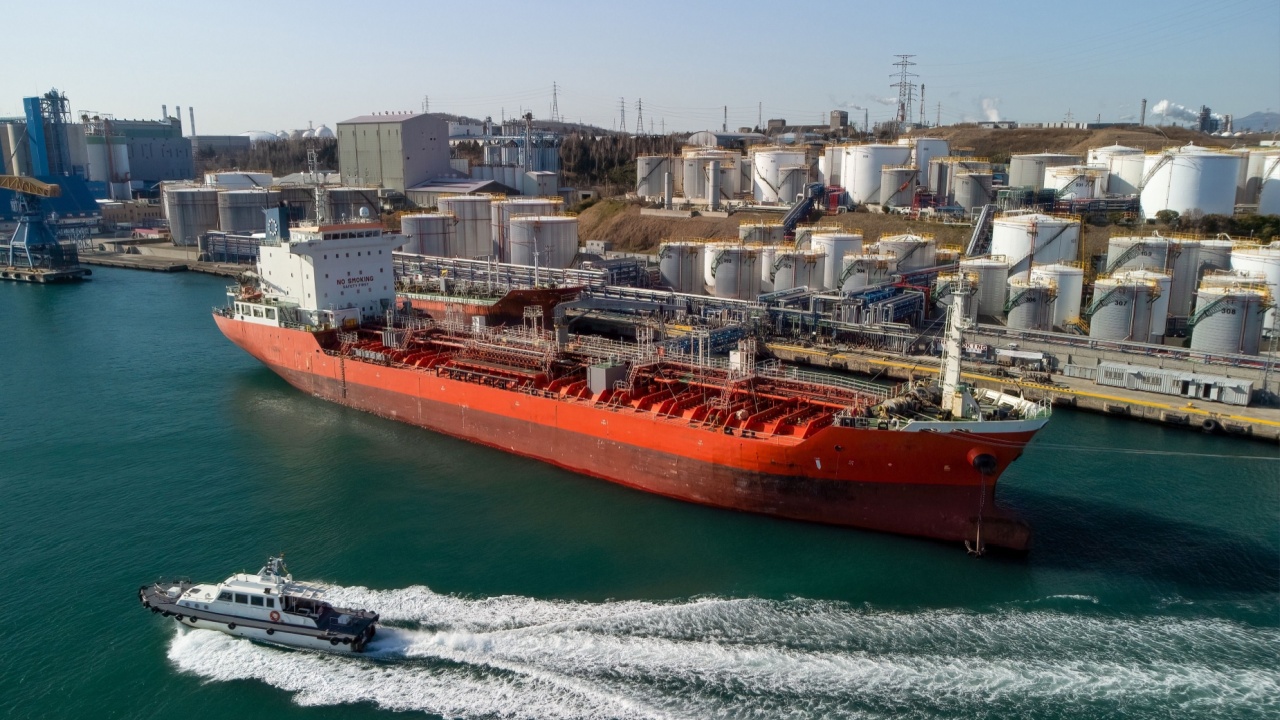
An extended closure of the Strait of Hormuz will have severe repercussions for South Korea’s energy security.
As the conflict in Iran wages on without a clear end in sight, countries in Asia, such as South Korea, are contending with difficult realities regarding their energy security and assumptions about the security architecture of East Asia. The most immediate concern is the closure of the shipping lane through the Strait of Hormuz.
At the time of this writing, at least four tankers have been hit by drone attacks since the conflict first began on February 28. Lloyd’s List Intelligence reports that maritime traffic through Hormuz has fallen by 80 percent, and maritime insurers have cancelled war risk coverage for vessels operating in the Gulf. For energy-import-dependent countries like South Korea, the impact on energy security and the economy is most dire and immediate.
South Korea’s Energy Insecurity
According to the International Energy Agency (IEA), crude oil and natural gas account for over 56 percent of South Korea’s total energy mix, with oil accounting for nearly 37 percent of the total energy supply and natural gas 20 percent. For power generation, 25 percent of electricity is produced from natural gas.
Over half of crude oil is used to heat and cool buildings, run lighting and devices, and power vehicles, machines, and factories. A large portion is refined and then exported to other countries. While the initial spikes in crude and LNG prices are unavoidable, short-term price impacts are less damaging to South Korea than a prolonged closure of the Strait of Hormuz would be to energy supplies from the Middle East.
There are two ways in which continued constraints in energy supply from the Middle East can negatively impact South Korea. One is a direct impact on South Korean refineries, which are not well equipped to handle blends other than the heavy-to-medium crudes imported from the region. Even though there are alternative crude sources from countries like the United States, West Texas Intermediate (WTI) grades are typically lighter and sweeter.
The problem for South Korea is that there is no real alternative to the Middle East as a source, other than maybe Canada, Mexico, and Latin America. What this means is that a prolonged closure of Hormuz would affect South Korean refineries, followed by its impact on transport-related sectors such as shipping, commercial airlines, and logistics. A slowdown in construction and manufacturing will also follow, since petroleum is an important input into building materials such as asphalt, lubricants, and plastics.
One way to address this challenge is to use stored crude from the national strategic stockpile, which accounts for about 75–130 million barrels of reserves. There is an additional 75–100 million barrels of private stockpiles, bringing the national total to about 150–230 million barrels. The Korean government may try to coordinate the release of these supplies with other countries and the IEA to maximize market impact.
However, the rise in crude oil prices presents a second problem. Natural gas imports from Qatar, which account for a significant portion of South Korea’s supply, are tied to crude oil prices. The closure of the Strait of Hormuz will also affect the shipment of LNG from Qatar, putting upward pressure on the price of liquefied natural gas (LNG). The short-term impact on South Korea’s power generation will be unavoidable, given that its LNG stockpile is also limited. Unlike crude, LNGs are more difficult to store for extended periods; the constraints on their supply would be more severe.
Estimates of South Korea’s LNG stockpile indicate that it will last only about 50 days. There are ways to address this problem by relying on alternative sources from Australia and North America. Still, it is unclear exactly how quickly Korean buyers can restructure their contracts with Qatari suppliers and what additional premium they will pay for spot cargoes from other suppliers.
Operation Epic Fury’s Lessons for the Korean Peninsula
Aside from the more immediate impact on South Korea’s energy security, there are at least three important lessons to take away from the initial stage of this conflict.
First is that the broadening of the conflict, which began with precision strikes in Iran conducted by the United States and Israel, can lead to a subsequent Iranian response that puts regional allies at risk. The latest strike by Iran on neighboring countries with US bases, for instance, has pushed the six Gulf states to call on Iran to halt its attacks and assert their right to self-defense.
From this, it follows that US allies have few options in a broad regional conflict involving the United States. Just as the presence of United States Forces Korea (USFK) served as a basis for deterrence against threats from North Korea, it can also be a target of attack from adversaries. The question for South Korea is whether they will guard against and plan for those threats, or take the bet that they can prevent or absorb such collateral damage.
Second, there is the signal that this military operation sends to North Korea. President Trump’s latest comment that “when crazy people have nuclear weapons, bad things happen” need not only apply to Iran. Under Secretary of War for Policy Elbridge Colby also stated during a Senate Armed Services Committee hearing on March 3 that the Trump administration’s goal is to be “strong and clear, but quiet” in its messaging to its adversaries.
Third is that Pyongyang will learn from the Russian response to the attack on Iran by the United States and Israel. The fact that Moscow cannot do much about what is happening in Iran should be a sobering wake-up call for North Korea, especially when Iran was one of the first nations to support Russia in the Ukraine War. Pyongyang would be wise to reset its expectations with Moscow, given this reality.
South Korea Must Further Diversify Its Energy Sources
The Iran conflict is a stress test for South Korea—one that exposes the vulnerabilities of an energy-import dependent economy while also forcing a harder look at the geopolitical assumptions that underpin its security architecture. The disruption to Hormuz shipping is not merely an energy crisis; it is a reminder that supply chains, alliance structures, and deterrence frameworks can all unravel with alarming speed when conflict escalates in strategically vital regions.
Seoul’s most urgent task is to stabilize its energy supply through coordinated stockpile releases and accelerated renegotiations of contracts with alternative LNG suppliers. But beyond the immediate crisis, this event should prompt a longer-term rethink of South Korea’s energy diversification strategy.
On the security front, the conflict illustrates that the alliance carries both benefits and risks. It would be wise for South Korea to plan more explicitly for the national security implications of escalation. Also, if Pyongyang is watching closely, it should take from Moscow’s impotence not a recommendation for boldness, but the risks of overdependence on Russia.
About the Author: James Kim
J. James Kim is the director of the Korea Program at the Stimson Center. He also serves as a lecturer in the Executive Master’s of Public Policy and Administration Program at Columbia University. Previously, he was the director of public opinion at the Korea Economic Institute, senior research fellow, and director of the Center for Regional Studies and the Center for Public Opinion Research at the Asan Institute for Policy Studies in Seoul, South Korea, where he also directed the institute’s Washington, DC office. Dr. Kim earned a BS and MS in Industrial and Labor Relations from Cornell University and a PhD in Political Science from Columbia University.