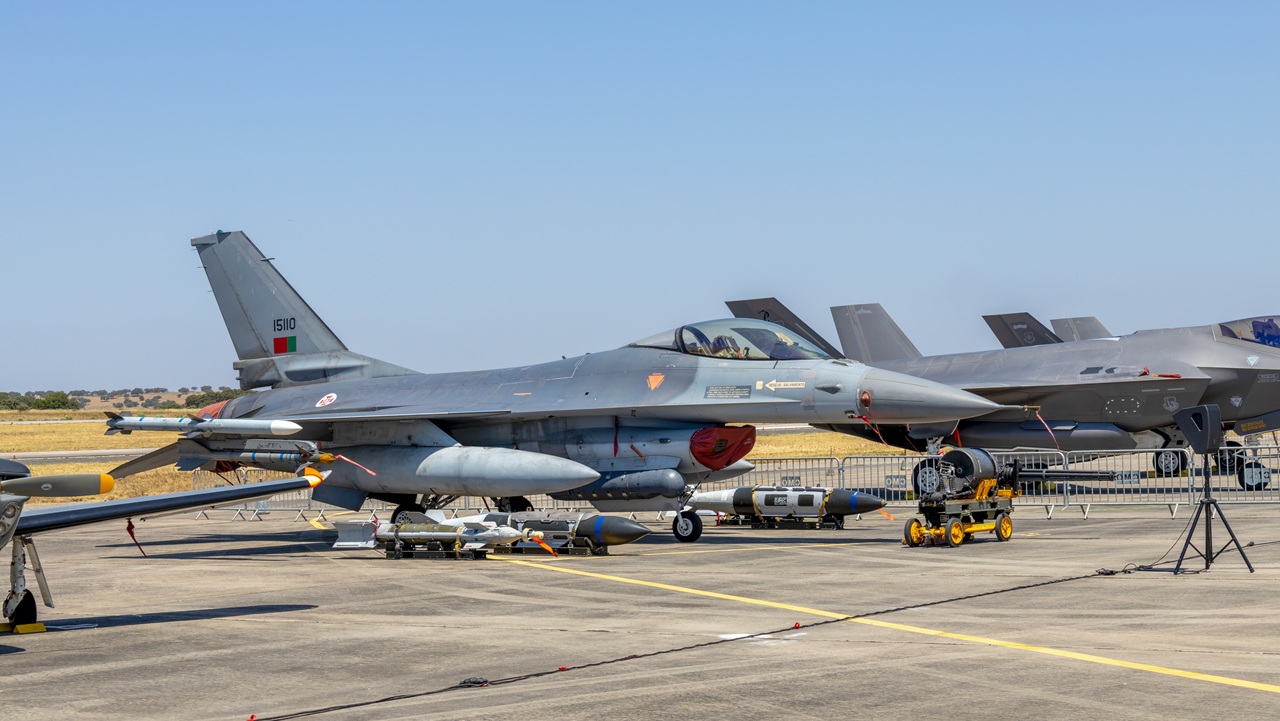
Portugal quit the F-35 program last year amid political disagreements with the Trump administration, and has shown few signs of wanting to return.
The United States ambassador to Portugal is reportedly attempting to woo Lisbon back to the Lockheed Martin F-35 Lightning II, months after the NATO member withdrew from a deal to obtain the multirole fighter.
Ambassador John Arrigo has urged Portugal to reconsider adopting the F-35 rather than pursuing alternative options.
Portugal isn’t alone in bailing out of the F-35 acquisition. Spain also announced last year that it would no longer seek to acquire the Lightning II. In August 2025, Madrid confirmed talks with Washington for the F-35 were suspended indefinitely.
Will Courting Portugal Work?
It was nearly a year ago that Portugal, a founding member of NATO, announced it would not move forward with a planned acquisition of the F-35. At the time, Portuguese Minister of Defense Nuno Melo cited his government’s opposition to current Trump administration policies for the decision.
Portugal had initially sought to acquire the fifth-generation stealth fighter to replace its aging fleet of F-16 Fighting Falcons. Still, following last March’s announcement, there has been speculation that Lisbon would consider the French-made Dassault Rafale, the Swedish-produced Saab JAS 39 Gripen, or the Eurofighter Typhoon.
In October 2025, Airbus signed a memorandum of understanding with Portuguese Cluster for Aeronautics, Space and Defence Industries (AED), which could pave the way for a formal deal for the Eurofighter. That deal could include local production of the Typhoon in Portugal, boosting the Portuguese economy.
A deal with Airbus is also likely, as the Força Aérea Portuguesa (Portuguese Air Force) currently operates 11 Airbus C295 military transports—of which five are configured for maritime patrol missions.
Portugal’s Air Force Needs an Overhaul
The backbone of Portugal’s air fleet are its F-16s. Lisbon now operates approximately 28 of the aircraft, including upgraded single-seat F-16 AM models and F-16BM twin-seat variants. Although the aircraft have undergone the Mid-Life Update (MLU) program, designed to keep them operational, the newest Fighting Falcons are at least three decades old, with some of the initial aircraft at least 40 years old.
The Portuguese government has since indicated that it may not seek to replace the aging warbirds on a one-for-one basis, and could instead seek a smaller number of fighters as a stopgap.
It is not clear what the long-term future of Portugal’s air force will be. It may adopt the F-35, as Washington wishes. But the fifth-generation plane may also face competition from the upcoming sixth generation of combat aircraft. At the same time Lisbon confirmed it would increase its defense spending to two percent of its gross domestic product (GDP), it further indicated that it would attempt to join a European sixth-generation fighter program—either the Future Combat Air System (FCAS) of France, Spain, and Germany, or the Global Combat Air Programme (GCAP) of the United Kingdom, Italy, and Japan. Melo has suggested that Portugal would seek to join one of the programs as an observer, at least initially.
It is unclear which program Portugal prefers, as it has a foot in each camp. It is a neighbor of Spain, and heavily integrated with Madrid’s defense, but it also has close ties with the UK through the Anglo-Portuguese Alliance—the world’s oldest active military alliance, dating back to June 1373.
About the Author: Peter Suciu
Peter Suciu has contributed over 3,200 published pieces to more than four dozen magazines and websites over a 30-year career in journalism. He regularly writes about military hardware, firearms history, cybersecurity, politics, and international affairs. Peter is also a contributing writer for Forbes and Clearance Jobs. He is based in Michigan. You can follow him on Twitter: @PeterSuciu. You can email the author: [email protected].