Sixteenth-century France was a time of moral, political, and intellectual chaos, when the dearest assumptions of Western Tradition were turned upside down.
Born in 1533, Catholic intellectual Michel de Montaigne entered the sphere just as Nicolaus Copernicus was leaving it. Copernicus passed in 1543, shortly after his publication of On the Revolution of the Heavenly Spheres, the work that contradicted the geocentric universe which had been advocated by the Church as well as the greatest astronomers of antiquity.
Such discoveries placed into question the Catholic Church’s assumptions of the special place the unmoved-earth held in God’s system. Simultaneously, the Protestant Reformation raged throughout Europe, and Europeans had discovered a New World across the Atlantic Ocean.
Montaigne’s coming of age during a time of such intellectual ferment could not but result in one of the greatest minds in history.
Michel de Montaigne
Michel de Montaigne was born in wealth and luxury in Bordeaux, France. His father, Pierre, ensured his son’s intellectual bent by employing a German tutor who only spoke Latin to the boy. Montaigne claimed, therefore, that his original tongue was Latin, not French. Since Latin was the language of the Church, the Law, and Science, he was set up to excel in all three.
Montaigne’s first published work was a translation of Spanish philosopher Raymond Sebond’s Book of Creatures, or Natural Theology, in which he juxtaposed Revealed Scripture of the Bible with the Natural Scripture of the Creation.
Raymond Sebond
Raymond Sebond lived in the fifteenth century, taught philosophy, science, and medicine at the university in Toulouse, and in his last years wrote his magnum opus. He argued in the Book of Creatures that the fundamental source of all knowledge of God and religious understanding is God’s Creation, which requires an intellectual, philosophical, scientific approach to understand.
Sebond viewed life as a “Ladder of Nature,” similar to the ancient and medieval notion of the Chain of Being, in which all of Creation is divided into:
- Those with being, which all Creation has.
- Those with life, which physical matter such as rocks lack.
- Those with feeling, which plants lack.
- Those with understanding, which all life lacks save humans.
Humans are unique, of body and soul, and since Creation must have a Creator, as Thomas Aquinas argued, that Creator is God. From here Sebond deduced the Trinity, the Incarnation, the Resurrection, and the Judgment—as the Catholic Church had known for centuries. However, to deduce these from the Creation alone is suspect, and in the sixteenth century, the Church placed the book on the Index of Prohibited Books for a time.
Montaigne’s Apology
Nevertheless, Michel de Montaigne’s father, Pierre, persuaded his son to translate the book into French. The translation spurred Montaigne’s critical thoughts about the work, which later erupted into the longest of his Essays, the Apology for Raymond Sebond, in which he agreed with the natural theologian that piety must accompany science and philosophy. Though the Apology agreed with Book of Creatures by arguing against human pretension and ignorance, Montaigne agreed with little else in Sebond’s work.
On Human Knowledge
Influenced by the ancient Skeptics and Cynics (or Pyrrhonists), especially Seneca and Sextus Empiricus, Montaigne questioned the bases of human thought and the notion that humans are the superior creature on Earth—far above all other animal life and closest to the spiritual realm, the angels, saints, and God Himself.
Astonishingly, Montaigne claimed that God alone is responsible for any knowledge that a human has. He argued that the Church, from the beginning, when Jesus chose His disciples, was comprised of “common people, simple and ignorant men, that he has been pleased to employ to instruct us in his admirable secrets.” He stated, “it is more by the mediation of our ignorance than of our knowledge that we know anything of the divine wisdom.” Echoing St. Paul, he claimed that the most foolish among us might be the most wise.
Importantly, when Montaigne professed that “doubting pleases me no less than knowing,” he was referring to his doubt of human knowledge and institutions, rather than of God and the Church.
Montaigne was disgusted by the propensity of some Renaissance humanists and scientists to eulogize humans and their knowledge. In turn, he responded with his own portrait of the dignity of man, who “feels and sees himself lodged here, amid the mire and dung of the world, nailed and riveted to the worst, the deadest, and the most stagnant part of the universe.” Here, as elsewhere, Montaigne trod on thin ice respecting the teachings of the Church.
Attacking Sebond and all scientists who believed that they understood the Creation, especially animals, Montaigne wrote:
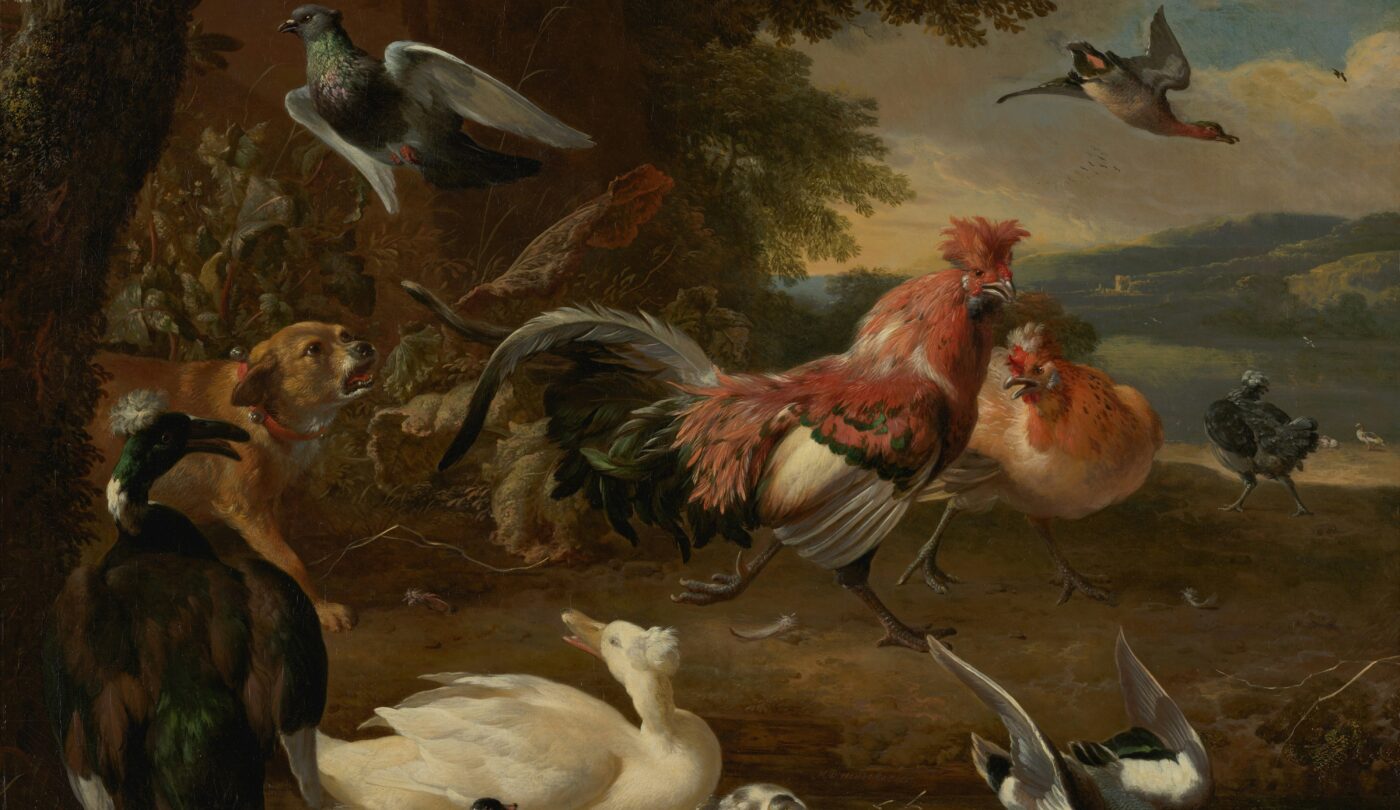
It is by the vanity of [human] imagination that he equals himself to God, attributes to himself divine characteristics, picks himself out and separates himself from the horde of other creatures, carves out their shares to his fellows and companions the animals, and distributes among them such portions of faculties and powers as he sees fit. How does he know, by the force of his intelligence, the secret internal stirrings of animals? By what comparison between them and us does he infer the stupidity that he attributes to them? When I play with my cat, who knows if I am not a pastime to her more than she is to me?
Here, Montaigne was akin to the Nominalists, such as William of Ockham, believing that human intelligence alone cannot comprehend God and Creation—faith is the sine qua non of understanding.
If animals know how to use nature to their benefit, Montaigne continued, why is instinct any less noble than our science and reason?
Animals have taught us most of the arts, as the spider to weave and sew, the swallow to build, the swan and the nightingale music, and many animals, through imitation of them, to practice medicine.
How do we know that animals do not have religion? What is the proof? Trying to understand God and His Creation is folly for humans. The reason why Jesus said that it is best for us to see yet not see, is that humans fabricate so much nonsense by comparing themselves to God; it is therefore best if humans are kept ignorant of much of the Creation.
A Pious Approach
Montaigne questioned whether or not human science really reveals anything, even the most basic truth. He would wonder—examining the sciences of physics and chemistry and mathematics today— if scientists really comprehend the most profound truths, such as: Why do we exist? Why does the universe exist? What is true reality? These questions are matters of faith, Montaigne argued.
Montaigne’s humility derived from personal introspection in light of his consideration of human experience. Montaigne came to know himself sufficiently in order to develop a complete sense of piety for God. Human existence awed and fascinated him, as did the divine.
If we believed in him just as in any other history, if we knew him like one of our comrades, we would love him above all other things, for the infinite goodness and beauty that shines in him.
In other words, if God were a human, we would embrace and love Him more than if He were a god. If in each person we would see God, then we would see the fundamental basis of what makes us human—the essence, the being, that which is divine incarnate in man.
Fascinatingly, Montaigne used Sebond as the means to create such overwhelming piety to accompany his scientific views, putting doubt, or rather the need for faith, first.
Editor’s Note: Read the previous installments of The Pious Scientist series here.