
Specialized anti-armor aircraft date back to World War II—but not all planes are well-equipped to take on ground targets.
The idea of aircraft destroying tanks is deeply embedded in modern warfare. From World War II to the Ukraine War, air power has repeatedly been used to counter armored forces on the ground. Indeed, aircraft can be devastating against tanks or other ground vehicles—but a plane’s effectiveness against tanks depends upon a specific set of circumstances.
Aircraft against tank engagements happen, but they are not a constant fixture of war fighting. Such encounters most frequently happen during breakthrough attempts, massed armored movements, and retreats in which logistical columns are exposed. Air power is most effective against tanks when the tanks are on the move, concentrated in one area, or lacking air defense cover.
When Do Aircraft Fight Tanks?
Ground-attack aircraft emerged in World War II as anti-armor platforms. Early examples include the German Junkers Ju 87 “Stuka” and various Allied fighter-bombers. Aircraft primarily attacked soft-skinned vehicles, supply columns, and tank formations from above and behind. The tanks, which were designed for land combat, typically had no ability to defend themselves against aerial threats.
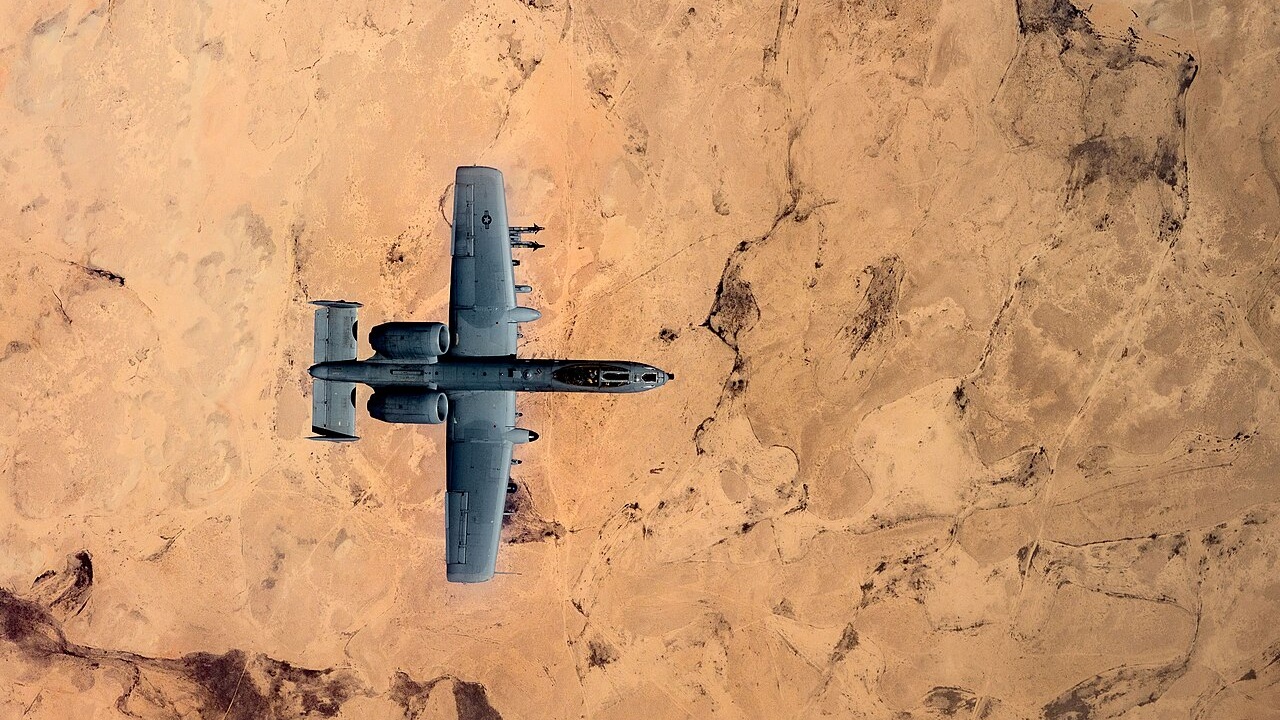
In the Cold War, NATO and the Soviet Union each planned extensively for World War III, which they envisioned as a conventional conflict in Eastern Europe between NATO and the Soviet-aligned Warsaw Pact. Both sides prepared aerial anti-armor capabilities in Eastern Europe—specifically deploying them near the “Fulda Gap,” a flat region of central Germany ideal for a sudden tank offensive by either side. Specialized aircraft were built around the anti-armor mission—most famously the American A-10 Thunderbolt II (better known as the “Warthog”) and the Soviet Su-25 Frogfoot. These aircraft emphasized low altitude, high survivability, and precision weapons deployment.
Fortunately for humanity, NATO and the Soviet Union never went to war. Instead, the first widespread documented instances of aircraft-on-tank engagements took place during the 1991 Gulf War, when coalition aircraft achieved total dominance of the skies over Iraq and Kuwait and destroyed hundreds of Iraqi armored vehicles. Iraq’s concentrated use of armor, paired with American air superiority, facilitated the circumstances in which aircraft were able to pick off so many tanks.
The ongoing Ukraine War has also featured documented instances of aircraft on tank engagements. Early Russian armor was lost to Ukrainian aircraft and drones, reaffirming that aircraft are lethal against armor when airspace is permissive.
Many Aircraft Are Designed for Ground Attack Roles
Specialized air-to-ground platforms, like the A-10 and Su-25, are most commonly used to engage tanks. But they aren’t the only platforms that can carry out these missions. Multirole fighters like the F-16, F/A-18, and Rafale can also be configured for strike operations, and can engage tanks as part of these missions. The AH-64 Apache attack helicopter is also an effective tank killer. And increasingly, UAVs and loitering munitions are being used to target tanks, blurring the aircraft to tank category with modern technology.
The weapons used against tanks include precision-guided munitions (like laser-guided bombs and GPS-guided weapons), anti-armor missiles (like the AGM-65 Maverick and Hellfire-class weapons), and cannons (which are effective against lighter armor, vulnerable components or top-side hits).
Tactically, when engaging tanks, aircraft avoid frontal armor, which is the strongest. Instead, they usually opt to target the roof, engine deck, or rear. Standoff weapons, pop-up attacks, and terrain masking are often used while coordination with ground forces and ISR is critical given the tank’s low profile and high mobility.
Are Anti-Tank Aircraft Ever in Danger?
Of course, while the aircraft holds an advantage in these engagements, CAS flying can be dangerous for the aircraft. Flying at low altitudes improves identification, but increases a plane’s vulnerability to attack from the ground. Conversely, higher-altitude flying improves survivability, but reduces visual targeting and accuracy. Aircraft are forced to balance weapon release envelopes, air defense threats, and fuel and loiter time—making attacks on ground vehicles a relatively complicated operation.
In sum, aircraft serve as a powerful counter to tanks, but they are not a universal solution. Aircraft particularly struggle when air defenses are intact, when weather degrades targeting, and when tanks are dispersed and dug in. But in the right conditions, with air superiority, ISR assets, and combined-arms integration, aircraft can become a tank crew’s worst nightmare.
About the Author: Harrison Kass
Harrison Kass is a senior defense and national security writer at The National Interest. Kass is an attorney and former political candidate who joined the US Air Force as a pilot trainee before being medically discharged. He focuses on military strategy, aerospace, and global security affairs. He holds a JD from the University of Oregon and a master’s in Global Journalism and International Relations from NYU.
Image: Wikimedia Commons.















.jpg)