The revival of Iraq’s most polarizing Shia leader signals Iran’s intent to set the terms of engagement with the Donald Trump administration.
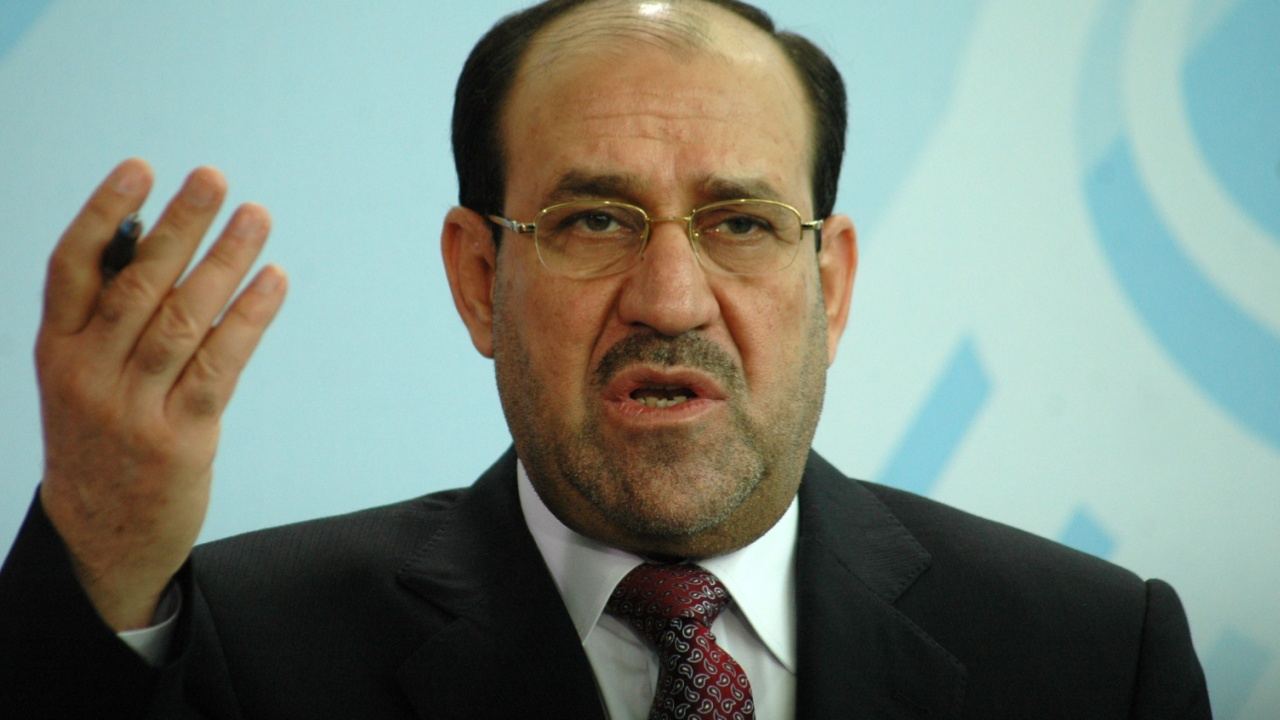
Iraq’s dominant Shia bloc has reached into the past to choose a face for the future: former Prime Minister Nuri al-Maliki. His nomination is being marketed as the return of an “experienced” strongman capable of restoring order and finally bringing Iran-aligned militias under state control. But this narrative is political theater. Maliki’s comeback is not a technocratic reset—it is a strategic message from Tehran to Washington that Iran intends to defend its primacy in Iraq through its most loyal and battle-tested operator.
Maliki’s record is not one of restraining armed groups. His tenure between 2006 and 2014 saw Iraq descend into its worst sectarian bloodshed since 2003, the loss of three provinces to ISIS, and the deepening entrenchment of Shia militias inside the state. Yet the same Iran-aligned coalition dominating parliament is reviving him now—precisely as Washington pressures Baghdad to curb militia influence and as the US facilitates the transfer of up to 7,000 ISIS detainees from Syria into Iraqi custody. There is more choreography to this decision than coincidence.
The Myth of Nuri al-Maliki the “Fixer”
A new narrative is taking shape: Maliki as the only figure strong enough to centralize power and impose order. Former US diplomat Zalmay Khalilzad has echoed this framing, and some regional commentators have embraced it as well. Saudi anchor Malek Alrougui argued that Maliki could “put the militias back in the bottle,” though even he conceded that the task is to “limit their power, not eliminate them.” He also noted that Iraq’s political elite seeks to construct an “Iraq under Maliki” to counterbalance a “Syria under al-Shara.” But this reading ignores the historical record. Maliki did not put the militias in the bottle; he shattered the bottle and built a political system that depended on them.
The idea that Maliki will dismantle or meaningfully weaken the militias is a structural fantasy. These groups are Iran’s primary lever of influence in Iraq. Tehran does not empower a loyalist to dismantle its own leverage.
Maliki’s likely role is to rebrand and centralize militia influence by integrating them deeper into state institutions; shield them from international scrutiny under the guise of “state control”; manage sensitive issues—including the transfer of thousands of ISIS detainees—within a security ecosystem aligned with Iran. This is not a plan to tame the militias. It is a plan to cement their position and present the arrangement to Washington as a fait accompli.
Iraqi political life often moves in circles rather than forward. As Iraqi academic Ayad Anbar notes, the system “reproduces itself without any circular or spiral development.” Maliki’s nomination fits this pattern.
Lebanese analyst Mustapha Fahs argues that the move reflects a new phase in which the Shia right and the Shia mainstream face an unprecedented challenge in maintaining their power amid regional realignment and rising domestic pressure. He also highlights the significance of Masoud Barzani’s support for Maliki—an alignment between the Shia right and the Kurdish right that exposes the depth of political bargaining required to manage Iraq’s next chapter.
Why Ali Khamenei Chose Nuri al-Maliki
Iran’s supreme leader, Ali Khamenei, has clearly blessed Maliki’s return over more consensus-oriented Shia figures. By elevating a polarizing veteran, Tehran signals that it values ideological loyalty over domestic legitimacy or Western approval. As Omar Abdulsattar Mahmoud—a leader in the Iraqi National Opposition Council and former member of parliament—put it, Iran is “dealing a painful blow to Trump and seizing complete control of all aspects of the Iraqi state and government.”
This sort of messaging indicates that Maliki’s return is not about governing Iraq. It is about shaping the terms of engagement with the Donald Trump administration. If Washington intends to revive elements of “maximum pressure,” Tehran is preparing to answer with “maximum resistance” through a Baghdad leadership fully aligned with its strategic worldview.
US Options: Punish Nuri al-Maliki, Don’t Just Protest
The timing of Maliki’s nomination was not lost on Washington. Just hours after the news broke, the State Department released a readout of Secretary of State Marco Rubio’s call with Prime Minister Mohammed Shiaa al-Sudani, warning that “a government controlled by Iran cannot successfully put Iraq’s own interests first, keep Iraq out of regional conflicts, or advance the mutually beneficial partnership between the United States and Iraq.” The United States evidently views Iraq’s government formation process as a strategic red line, not an internal matter, and is prepared to recalibrate its approach if Baghdad tilts decisively toward Tehran.
Then came a direct and unusually blunt intervention from President Donald Trump on Truth Social, delivering a political body blow to Maliki’s bid. Trump warned: “Last time Maliki was in power, the Country descended into poverty and total chaos. That should not be allowed to happen again.” He added that “because of his insane policies and ideologies, if elected, the United States of America will no longer help Iraq and, if we are not there to help, Iraq has ZERO chance of Success, Prosperity, or Freedom.” Together, these statements transform Washington’s discomfort with Maliki into a clear threat of consequences for any Iraqi faction backing his return.
In 2014, the Obama administration helped push Maliki aside to prevent total state collapse. Today, the United States faces a far more entrenched reality. Washington cannot veto Iraqi internal politics, but it can shape the cost of political choices. The question is not whether the United States can stop Maliki’s appointment; it cannot. The question is how much it will make Maliki and his backers pay for it. Realistic means to impose costs on Maliki include targeted sanctions, financial pressure, conditional security cooperation, tighter oversight of US assistance, and diplomatic isolation of militia-aligned ministries. These are the levers that remain.
The West risks comforting itself with the illusion that a “strongman” can solve Iraq’s militia problem. Maliki’s return does the opposite: it entrenches the very forces that hollowed out the Iraqi state and paved the way for ISIS’ rise. If policymakers accept the myth of the “experienced fixer,” they are simply waiting for the next collapse.
About the Author: Charbel Antoun
Charbel A. Antoun is a Washington-based journalist and writer specializing in US foreign policy, with a focus on the Middle East and North Africa. He is passionate about global affairs, conflict resolution, human rights, and democratic governance, and explores the world’s complexities through in-depth reporting and analysis.
Image: 360b / Shutterstock.com.