A priest friend recently expressed his concern about the increasing fluidity of human identity and values over the past twenty years. His observation prompted me to reflect on insights drawn from Medieval philosophy—particularly from St. Thomas Aquinas—regarding the notion of tabula rasa, the idea that the human person is born as a “blank slate.”
While modern thinkers such as John Locke emphasized this concept in a radical sense, Aquinas and the classical tradition understood that it must always be held together with a robust account of nature. We are not born fully formed, but neither are we indeterminate. Formation presupposes something already given.
A simple analogy makes this clear. If a puppy and a human infant are born on the same day, and both are exposed to language, within two years the child will begin to speak, while the puppy will not. The difference does not lie in desire, encouragement, or environment, but in nature. The puppy lacks the biological and rational capacity for language. Formation does not create the capacity; it draws out what is already there.
The same principle applies to human identity and vocation. Human beings require formation and education not in order to invent themselves, but in order to become what they already are.
Freedom, Nature, and Vocation
If human nature fails to achieve its proper ends, the result is not liberation but frustration. Unhappiness often arises precisely from a mismatch between one’s lived choices and one’s objective nature. True fulfillment, therefore, is inseparable from both nature and vocation.
The more a person lives in harmony with his or her nature and authentic vocation, the more genuinely free that person becomes. This is what Servais Pinckaers famously described as freedom of excellence: not the freedom to do whatever one wants, but the freedom to do well what one is meant to do.
This already challenges a dominant modern assumption: that freedom consists primarily in the absence of limits, or in the ability to redefine oneself according to desire. On the contrary, the classical tradition holds that freedom grows with commitment, not against it. The violinist is most free not when ignoring technique, but when disciplined by it.
Misdiscernment and the Illusion of Self-Creation
At this point, a crucial question emerges—one that contemporary culture presses relentlessly: What happens when an individual discerns his or her nature or vocation incorrectly? If freedom lies in fulfilling one’s deepest desires, why should a person not be encouraged to “live their truth,” even when that truth involves rejecting biological sex, inherited identity, or given limits?
Modern slogans—“be your authentic self,” “you do you,” “follow your truth”—appear to echo the classical idea that fulfillment lies in self-realization. But this resemblance is deceptive. What contemporary culture presupposes is not a formed nature seeking its proper end, but a radically indeterminate self, a true tabula rasa upon which identity may be constructed.
Here the earlier analogy becomes decisive. A human child does not speak simply because he desires to speak. Desire alone does not generate truth. Desire itself must be educated, healed, and judged in light of nature. It is an ensemble of nature and nurture.
Gender fluidity, then, is best understood not as the flowering of human nature, but as a symptom of its misformation. It reflects an anthropology shaped more by nurture than by nature—precisely the trajectory inaugurated by thinkers such as Simone de Beauvoir and later radicalized by Judith Butler, for whom gender is not received but constructed.
This framework places enormous weight on subjective experience—often formed by trauma, social pressure, psychological fragility, or ideological conditioning—while severing identity from the objective structure of the human person. The result is not freedom, but instability.
If nature were truly a blank slate, self-creation would be plausible. But if nature is real, intelligible, and ordered toward specific goods, then a mistaken discernment does not liberate—it misdirects. One may sincerely pursue happiness and yet move farther from it. Good intentions cannot substitute for truth about the human person.
False Freedom and True Freedom
The classical tradition insists that freedom is not the power to redefine reality, but the capacity to adhere to it intelligently. When desire is severed from nature, freedom collapses into compulsion. Self-expression becomes self-fragmentation.
Society thus places upon fragile individuals the burden of inventing themselves without the guidance of an objective human form—a task no human person was meant to bear.
At the heart of this confusion lies a fundamental inversion. Modern culture treats freedom as foundational and truth as negotiable. The Christian tradition insists on the opposite: truth is foundational, and freedom flows from it. We are not free because we choose; we are free because reality is intelligible and good, and because our lives are meant to conform to that truth. When freedom is detached from truth, it does not expand—it disintegrates.
For Catholics, this means that discernment is never a solitary project of self-definition, but a communal and sacramental journey in which desire is not simply followed, but purified and ordered toward the truth of the human person.
Mary and the Freedom of Full Correspondence
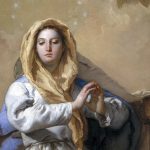
A perfect embodiment of this truth is found in Our Lady, the Immaculate Conception. Her purity does not constrain her freedom; it perfects it. Free from the disorder of disintegrated desire, she acts with complete rationality and availability to her vocation.
Mary’s fiat is not an act of self-invention, but of perfect correspondence between nature, grace, and calling. In her we see that the highest freedom does not arise from indeterminacy, but from truth fully embraced.
Conclusion
The contemporary crisis of identity stems from a profound confusion about freedom. When nature is denied, discernment becomes unreliable; when vocation is severed from truth, desire becomes tyrannical.
Recovering an account of human nature is not a step backward, but a necessary condition for genuine liberation. We do not become free by inventing ourselves, but by becoming—slowly, painfully, and joyfully—what we already are.
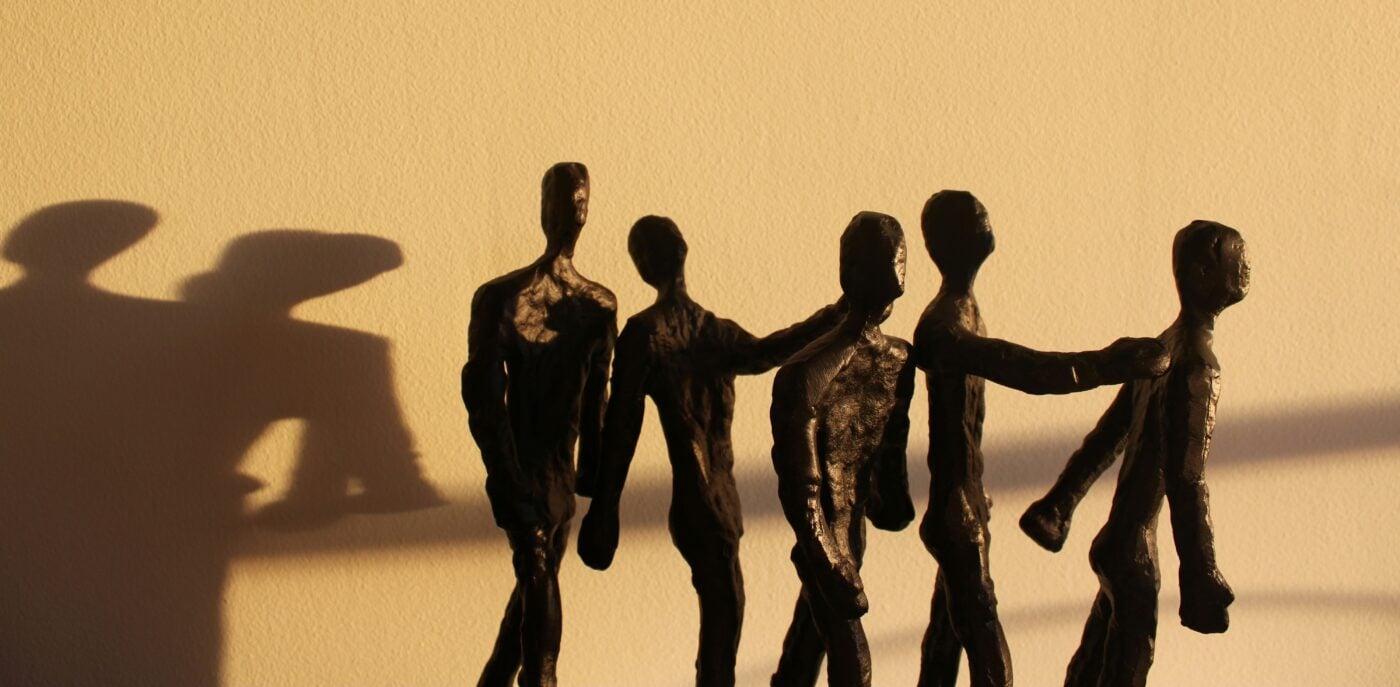
Photo by Trude Jonsson Stangel on Unsplash