U.S. Ambassador to Panama Kevin Cabrera over the weekend emphasized in an official statement that the recent ruling from Panama’s Supreme Court nullifying two Canal port contracts awarded to a China-linked company strongly affirms the rule of law.
Cabrera indicated that the ruling confirms Panama’s independent judiciary “enforces legal compliance, transparency, and public-interest obligations – holding all private operators accountable.”
“This ruling strengthens Panama’s national security and investment climate by boosting predictability, fairness, and legal confidence. Investors gain assurance that valid contracts are protected and improper ones corrected, making Panama more attractive for quality, long-term investment,” the statement read.
“The decision enables a review of port governance and transparent, competitive processes to attract world-class investors that bring innovation, efficiency, quality jobs, and reinforce Panama’s role as a leading logistics hub,” the statement continued. “We respect Panama’s right to regulate and protect its critical infrastructure under its laws. This outcome enhances the integrity of Panama’s legal framework and supports sustainable, rule-based economic growth.”
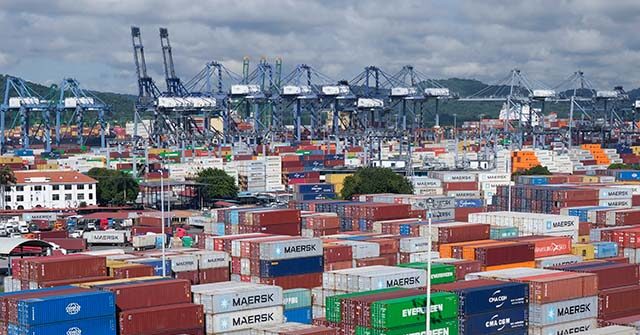
On Thursday, Panama’s top court ruled that two contracts signed in 1997 between the Panamanian state and Panama Ports Company (PPC), a subsidiary of Hong Kong-based Hutchison Port Holdings, were unconstitutional. The controversial contracts granted PPC a 25-year lease for the development and administration of two ports at opposite ends of the Panama Canal, one is located at the province of Balboa and the other in Cristóbal. The now-nullified lease had been automatically renewed for an additional 25-year period in 2021.
PPC’s control of the two ports has been widely described by international outlets as an example of the growing influence of China’s communist regime in the important interoceanic trade route. The controversial contracts were at the center of an ongoing debate started by President Donald Trump shortly before the start of his second term over China’s alleged growing influence and control of the Panama Canal.
The Panamanian newspaper La Prensa reported on Monday that the two ports handled nearly 40 percent of all container cargo traffic transiting through the Canal.
The Supreme Court’s ruling follows a roughly one-year-old process that started in February 2025 after the nation’s Attorney General Luis Carlos Gómez determined that the PPC contracts for the Balboa and Cristóbal ports presented numerous violations and irregularities that gave the company “disproportionate rights” over the management of the ports. Gómez suggested that the top court declared the two contracts as unconstitutional. Months later, in April, Comptroller General of Panama Anel Flores started a criminal complaint process against PPC, accusing it of causing roughly $1.2 billion in financial damages to the country as well as several instances of breach of contract.
Flores presented a lawsuit against the contracts in July 2025 leading to last week’s Supreme Court ruling declaring both the original 1997 contracts and their 2021 renewals as unconstitutional.
U.S. Secretary of State Marco Rubio celebrated the ruling through a brief social media post indicating that the United States is “encouraged” by the top court’s decision against the China-linked contracts. America’s celebratory stance toward the rulings heavily contrasts that of Chinese authorities, who have heavily criticized the Panamanian top court’s decision.
PPC criticized the ruling shortly after the Supreme Court’s announcement, claiming that it “lacks legal basis” and is “inconsistent” with the legal framework of the original 1997 contract. Hours later, Chinese Foreign Ministry spokesman Guo Jiakun said that “China will take all measures necessary to firmly protect the legitimate and lawful rights and interests of Chinese companies.”
According to the Chinese state-owned Global Times, a Hong Kong government spokesperson condemned the ruling, and said that the HK government “strongly opposes any foreign government’s use of coercion, pressure or other unreasonable means in international economic and trade relations, stressing that such actions seriously undermine the lawful business operations and legitimate rights of Hong Kong enterprises in the locality.
“Such moves will also severely damage the local business environment, inevitably shake investor confidence, and harm bilateral relations as well as the long-term economic development of both sides,” the spokesperson reportedly said.
La Prensa reported over the weekend that APM Terminals, a subsidiary of Danish shipping company Maersk, will temporarily take control of the two ports from PPC until authorities determine the structure and terms of a new lease agreement. PPC will administer the ports until the ruling is executed.
“We’ve made clear China’s position on relevant ports in Panama. China will firmly safeguard the legitimate and lawful rights and interests of Chinese companies,” Chinese Foreign Minister Spokesperson Lin Jian told reporters on Monday when asked for comment on Maersk’s comment on the developing situation.
Christian K. Caruzo is a Venezuelan writer and documents life under socialism. You can follow him on Twitter here.