A pro-Iran government in Baghdad will compromise US development plans for Iraq.
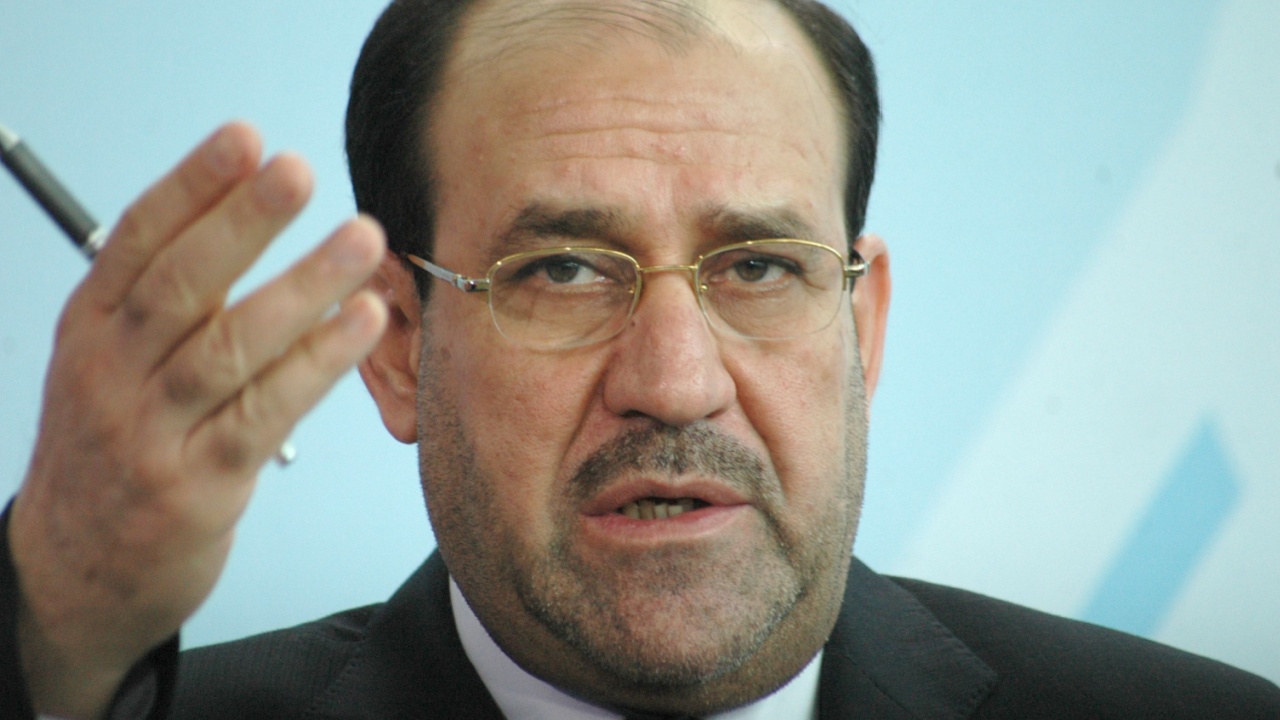
The man Iraq’s Shia leadership picked as their candidate to lead the country, former prime minister Nouri al-Maliki, won’t get an American nod of approval. Maliki was announced on January 24, two and a half months after the country’s parliamentary election, and only three days later, President Donald Trump objected, saying, “If [Maliki is] elected, the United States of America will no longer help Iraq.”
Despite the announcement by the Coordination Framework, the Shia bloc that led Iraq’s previous government, Maliki’s selection doesn’t mean he’ll necessarily get the job. The Coordination Framework resolved its internal deadlock by selecting Maliki, but it did not reach full consensus on the choice. This could complicate Maliki’s navigation of the remaining hurdles in Iraq’s multi-step government formation process, and Trump’s objection certainly doesn’t help his chances.
Regardless of Maliki’s success, it’s unlikely that whoever takes over in Iraq will be their own man. And it’s not just about Trump and the United States; the Islamic Republic of Iran’s influence is felt everywhere in Iraq.
The Trump administration has high hopes for Iraq in the coming years, which range from wresting the country from Tehran’s clutches to promoting development and economic growth. Unfortunately for the White House, Iran-backed Shia parties were big winners in the November elections. Just days after the ballots were cast, the Coordination Framework declared itself the largest bloc and announced its intention to form the next government.
Some members of the framework represent militias tied to Iran, which have enormous power over the country. Still, Washington has reportedly sent the message to Iraq that it should have no place in the next government. In practice, this is reported to mean that the prime minister and major cabinet members cannot come from armed groups.
Though Maliki is not a member of an Iran-backed militia, he has served as a political “godfather” and advocate of the militias and their aligned political parties throughout his career. Maliki founded the Popular Mobilization Forces (PMF), an official Iraqi security institution comprised mostly of Iran-backed militias, in 2014 to formalize the militias’ role amid the fight against the Islamic State. The PMF has legitimized, enabled, and supported Iran-backed militias, including US-designated Foreign Terrorist Organizations that killed American servicemembers, in expanding their influence in Iraq.
The Coordination Framework has already elevated militia-aligned figures. In early leadership selections, the coalition’s choice of First Deputy Speaker, Adnan Fayhan al-Dulaimi, was cause for alarm. Dulaimi is not only affiliated with a US-designated terror group, Asaib Ahl al-Haq (AAH), but was involved in the 2007 Karbala attack, where AAH forces killed one US servicemember and then kidnapped and executed four more.
Certainly, it would be a win for the United States—and Iraqis—if the new leadership were not associated with militias, but this red line won’t remove the entrenched influence of Iran-aligned actors in key government ministries and segments of the economy, especially under a Maliki government.
Since the Coordination Framework itself has Iran’s backing, Tehran’s favorite militia leaders and politicians will have a seat at the table for every major decision, which certainly doesn’t create an environment conducive to Washington’s hopes for disarmament.
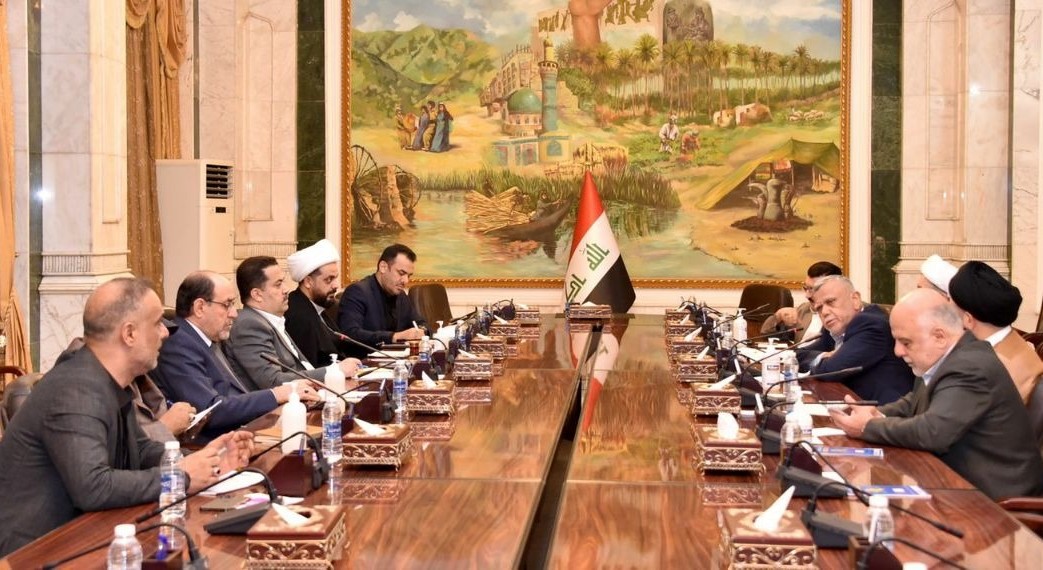
The Coordination Framework itself doesn’t stand up well to American calls not to include Iran-backed militia leaders. In nearly every picture of framework leadership meetings, Qais Khazali, the leader of AAH, is sometimes seated next to the then-prime minister. The group has claimed thousands of attacks against American and coalition forces since the 2003 US invasion. Khazali, easily recognizable with his white turban, is himself a designated terrorist and, before his attempt to rebrand as a politician, was arrested for ordering the 2007 attack in which al-Dulaimi was involved. Khazali expressed pride in this terror attack just this year.
Another prominent leader, often sitting front and center at meetings, is Hadi al-Amiri, a veteran militia leader and secretary general of the Badr Organization. Iran’s Islamic Revolutionary Guard Corps (IRGC) founded Badr in the early 1980s, and it has advanced Iran’s interests militarily and through state capture ever since. Amiri has described Iranian Supreme Leader Ali Khamenei as “the leader not only for Iranians but the Islamic nation.”
These aren’t the only concerning members of the Coordination Framework’s leadership. The political wing of Kataib Hezbollah, one of the most violent Iran-backed, US-designated Iraqi terrorist groups, is party to the bloc, and many other leaders of the Shia establishment have ties to Iran-backed organizations.
This cast of characters will drive decision-making in Iraq under a Maliki government, or under any other Coordination Framework-approved prime minister, if Iraqis heed Trump’s warning and do not select Maliki.
The Trump administration should view whomever the Shia leadership puts forward—in any role—with caution. To promote a genuine partner for the West, Iran’s powerful allies in Iraq need to be sidelined not only in government positions but also in the Shia decision-making body, the Coordination Framework.
This isn’t a problem that the United States, or Iraqis, tired of Iran’s exploitation of their country, can solve overnight. In the meantime, it is important to add up small wins—such as prohibiting Iran’s closest allies from powerful government roles—that decrease Iran’s stranglehold on the country and erode the militias’ power.
About the Author: Bridget Toomey
Bridget Toomey is a research analyst at the Foundation for Defense of Democracies (FDD), focusing on Iranian proxies, specifically Iraqi militias and the Houthis. Prior to joining FDD, she was a Fulbright fellow in Israel, where she completed an MA in security and diplomacy at Tel Aviv University. During her undergraduate studies, she interned for the American Enterprise Institute’s Critical Threats Project and for the Senate Foreign Relations Committee. She holds a BA in government with a minor in modern Middle Eastern studies from Harvard. Follow Bridget on X: @BridgetKToomey.
Image: 360B / Shutterstock.com.