The death of Aldrich Ames, earlier this month, went by almost unnoticed. That’s a shame. It’s a name that should never be forgotten—and not for his good deeds. Ames was eighty-four years old when he died in the federal correctional institution in Cumberland, Maryland, where he was serving a life sentence without parole. He had been behind bars since his arrest in 1994. If you don’t know why, you should.
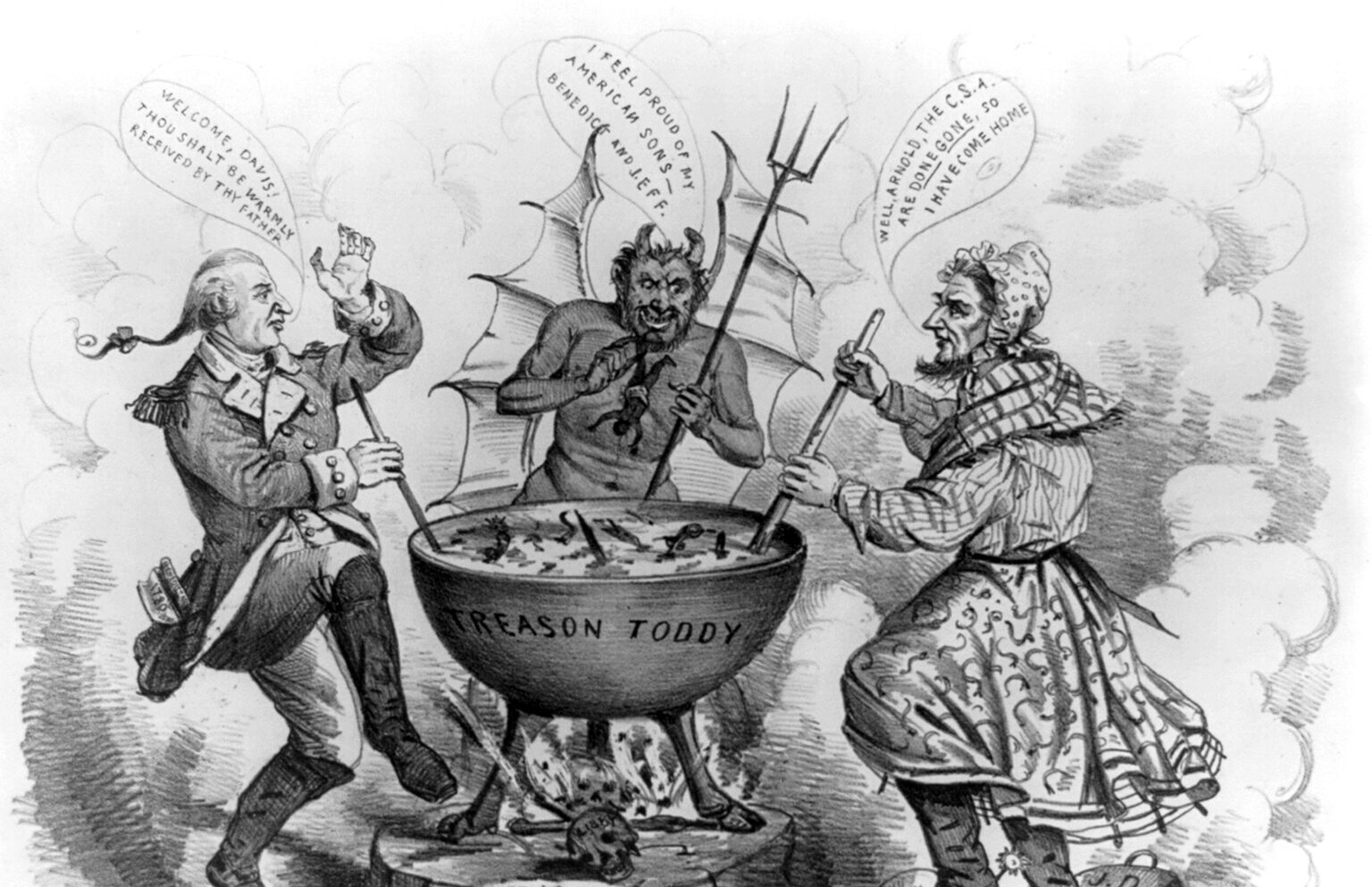
Throughout the 250-year history of the United States, the name always synonymous with treason has been that of Benedict Arnold. I still remember hearing it on the playground when I was growing up. If someone was going to snitch or change sides, the phrase was “Don’t be a Benedict Arnold.” None of us knew the details of Arnold’s behavior; we just knew we shouldn’t be like him.
In fact, Arnold was a major general in the Continental Army, who served with distinction and had the full trust of his commander, George Washington. But Arnold was a turncoat, a man with no real allegiance to either side. He planned to surrender the fort at West Point to the British, until that plot was discovered. He then defected and served in the British forces, fighting the army he once commanded. After Britain lost the war, Arnold made his way to London, where he lived until his death in 1801. The main reasons for Arnold’s defection were twofold. He was miffed because he was passed over for promotion twice. But perhaps the greater impetus was just plain greed—Arnold thought he deserved more than he was given. Political loyalties to the Crown or the colonists were secondary.
After 250 years, I believe we can retire Benedict Arnold’s name and replace it with that of Aldrich Ames. Ames was a career CIA officer who never really distinguished himself as exceptionally bright. Like his father, also a CIA officer until he was fired, Ames was a drunk. Still, he rose in the ranks despite negative reviews. He failed upwards, mainly because he was personable and fit in. Ames eventually became chief of the counterintelligence branch of the Soviet Division. This gave him access to our most sensitive secrets during a dangerous period in the Cold War. He knew the names of every Russian working on behalf of the United States.
In 1985 Ames realized he could make a handy profit by selling these names to the Soviets. The excuses for what became the greatest betrayal in the history of the CIA varied from arrogance to alcoholism to delusions of grandeur. In the end, as with Arnold, it came down to nothing more than greed. Ames thought he deserved a better life.
The Soviets provided that. For giving up the names of numerous American assets (perhaps as many as eight, who were then tortured and executed), as well as highly classified secrets, Ames was rewarded with more than two million dollars. For his betrayal, he reaped a larger home, fancy cars, and vacations. His wife, who clearly knew the source of this windfall and had no problem with it either, was given a five-year prison sentence.
Eventually, a lower-level counterintelligence analyst, Sandra Grimes, at one time in charge of the CIA’s secretaries and clerks, figured out what Ames was up to. As the CIA became increasingly concerned that its assets were disappearing, agents came to the conclusion that there was a mole inside the agency. Yet it was Grimes who put two and two together when she noticed Ames had deposited nine thousand dollars into his bank account on three occasions after long lunches at the Soviet embassy. James Bond spycraft, it wasn’t.
“It doesn’t take a rocket scientist to tell what is going on here,” Grimes, who died this past August, told her colleagues, “Rick is a goddamn Russian spy.”
There is enough blame to be shared all around. Every organization, every office, every business has employees who are detrimental to the work performed. But the CIA should have been more vigilant. Ames proved to be a deadly embarrassment.
I remember when the story broke in 1994. I was talking about it with my father, a man whose only connection to Washington was as a tourist. But he was also a World War II veteran. I will always remember how inconceivable the actions of someone like Ames were to him. “Selling out your country . . . for money?” he said, shaking his head in disbelief.
My wish is that kids on future playgrounds will retire the name Benedict Arnold and instead warn each other not to be “an Aldrich Ames.”