Catholic observers point out the distinction between Protestant and Catholic understandings of Zionism.
The condemnation of Christian Zionism by the Council of Patriarchs and Heads of Churches in Jerusalem is prompting varied reactions by Catholics in the U.S., Israel, and Rome.
In a statement last week, the council — comprised of the leaders of the historic Christian churches in the Holy City, including the Latin patriarch; the Maronite, Melkite, Syriac, and Armenian Catholic patriarchs; the Armenian Orthodox patriarch; the heads of the Coptic and Greek Orthodox churches; and leaders of the Lutheran and Anglican churches — denounced Christian Zionism as a “damaging ideology.”
In its statement, the council — which meets to consult and issue joint statements and positions related to political and humanitarian developments, the protection of holy sites, and the defense of the Christian presence and church rights in Jerusalem and the Holy Land — specifically identified Christian Zionism as a threat to the Christian presence in the region.
The Church leaders referenced “recent activities undertaken by local individuals” identified with Christian Zionism that “mislead the public, sow confusion, and harm the unity of our flock.” The leaders are believed to be referencing the activities, among others, of Ihab Shlayan, chairman of the Israeli Christian Voice.
In a statement to EWTN News, Shlayan rejected charges that his work undermines ecclesiastical authority as “false and misleading,” saying that he respects the clergy and maintains good relations with the Patriarchs and Heads of Churches. Shlayan describes himself as “a believing Christian” who prays “in both traditional and evangelical churches.”
Amid the controversy, the Jewish News Service reported that the Latin patriarch of Jerusalem, Cardinal Pierbattista Pizzaballa, had not been a party to the statement, prompting speculation about the Latin Patriarchate’s stance.
However, a political and media adviser to the Latin Patriarchate of Jerusalem told ACI MENA, the Arabic-language sister service of EWTN News, that the Latin Patriarchate fully agrees with the statement issued by the Patriarchs and Heads of Churches.
For his part, Auxiliary Bishop William Shomali, the general vicar of the Latin Patriarchate in Jerusalem, explained to ACI MENA that statements of this nature are typically issued collectively in the name of the ecclesial body and not published individually under each patriarch’s name.
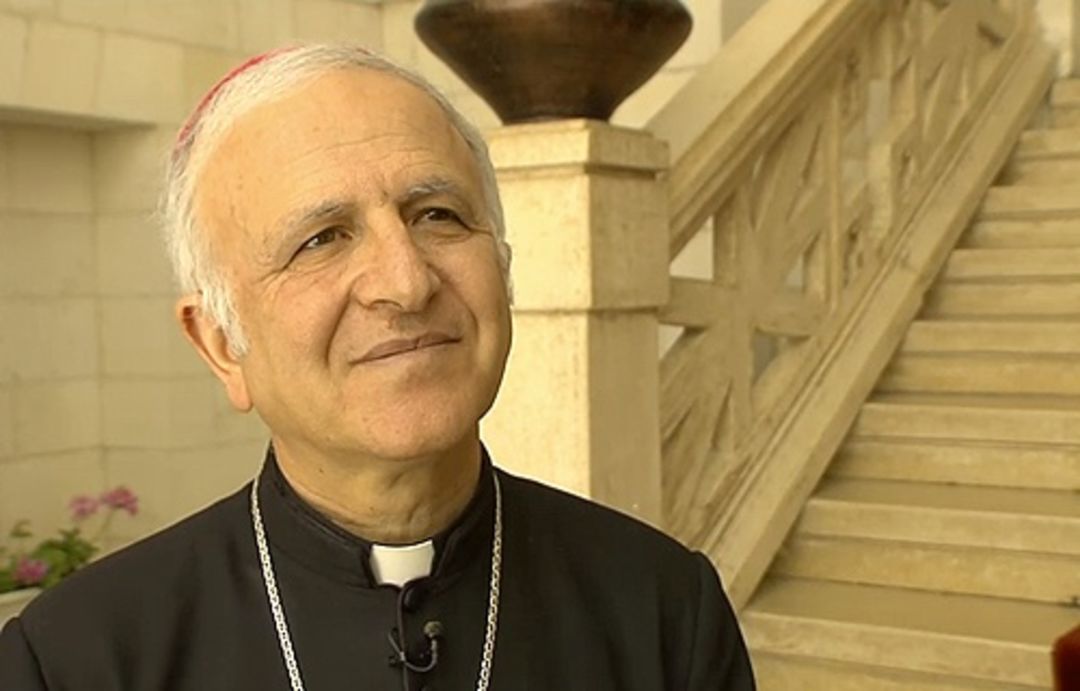
In remarks to Al Jazeera Net, Shomali also warned of the dangers posed by Christian Zionism, stating: “The church leaders are criticizing an ideology that defends one side over another and grants rights to one party while denying them to another. This is unacceptable.”
Shomali continued: “It is well known that Christian Zionism supports extremist Zionist thought against the rights of the Palestinian people. Those who promote it claim to represent the Christian view, while in reality they are a minority. The true representatives of Christianity in the Holy Land are the heads of the churches.”
He noted that some individuals seek, through official visits or partial demands, to gain media and political legitimacy, stressing: “We say clearly that they represent only themselves.”
Additional responses
Several Catholic observers in the U.S. and Israel also addressed what the principal Church leaders of the Holy Land mean by “Christian Zionism.”
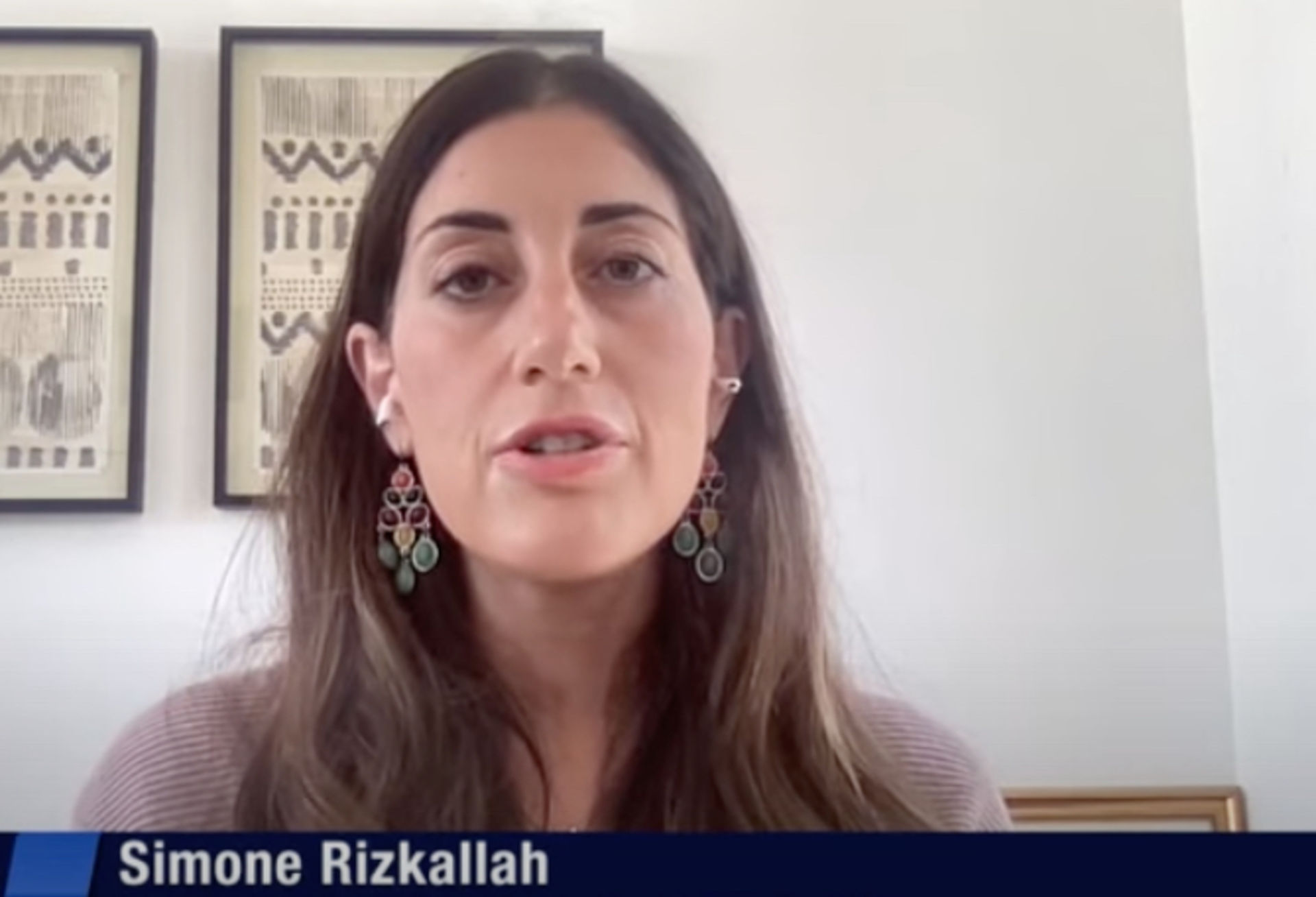
According to Philos Catholic Director Simone Rizkallah, “when the patriarchs and other church leaders speak against ‘Christian Zionism,’ they are primarily addressing Christian Zionism as it is commonly understood in Protestant circles.”
“This theological framework, rooted in evangelical and dispensationalist thought, interprets the modern State of Israel mainly through end-times narratives, often flattening both Jewish history and Christian theology into a schematic eschatology,” she told EWTN News.
Philos Catholic is the Catholic wing of the Philos Project, an ecumenical Christian nonprofit organization that advocates for pluralism and Israel’s peaceful existence in the Middle East.
While the Catholic Church recognizes the connection the Jewish people have to their ancestral homeland, Rizkallah explained, it rejects certain Protestant theology that asserts the modern state of Israel as it is today as a fulfillment of biblical prophecy. Rather, she said, the Catholic Church sees the modern state of Israel as having developed freely.
‘Rejecting Protestant Christian Zionism does not require rejecting Zionism altogether’
“Rejecting Protestant Christian Zionism does not require rejecting Zionism altogether, nor does it excuse Catholic ambivalence toward the Jewish people’s return to their ancestral homeland,” Rizkallah said. “Catholics possess their own intellectual and moral inheritance here — one that neither baptizes modern geopolitics nor treats Jewish attachment to the land as theologically meaningless.”
“Pope Benedict also advances a claim many Catholics find uncomfortable: that there is something mysterious, even providential, about the modern return of the Jewish people to the land of Israel,” she continued. “This is not a political endorsement, nor a theological endorsement of every action of the modern state. It is an acknowledgment that history, theology, and prophecy sometimes converge in ways that resist easy classification.”
Rizkallah emphasized that “a Catholic should read the patriarchs’ statement as merely condemning the Protestant framework,” pointing out that the distinction between Catholic and Protestant understandings of Zionism “matters deeply.”
Citing scholars such as Dominican Father Thomas Joseph White and Gavin D’Costa, whom she said “articulated what might be called a ‘minimalist’ Catholic Zionism,” Rizkallah underscored that the Catholic conversation surrounding Zionism can uphold the legitimacy of the modern state of Israel without adopting Protestant claims.
“There is space in Catholic theology for our own approach to the Jewish people and the Holy Land, and clarity on this distinction is essential for faithful dialogue,” she said, concluding: “Taken together, this statement is less a political position than a pastoral and theological clarification. For U.S. Catholics in particular, it is an invitation to deepen formation, speak about Israel and the Jewish people with care, and avoid collapsing Catholic teaching into imported Protestant frameworks.”
Weighing in on the controversy in First Things, D’Costa, a professor at the Angelicum and specialist in Jewish-Catholic relations, said “the core concerns of the 2026 statement are legitimate.”
“The current Israeli government includes religious Zionist figures such as Itamar Ben-Gvir and Bezalel Smotrich, who claim that Gaza and the West Bank belong to Israel and who envision the departure of Palestinians from these territories. Were such views to prevail, the likely outcome would be the disappearance of Arab Christian communities from the occupied territories,” D’Costa indicated.
For his part, the president of the Association of Hebrew Catholics International, Yarden Zelivansky, a Jewish convert to Catholicism and member of the Israel Defense Forces (IDF), told EWTN News: “As Catholics of Jewish origin, we seek to bear witness to Christ from within the Church’s communion, in continuity with her teaching and free from ideological distortions of the Gospel.”
“In this context, we believe it is important to distinguish clearly between so-called Christian Zionism — a theological framework that instrumentalizes Scripture and the Jewish people in service of an eschatological or political agenda — and the legitimate holding of political Zionist convictions by individual Christians, which, like other political positions, belongs to the prudential order rather than to doctrine,” he said.
The Association of Hebrew Catholics was founded in 1979 by Carmelite Father Elias Friedman, a Jewish convert to Catholicism who lived in Haifa, Israel.
Zelivansky expressed concern over “imprecise or ambiguous language” in public discourse, which he said has contributed to validation of antisemitic ideas and hostility toward Jews, including Jewish followers of Christ.
“The Association of Hebrew Catholics advances no political theology and claims no authority outside the Church, but exists to foster integration, pastoral accompaniment, and truthful dialogue, confident that clarity, charity, and mutual understanding strengthen authentic ecclesial unity,” he said.
ACI MENA, the Arabic-language sister service of EWTN News, contributed to this report.
If you value the news and views Catholic World Report provides, please consider donating to support our efforts. Your contribution will help us continue to make CWR available to all readers worldwide for free, without a subscription. Thank you for your generosity!
Click here for more information on donating to CWR. Click here to sign up for our newsletter.