Among the great figures of the early medieval Church, few are as remarkable, and frequently as neglected, as the figure of John Scotus Eriugena. Born in Ireland around the beginning of the ninth century, Eriugena stands as the summit of Irish monastic learning, Greek patristic theology, and the emerging intellectual life of Christian Europe. In an age often caricatured as intellectually barren, he produced some of the most ambitious theological works of the young Middle Ages. Yet, his name is rarely mentioned outside academic and medievalist circles.
Very little is known about Eriugena’s early life. His epithet Scotus, which in the 9th century referred to an Irishman, places him firmly within the vibrant world of Irish monastic scholarship. The Irish Church produced many scholars with this epithet: Aaron Scotus, Marianus Scotus, Joseph Scottus, etc. This was not an arbitrary post nominal; Irish monasteries preserved classical learning and cultivated a rigorous engagement with the Scriptures, language, and philosophy, and as such Irish scholars were known for their intellectual and academic rigor. From this cultural milieu, Eriugena emerged as a thinker unusually at home in Greek as well as Latin, a rare skill in the Western world at the time.
Sometime in the early-to-mid 9th century, Eriugena was invited to the court of the Emperor Charles II the Bald. There he served as a teacher and translator, rendering key Greek theological works into the more familiar Latin so that they could be distributed across the empire. Most significant among these were the writings attributed to St. Dionysius the Areopagite, whose works on mystical theology would shape Christian thought for several centuries to come. Through the works of Eriugena, the riches of the Greek Fathers—St. Gregory of Nyssa, St. Maximus the Confessor, and various other Byzantine works—entered more fully into Catholic Latin thought.
Eriugena’s most important work, known as the On the Division of Nature (also called the Periphyseon), is a vast theological dialogue that attempts nothing less than a comprehensive account of the fabric of reality. For Eriugena, all things are encompassed within what he calls “nature,” which includes God, the creative world, and humanity’s own moral constitution. This is not nature in the modern, materialist sense, but reality understood as flowing from and returning to its divine source.
At the heart of the Periphyseon lies a striking confidence in the harmony of faith and reason, something which Eriugena would help lay the foundations for, and would later evolve into Scholasticism in the high middle ages. Eriugena insists that human reason and scriptural authority cannot contradict one another, since both ultimately come from God. Reason is not a threat to faith, nor faith an obstacle to our understanding of the material world. Rather, our natural reason is a gift that allows the believer to enter more deeply into the mysteries revealed by God. God’s “sciences” are therefore fundamental to the life of the Church, and our reason should be developed through the acquisition of skillful knowledge.
It would be this justification that would be utilized by the Church to found Europe’s ancient universities, and more directly, the French Catholic school system, founded by the Carolingians, which lasted until its disestablishment in 1905.
Eriugena’s theological vision is profoundly shaped by the biblical narrative of creation and the message of Christian redemption. Creation, for him, is not a one-time event consigned to the distant past, but an ongoing theophany. That is to say, a continuous self-manifestation of God present in the world. Every creature, from the highest angel to the smallest blade of grass, reflects something of the divine goodness and wisdom in it.
Humanity occupies a unique place in this vision. Created in the image of God, the human person is a microcosm of the whole creation, an icon of the living God, uniting the spiritual and material realms together. The Fall of Man, in Eriugena’s account, is not solely a moral lapse, but a darkening of moral understanding, a turning away from the contemplation of the vision and the presence of God toward the fragmentation of the material world.
Through Christ, the eternal Word made flesh, creation is gathered up again and restored to its proper place. Salvation is described not only in juridical or moral terms, but as a return (reditus) to our true origin in God. This return is ultimately eschatological, but it begins even now through prayer, sacramental life, and the renewal of the mind. When Eriugena speaks of creation’s return to God, he does not deny the reality of distinction, but seeks to articulate the fullness of communion promised in Christ, when God will be “all in all” (1 Cor. 15:28).
In a fragmented cultural moment, Eriugena offers a vision of integration. He refuses to separate theology from philosophy, spirituality from the intellect, or psychology from the practice of religion. His work still challenges modern audiences, who have the tendency to confine faith to the private sphere, or to reduce theology to moral instruction alone.
For Irish Catholics in particular, Eriugena is the hallmark of the profound contribution Ireland has made to the intellectual life of the universal Church. Long before the formal founding of the universities of Paris or Oxford, Irish scholars were engaging the deepest questions of faith with creativity and scholarship. Eriugena stands among them as a figure of international stature, whose thought continues to reward careful reading. As such, he has been periodically honored domestically and abroad. The Central Bank of Ireland placed him on a banknote in 1976, where he remained until the euro was adopted in 2002. University College Dublin has also placed a statue of him on their campus, commemorating his academic achievements.
Even the late Pope Benedict XVI made note of the achievements of Eriugena in 2009, saying, “John Scotus Eriugena was a man of outstanding culture, endowed with an extraordinary intellectual boldness. He knew how to keep together, in a creative synthesis, the heritage of Greek and Latin thought.”
Recovering the forgotten wisdom of John Scotus Eriugena does not require an in-depth understanding of the body of his works, or adopting all his formulations and entering every medieval debate. For those interested in Eriugena, it requires the art of learning again how to think theologically with confidence: trusting that truth is one, that creation is meaningful, and that the God who reveals Himself in the person of Christ invites us to understanding. In honoring and remembering John Scotus Eriugena, we recover something of the forgotten wisdom that he left as his legacy to the world.
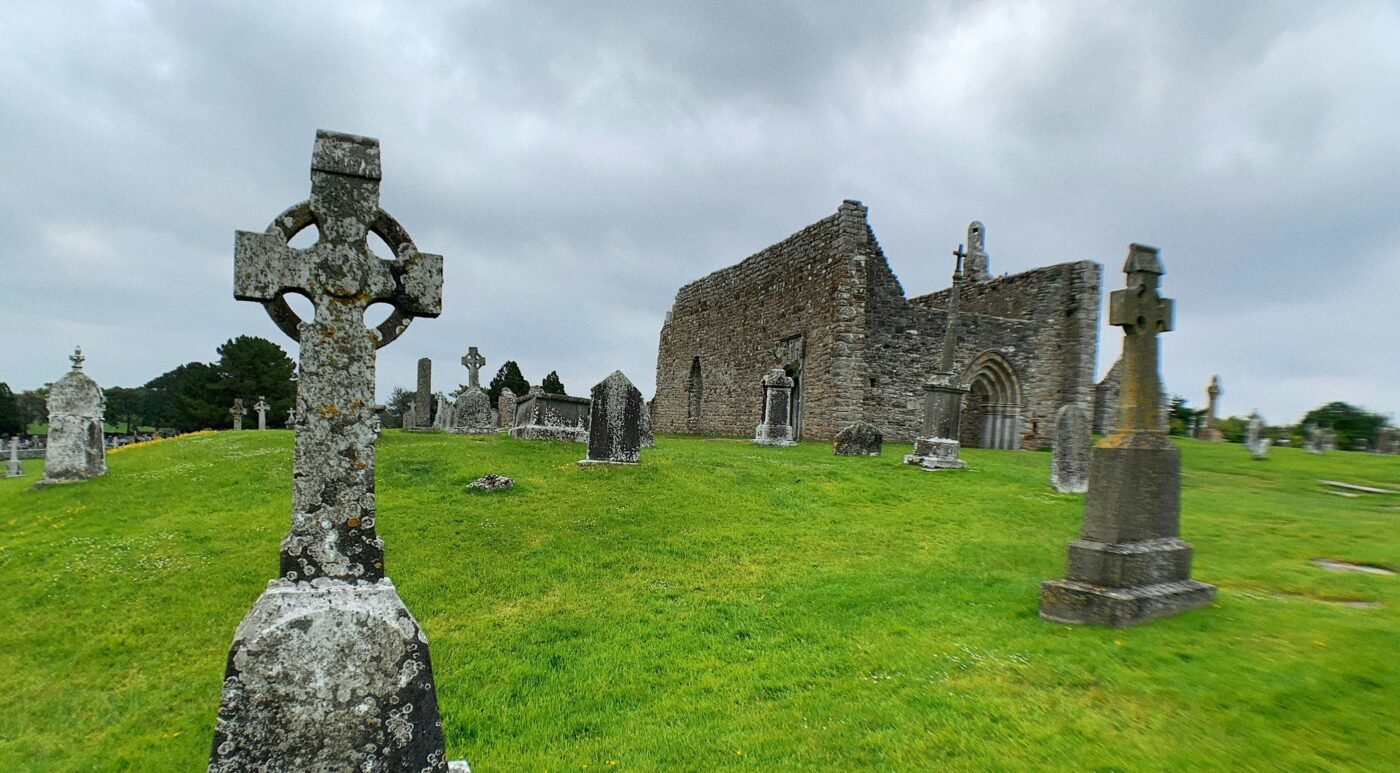
Photo by Tommy Bond on Unsplash