Despite many US inducements, Crown Prince Mohammed bin Salman has turned away from normalization with Israel and broader US alignment in the Middle East.
Driven largely by their shared fears of Iran’s hegemonic ambitions, Israel and Saudi Arabia inched closer to one another in recent years, cooperating on regional matters and raising hopes in both Jerusalem and Washington that Riyadh would soon agree to normalize relations with the Jewish state fully.
In a sense, Saudi-Israeli normalization (that is, the establishment of standard diplomatic relations) between them could represent a fitting capstone to the extraordinary regional developments that unfolded after Hamas’ slaughter of 1,200 Israelis on October 7, 2023. Israel’s broad military response severely weakened not only Iran but also the most important terrorist proxies in its “axis of resistance,” Hezbollah and Hamas. All of that greatly benefited both Riyadh and Jerusalem by significantly reducing the military threat that Tehran posed.
In the tumultuous Middle East, however, coalitions come and go, new alliances arise in response to perceived new threats, and hopes for long-term regional stability fall victim to the new ambitions of key players.
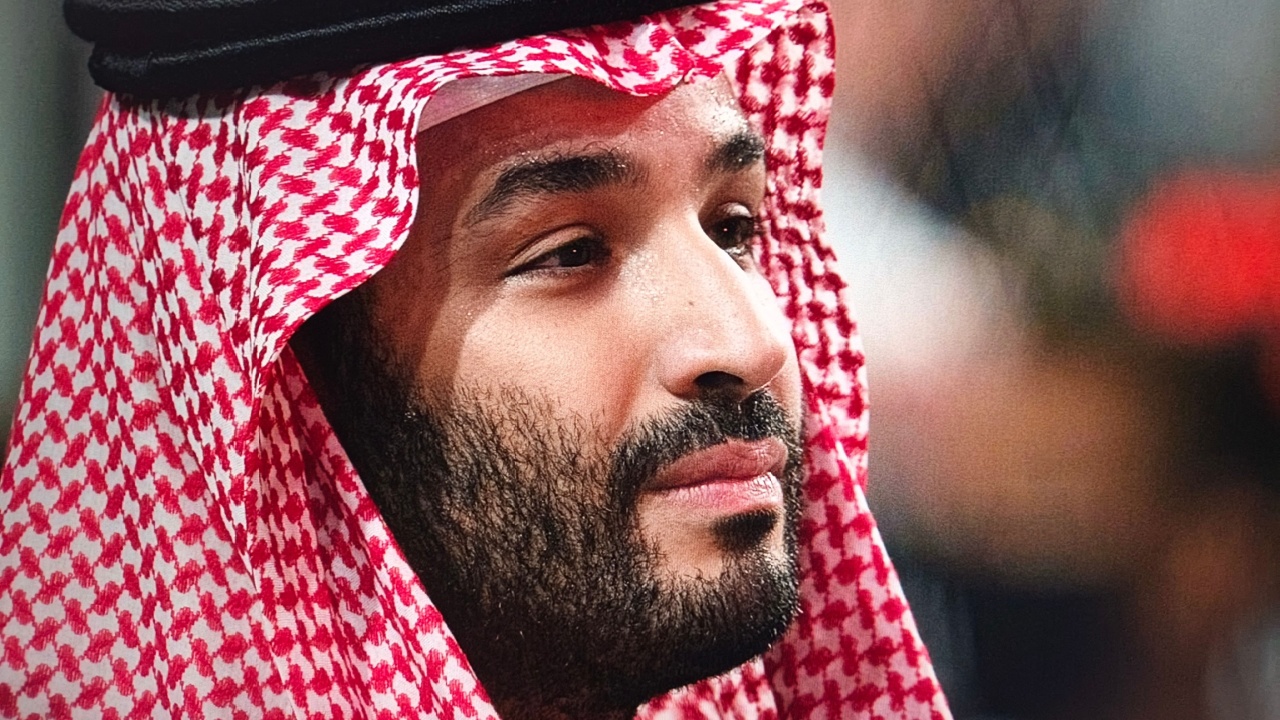
So it is with the Saudi-Israeli relationship. Riyadh and Jerusalem are no longer on a path to normalization, as they seemed to be in the days leading up to October 7. Recently, Saudi crown prince Mohammed bin Salman (MBS) has been harshly criticizing Israeli behavior and building a new regional bloc to counterbalance the growing alliance between Israel and the United Arab Emirates (UAE).
The Saudi turn away from Israel has huge implications not only for Jerusalem, which must reckon with a new set of regional dynamics, but also for Washington. President Donald Trump hoped that Saudi-Israeli normalization would open the door for many more Arab countries to join the US-brokered Abraham Accords (as Israel’s 2020 peace agreements with the UAE, Bahrain, Morocco, and Sudan are known).
Over the last year, a still-hopeful Trump praised MBS in lavish terms while showering Riyadh with military and economic goodies. In November, Trump approved the sale of up to 48 F-35 advanced stealth fighter jets and nearly 300 tanks to Riyadh, while he and MBS agreed to expand trade relations and reduce barriers to investment in their respective nations.
In light of recent Saudi moves, however, Washington would be wise to step back, ponder Saudi activities, and perhaps reconsider the F-35 deliveries, which Congress must approve and which wouldn’t begin for several years anyway. Jerusalem was already concerned that F-35s in Saudi hands would threaten its qualitative military edge (QME) over regional rivals, a concern Washington has consistently sought to address. A Saudi Arabia that’s increasingly hostile to Israel will only heighten those concerns.
MBS had conditioned Saudi-Israeli normalization on, at the very least, Israeli moves that would advance Palestinian statehood, but his broader strategic turn away from the Jewish state seems driven far more by domestic politics and regional developments. At home, he faces opposition to normalization from Saudi princes who view Israel as less a partner than a competitor, from religious leaders who retain their venom against Jews, and from young Saudis who overwhelmingly blame Israel for the bloody aftermath of October 2023.
Viewing the region, MBS sees a much-weakened Iran (thus, reducing Riyadh’s need for Israel’s military muscle) and an Israel that—in its efforts not just to weaken Iran and its proxies but also to strike Hamas leaders in Doha and shape a post-Assad Syria—seems to have its own hegemonic ambitions.
But even before October 2023, when the dramatic changes followed, Riyadh was laying the groundwork for a regional reshuffle. In March of that year, Riyadh and Tehran announced their own re-normalization after a seven-year break, and it’s proving resilient; this past April, the Saudi defense minister visited Tehran for talks with top Iranian officials, including Supreme Leader Ali Khamenei.
As it turns against Israel, Saudi Arabia is also turning against Israel’s increasingly close partner, the UAE, marking “a dramatic shift in the regional balance of power.” The Saudis, who back the internationally recognized government of Yemen, in recent weeks struck UAE-backed rebels in that war-torn country.
More broadly, Riyadh is working to offset Abu Dhabi’s growing influence near the Red Sea and Horn of Africa, and to expand its other alliances—working, for instance, to expand security cooperation with Egypt and Somalia.
Fearing less from Iran and more from Israel and the UAE, Saudi Arabia is fostering closer ties to Turkey.
Turkey’s efforts to join a defense pact that Saudi Arabia inked with Pakistan in September—which includes a mutual defense clause that’s akin to NATO’s Article V—could presage “a Turkey-Saudi axis backed by a NATO-like defense architecture, implicitly aligned against Israel and the United Arab Emirates.”
All in all, the US hopes of nurturing stronger ties with Riyadh and finalizing Saudi-Israeli normalization are running up against MBS’ domestic constraints and regional ambitions. To protect its own interests, a wise Washington would reassess the shifting landscape and respond accordingly.
About the Author: Lawrence Haas
Lawrence J. Haas is a senior fellow at the American Foreign Policy Council. Previously, he was communications director for Vice President Al Gore and, before that, for the Office of Management and Budget. Haas is a frequent public commentator. His work has appeared in The New York Times, The Wall Street Journal, USA Today, The Los Angeles Times, and scores of other newspapers. He is the author of, among other books, Harry and Arthur: Truman, Vandenberg, and the Partnership That Created the Free World.
Image: Fotofield / Shutterstock.com.