The Fujian is undoubtedly impressive—but its aircraft sortie rates still trail far behind comparable US carriers due to a handful of critical design flaws.
For the People’s Liberation Army Navy (PLAN) and its efforts to increase the capabilities of its aircraft carriers, the third time wasn’t exactly the charm.
Beijing has apparently acknowledged that the Type 003 CNS Fujian has significant design flaws, and addressing the issues will require radical changes to the next aircraft carrier. Chinese military analysts writing for the Shipborne Weapons Defense Review highlighted several areas of concern, according to a report from the South China Morning Post.
CNS Fujian is the PLAN’s third aircraft carrier, the second domestically built in China, but it is also the first to be domestically designed. Although Beijing wasn’t starting from scratch, having learned lessons from the Soviet-built, indigenously-refurbished Type 001 CNS Liaoning and the domestically-built Type 002 CNS Shandong, it attempted to leapfrog US Navy carriers in some respects. That may have been an overly ambitious goal.
The Fujian Doesn’t Have Enough Catapults
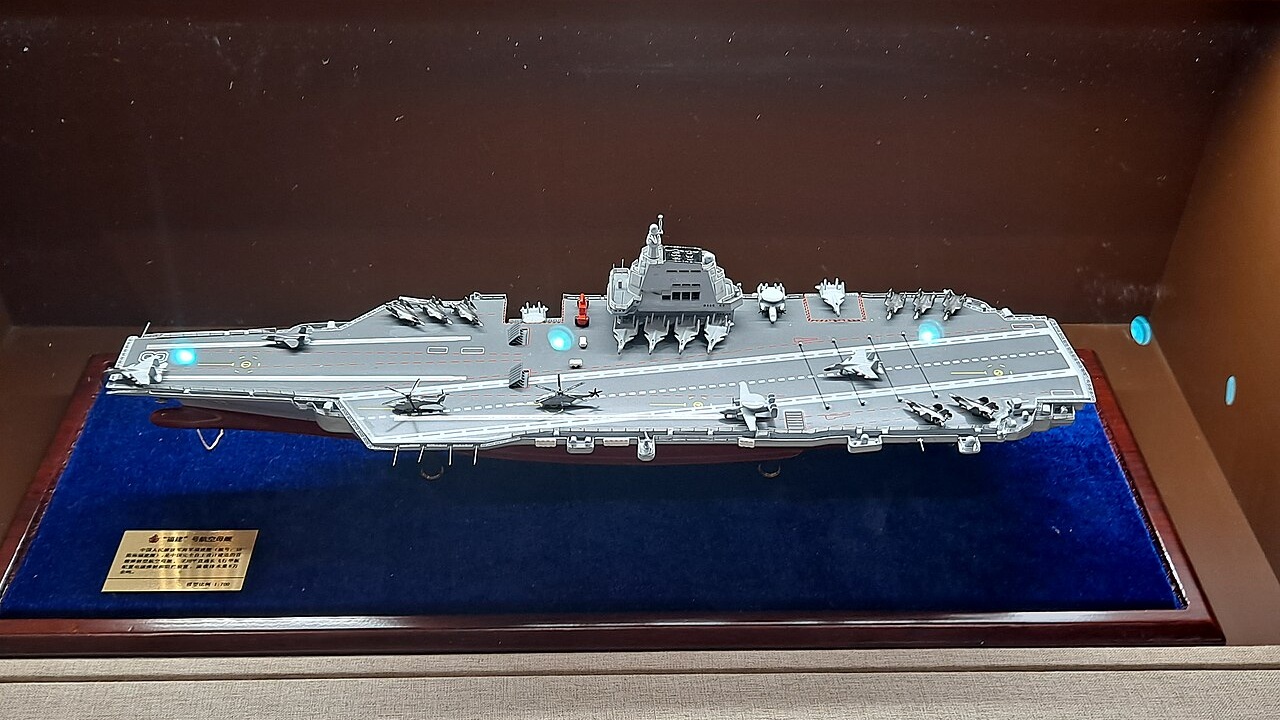
The Type 003 supercarrier displaces more than 80,000 tonnes, and is now the world’s largest conventionally-powered warship. It is also the first non-US Navy aircraft carrier to be equipped with advanced electromagnetic catapults. The technology has been seen to be as effective, and perhaps even more so, than the EMALS catapults on the US Navy’s new Gerald R. Ford-class carriers.
The air wings of the Type 001 and Type 002 were necessarily limited due to those warships employing a ski jump ramp, which can only be used for lighter aircraft. The Type 003’s catapults allow the PLAN’s newest carrier to operate a broader range of planes, ranging from small unmanned aerial systems (UAS) to fifth-generation manned fighters and even heavier surveillance aircraft.
Yet the CNS Fujian, commissioned in November, has just two catapults, compared to the three on the Ford-class. That limits the very efficiency that the systems provide. It is also unlikely that the Chinese warship could support an additional catapult due to its power constraints.
The obvious solution is to make the next carrier nuclear-powered—but that would create its own set of challenges.
Apart from the French Marine Nationale’s flagship, Charles de Gaulle, only the United States Navy currently operates nuclear-powered flattops.
Other Design Flaws in the Fujian
Beyond the shortage of catapults, Chinese analysts specifically called out the placement of the island superstructure, which impacted usable space on the flight deck—creating “bottlenecks” during operations. The superstructure was positioned closer to the middle of the flight deck, the report stated, noting that one of the two catapults was also placed too close to an aircraft elevator.
That placement created a choke point in aircraft movement. All of this is further complicated by the Type 003 CNS Fujian’s shallow-angled flight deck, which is narrower than the US Navy’s supercarriers’.
Issues with the layout reportedly stem from a late design change, which saw the original steam catapults replaced by longer electromagnetic tracks during construction of the supercarrier.
Even as electromagnetic catapults have the potential to offer faster launches than steam catapults, the newest Chinese supercarrier is speculated to have only around 60 percent of the operational tempo of the US Navy’s Nimitz-class, all of which employ steam catapults.
China’s Next Aircraft Carrier Could Be Bigger—and Nuclear-Powered
The SCMP report, citing the Shipborne Weapons Defense Review, suggested that the next PLAN supercarrier will be nuclear-powered to address some of the flaws.
The nuclear reactor would take up less internal space and allow greater flexibility in the flight deck layout, as issues such as the placement of exhaust funnels wouldn’t be a concern.
More importantly, the nuclear reactors could generate far more power—allowing the ship to utilize high-energy sensors, electronic warfare systems, and additional electromagnetic catapults.
There is speculation that the fourth PLAN supercarrier, now known only as the Type 004, will be nuclear-powered, perhaps even larger than the US Navy’s Ford-class, and outfitted with four electromagnetic catapults. If these reports are true, the new carrier could be a great leap forward for Beijing’s naval capabilities.
About the Author: Peter Suciu
Peter Suciu has contributed over 3,200 published pieces to more than four dozen magazines and websites over a 30-year career in journalism. He regularly writes about military hardware, firearms history, cybersecurity, politics, and international affairs. Peter is also a contributing writer for Forbes and Clearance Jobs. He is based in Michigan. You can follow him on Twitter: @PeterSuciu. You can email the author: [email protected].
Image: Wikimedia Commons.