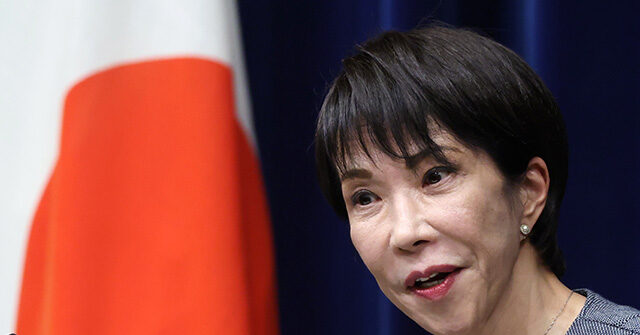
Japanese Prime Minister Takaichi Sanae said on Monday she will dissolve the lower house of the Japanese Parliament on Friday, setting the stage for snap elections on February 8. The next parliamentary election was not scheduled until October 2028.
Takaichi said she made the “very difficult” decision to pull the trigger on early elections because she wants the Japanese people to “decide directly whether they can entrust the management of the country to me.”
“I believe that the only option is for the people, as sovereign citizens, to decide whether or not Sanae Takaichi should be prime minister,” she said at a press conference in Tokyo on Monday.
Takaichi became Japan’s first female prime minister in October, with the help of a reforged political coalition that swapped out her LDP party’s longtime partner Komeito for the Japan Innovation Party, commonly known as Ishin.
Komeito, a center-left Buddhist religious party, was uncomfortable with Takaichi’s tough stance against migration and her desire to strengthen Japan’s military. LDP, long the dominant political party in Japan, was reeling from public disapproval of its economic stewardship and a wide-ranging corruption scandal. A disastrous showing in the previous parliamentary election led LDP Prime Minister Ishiba Shigeru to announce his resignation in September.
Takaichi is faring much better in the polls than Ishiba was. She enjoyed nearly 80-percent personal approval ratings in recent polls, with remarkably low disapproval numbers for her administration. Most of the Japanese public seems to like her, and those who do not are willing to give her a chance.
A possible pitfall for Takaichi is that she polls far higher than LDP, which has a rather tenuous position in the National Diet at the moment. The LDP’s approval rating has not budged from a dismal 30 percent since Takaichi took office.
Takaichi’s bold move to call early elections – the first winter elections in Japan in 36 years – could transfer some of her personal popularity to her party and give LDP enough seats to move legislation without cutting coalition deals.
The Japanese stock market shot to record highs on Monday after Takaichi announced early elections, suggesting that investors believe her gamble will pay off, and make it easier for her to implement the fiscal policies she discussed during her campaign.
Deutsche Welle (DW) said on Monday that Takaichi “has an easy-to-understand plan for revitalizing Japan’s economy and appears to be working hard to put it in place.” Her plan includes a mixture of tax cuts, energy subsidies, and economic stimulus spending. There is good reason to believe voters will smile on her party in the snap elections and give her the legislative strength she needs to fully implement her program.
Another reason for Takaichi’s high approval numbers is her tough stance against China. Some observers thought she might have made a mistake by antagonizing Beijing in November with a strong statement of support for Taiwan, but the polls clearly show Japanese voters rallying behind her.
Takaichi is also an affable, energetic woman who is a decade younger than much of the Japanese political elite, her fun-loving personal style cutting through the gloom that had descended over the LDP during Ishiba’s term.
“The image of a leader, a decisive woman, heading the country could distract from an objective debate over her record since taking office. Social media image campaigns are more likely to motivate voters than dry facts,” Japan expert Axel Klein of German’s University of Duisburg-Essen told DW.
The greatest danger Takaichi faces in the coming snap elections is that the LDP is still unpopular. Komeito, which was very good at dutifully delivering votes to LDP during their long alliance, just joined a new political coalition that plans to campaign as a moderate alternative to Takaichi’s conservatism. Ishin has yet to demonstrate that it can turn out votes as reliably as Komeito did.
At her press conference in Tokyo, Takaichi proposed reducing consumption taxes on food and beverages from eight percent to zero percent for two years, to “ease the burden on low- and middle-income households.” Komeito and its new coalition partner, the Constitutional Democratic Party (CDP), have proposed zeroing out the consumption tax on food permanently.