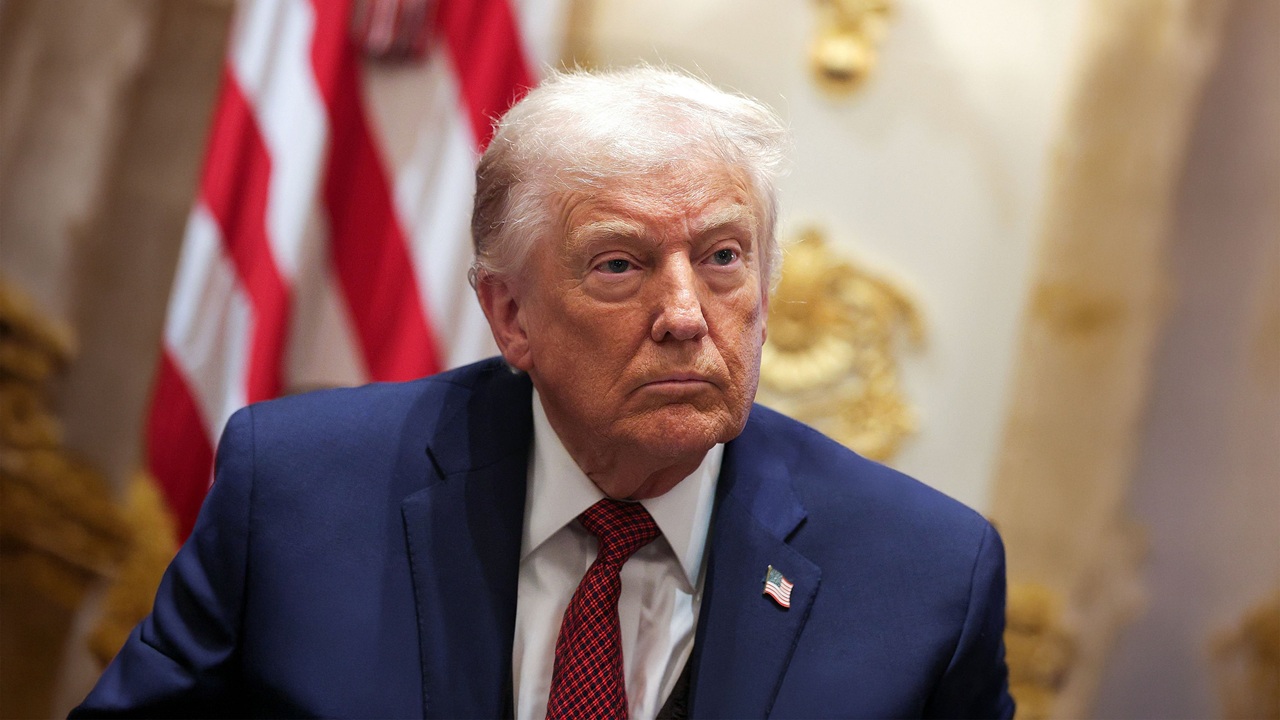
Trump’s decision not to ban Chinese drones from the United States is a clear sign that, at least for the time being, China has America over a barrel on trade.
In recent months, the United States has continued its abandonment of hawkish trade policies with the People’s Republic of China—not because of some great love for China by the Trump administration, but simply because China has the United States in a bind with its dominance of rare earth minerals.
As part of this new conciliatory approach by Washington, the United States has dropped its proposed rule on Chinese drone imports. This move has sent shockwaves through national security circles, seeing as it was national security concerns that initiated the proposed rule on Chinese drone imports.
The proposal was originally introduced in late 2025 as part of a sweeping set of national security-related proposals all designed to mitigate the threat that Chinese technologies within US supply chains posed to the country’s national security. Specifically, US lawmakers and national security officials feared that China could exploit software and communications links on their drones sold in the United States to disable those drones.
Why the United States Banned Chinese Drone Imports
Poison-pilled drones should not surprise anyone. After all, China has recently been caught lacing solar panels sold to the United States and other hardware with spy equipment and other subversive technologies.
By officially withdrawing the proposal at this time, the Trump administration was sending a strong, conciliatory signal to Beijing in the run-up to what many believe will be a major breakthrough summit planned for this April with the Chinese. It is believed that this move will make Xi Jinping more open to further accommodationist measures.
The point is for the Americans to calm the roiling waters that are Sino-American relations. And Trump is planning to do this not through his typical braggadocio and threats. He tried that, and the Chinese exacted a terrible price for it with rare earth mineral and silver bans. Now, Trump wants to reset relations with China…via engagement.
Poison-Pilled Tech from China Is a Real Threat
The proposed drone ban was originally intended to address perceived national security threats and data risks posed from both Chinese and Russian drone technology in the US civil and commercial markets. China is a particularly problematic player in that area. After all, Chinese drone companies—such as DJI—are among the world’s largest, most powerful, and cheapest firms. American lawmakers wanted to block future imports or limit the use of certain foreign drone systems.
Advocacy for the proposal went into high gear in the wake of the drone scare of 2024. At that time, countless unidentified drones appeared in the skies across the East Coast—even appearing over sensitive military installations, like Langley Air Force Base—which remain a mystery to this day.
Ever since then, US lawmakers and national security professionals have demanded greater protections from drones in the homeland. By banning drones from two rival countries, China and Russia, the US leadership was trying to negate that threat.
But because China has such a vise-like grip on the world’s critical rare earth minerals, Trump has to accommodate Beijing anyway he can…even at the risk of letting in poison pilled drones. That’s how serious the Chinese dominance over rare earths is.
Even though the Commerce rule has been put on ice, there are other parts of the ban that remain active, especially those from the Federal Communications Commission (FCC). The FCC has restricted the certification of new foreign-made drone models in the United States. Meanwhile, the FCC is also saying that existing models approved before the ban was proposed can still be imported and operated. The FCC ban, however, is fixated on preventing new products from legally entering the American market.
According to TechRadar, there are now two layers of US drone policy. That first layer is more permissive and prevents sweeping bans on existing drones. The second layer allows for FCC restrictions that will prevent new foreign drone certifications.
Currently, Chinese manufacturers (such as DJI) dominate America’s commercial drone market. Their business growth would be constrained by the proposed restrictions. DJI is one of China’s most important companies, too. So, Trump’s balancing act—allowing Washington to ease off on the ban, while not abandoning it altogether—is his attempt to deescalate the ongoing trade tensions with the People’s Republic of China.
In short, Trump is wisely taking a middle path. He is not entirely abandoning the ban, he’s just selectively enforcing it. If China plays nice, he’ll continue to weaken it. If not, he’ll restore it wholesale.
The Truth No One Wants to Say: Chinese Drones Should Be Banned
Here’s the problem, though: unlike business negotiations, talks between states (especially competitors) can break down due to this sort of brinkmanship. In Trump’s understandable and endless quest for flexibility and leverage, he might end up antagonizing Beijing further.
If his goal is to de-escalate until the United States can find alternative sources of rare earth minerals, he should be aware that the Chinese resent the kind of fluid negotiations he’s engaged in.
Already, Beijing has expressed an unwillingness to engage too seriously with the Americans, in part out of frustration for the mercurial way that Trump is applying tariffs in the rapidly de-escalating trade war.
Ultimately, Chinese drones should be banned. But they won’t be. And it isn’t because Trump is too cowardly to take on Beijing. It’s because China has deftly spent the last decade or so capturing as much of the world’s rare earth minerals as possible, while the Americans have dithered. Trump is pragmatically avoiding ruffling Beijing’s feathers until he can break that most unwanted monopoly.
About the Author: Brandon J. Weichert
Brandon J. Weichert is a senior national security editor at The National Interest. Recently, Weichert became the host of The National Security Hour on America Outloud News and iHeartRadio, where he discusses national security policy every Wednesday at 8pm Eastern. Weichert hosts a companion book talk series on Rumble entitled “National Security Talk.” He is also a contributor at Popular Mechanics and has consulted regularly with various government institutions and private organizations on geopolitical issues. Weichert’s writings have appeared in multiple publications, including The Washington Times, National Review, The American Spectator, MSN, and the Asia Times. His books include Winning Space: How America Remains a Superpower, Biohacked: China’s Race to Control Life, and The Shadow War: Iran’s Quest for Supremacy. His newest book, A Disaster of Our Own Making: How the West Lost Ukraine is available for purchase wherever books are sold. He can be followed via Twitter @WeTheBrandon.
Image: Shutterstock / Lucas Parker.