A limited military strike on the Iranian regime could go a long way to giving the Iranian people a chance to enact regime change on their own terms.
With the death toll from the current protests already in the thousands in Iran—and with earlier emblematic killings of young women over attire or protest, such as Mahsa Amini and Hadis Najafi—the regime stands exposed as a tyranny sustained by terror. Donald Trump’s presidency once again edges toward a quarrel with the Islamic Republic. It is a familiar rodeo: from the killing of Quds Force commander General Qasem Soleimani in the first term to strikes against the regime’s nuclear program in the second.
A campaign would not seek devastation, nor would the United States have an interest in a failed state or spiraling regional destabilization. Any potential American military intervention would therefore rest on two core principles: preserving state capacity to govern post-Islamic Republic Iran, while systematically breaking the hold of the clerical establishment and the Islamic Revolutionary Guard Corps (IRGC). The indirect objective would be to eventually return the country to the Iranian people and give them a chance to bring the post-1979 order to a close, for good.
Airpower and Regime Change: Political Warfare from the Sky
In 1999, NATO launched Operation Allied Force, an air campaign aimed at ending Serbia’s abuses against Kosovo’s ethnic Albanians. Seventy-eight days later, President Slobodan Milošević capitulated, withdrawing Serbian forces from Kosovo. The airpower was decisive, albeit indirectly. The outcome was shaped by Serbia’s growing international isolation and the costs imposed on the ruling elite as strikes on economic and infrastructure targets mounted, leading Milošević to conclude that NATO aimed to prevail. The Kosovo campaign showcased how airpower can be employed as a tool of broader political warfare.
The absence of a US aircraft carrier in the region does not leave President Trump without options. However, the USS Abraham Lincoln carrier strike group is reported to be moving to the Middle East. In June 2025, Operation Midnight Hammer demonstrated global reach, with B-2 Spirit strategic bombers flying from Whiteman Air Force Base in Missouri on missions exceeding 36 hours and more than 13,000 miles. Submarines are not easily tracked through open-source intelligence, but their presumed presence in the region presages surprise Tomahawk cruise missile salvos.
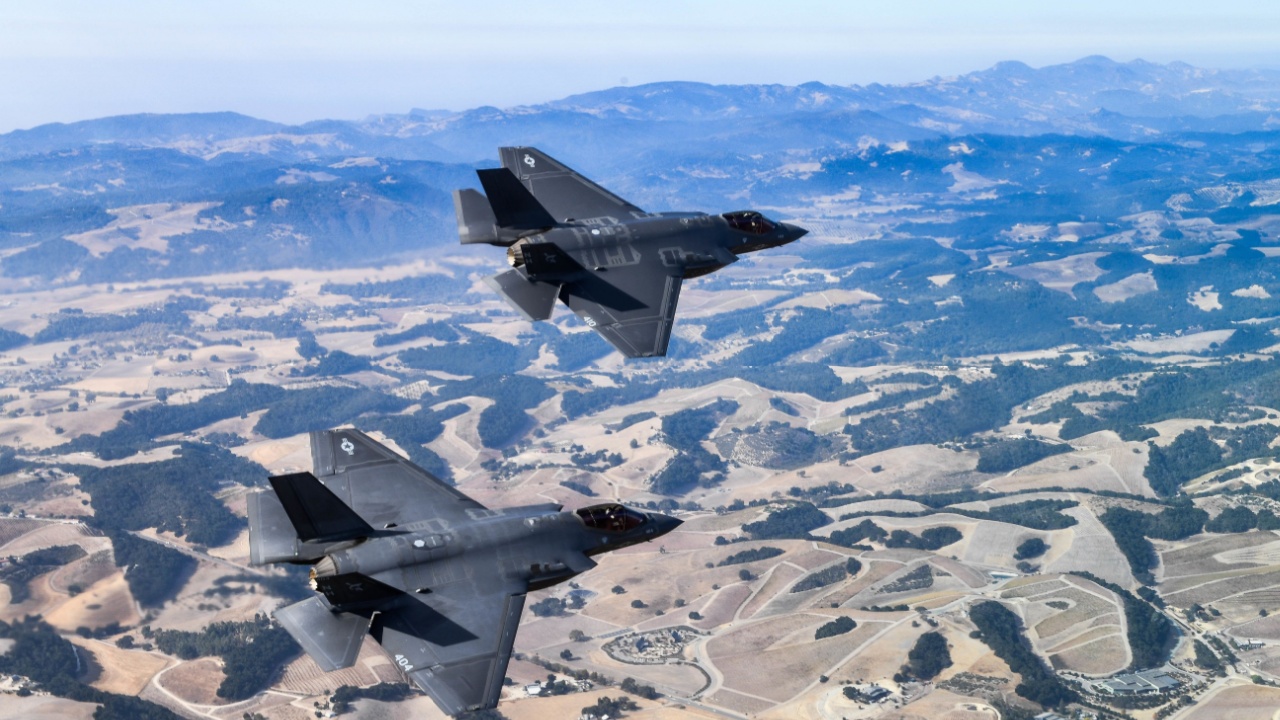
In the tactical military aviation segment, Israel’s use of fifth-generation stealth F-35I fighters in the 12-Day War to penetrate Iranian airspace set a precedent for the employment of the US Air Force’s F-22s and F-35s. Alternatively, the president can wait for the USS Abraham Lincoln to arrive in the area of operations to generate a maximal military force.
Brute force alone would not deliver results in a connected twenty-first-century battlespace: America needs to ensure Iranian society’s access to the internet to bypass blackouts, alongside a major cyber offensive to disrupt the regime’s information superiority over the people.
Military Allegiance in Iran
If President Trump opts for the military option, the air campaign should also transmit a clear political signal by prioritizing hardline IRGC targets while sparing the Artesh—the conventional forces—wherever possible. The CONOPS (concept of operations) should be reinforced by rhetoric that pressures the regular military to honor its oath to protect the people. This logic draws a deliberate contrast between the Guards, which shield the clerical elite and the regime from society, and the Artesh men in uniform, who could instead shield their people from the regime.
Such signaling would resonate with Iran’s own history. Despite the Imperial Army’s declaration of neutrality in 1979, the revolutionary leadership doubted its loyalty, purged its ranks, and later elevated pro-Khomeini militias, later consolidated as the IRGC, to check the Army and prevent coups. That early suspicion hardened into a durable institutional rivalry, codified through overlapping constitutional roles that divided territorial defense from ideological control.
Power at the Threshold: The Limits of Waiting
Operation Allied Force operated in a legal gray zone, breaching traditional norms of nonintervention and the use of force without UN Security Council authorization. Military action against Iran would sit squarely in the same legal space, resting on the premise that a state forfeits the rights of sovereignty when it systematically abuses its own citizens to the extent of committing mass killings. The argument for and against such an operation is unusually sharp.
History, nonetheless, cautions against hesitation. Then-President Barack Obama later conceded that failing to support Iran’s 2009 Green Movement was a mistake, one whose costs were borne by the Iranian people. Once repression succeeds, the regime consolidates and tightens its grip. Moments of vulnerability are rare, and in the aftermath of the 12-Day War, Iran appears unusually exposed—like a powerful brawler trapped on the ropes in the closing seconds of a round. In the absence of action, the boxer’s blows may swing more aggressively. Iran retains substantial ballistic missile capabilities, continues to benefit from Chinese assistance, and is even exploring intercontinental ballistic missile capabilities to threaten the American homeland.
The risks are no less compelling. A limited campaign that fails to achieve a decisive political outcome could leave Iran wounded but defiant. Operation Allied Force itself required seventy-eight days and more than 38,000 sorties (some 10,000 strike sorties) to produce results—an Iran campaign would be far more surgical. Tehran could retaliate against US forward forces, or strike high-value targets across the Middle East to spark wider instability—drawing the American military into mission creep.
Choosing the Direction of Iran’s Regime Change
Regime change in Iran is no longer a matter of if, but when and in what direction. Supreme Leader Ali Khamenei is old, 86, and no cleric of comparable authority stands ready to succeed. If the Islamic Republic suppresses the uprising, the likely outcome is an IRGC-dominated military dictatorship.
Another path seeks to undo the legacy of 1979. Yet, nostalgia offers no solution: despite the exiled crown prince Reza Pahlavi’s renewed appeal in some circles, the pre-revolutionary order carried its own forms of repression, making restoration of the crown implausible in the eyes of most non-Persian Iranians.
Iran, as it exists today, will either sail into a militarized state or be given a chance—however uncertain—that may return it to its people. No one pretends the choices ahead are easy or without risk. A campaign would carry the burden of deciding which path to follow.
About the Author: Can Kasapoglu
Dr. Can Kasapoğlu is a senior fellow at the Hudson Institute. His work focuses on political and military affairs in the Middle East, North Africa, and the former Soviet regions. He specializes in open-source defense intelligence, geopolitical assessments, international weapons market trends, as well as emerging defense technologies and related concepts of operations. Dr. Kasapoğlu was previously a fellow at the NATO Defense College in Italy and a visiting scholar at the NATO Cooperative Cyber Defense Center of Excellence in Estonia. A military-scientist, Dr. Kasapoglu holds a PhD from the Turkish War College and an MSci from the Turkish Military Academy.
Image: Faizinraz / Shutterstock.com.