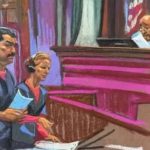
On August 22, 2025, a man with 14 prior arrests plunged a knife into the neck of a young Ukrainian woman on a Charlotte light-rail train, as she sat unawares in front of him. She died moments later, her blood streaming across the train floor.
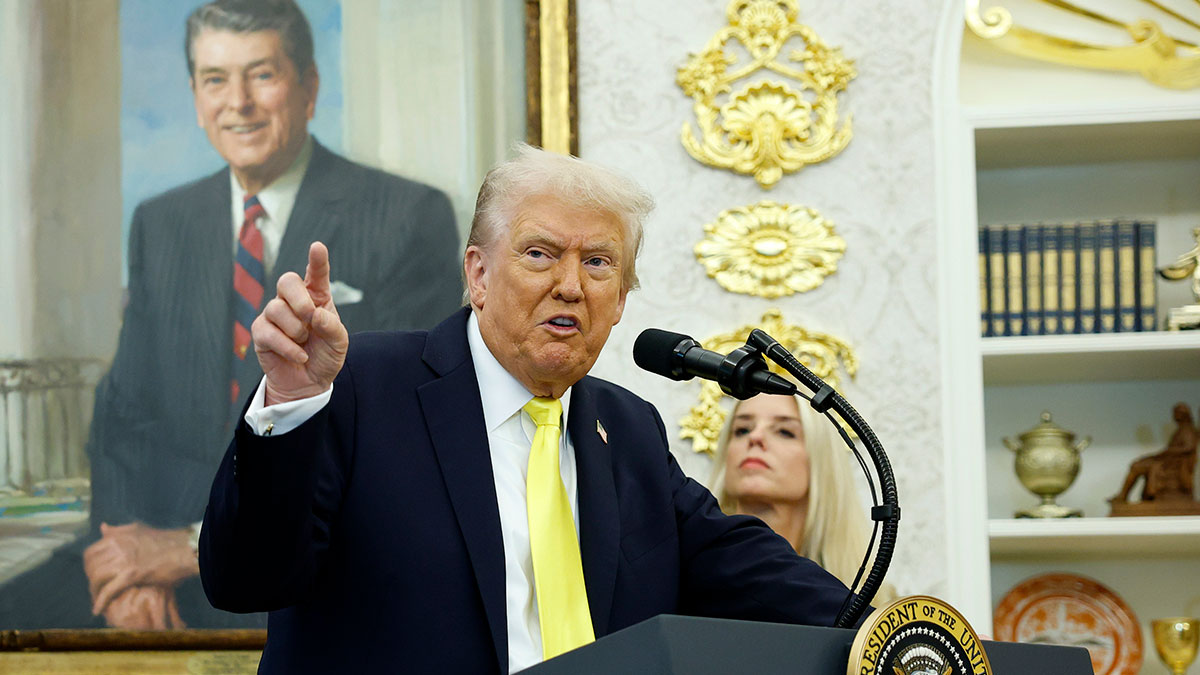
“I just give my love and hope to the family of the young woman who was stabbed . . . in Charlotte by a madman, a lunatic,” President Donald Trump said in a video from the Oval Office. “It’s right on the tape, not really watchable because it’s so horrible, but just viciously stabbed. She’s just sitting there. So they’re evil people. We have to be able to handle that. If we don’t handle that, we don’t have a country.”
Finally, a reason to check your email.
Sign up for our free newsletter today.
On August 3, a former administration staffer was assaulted by nearly a dozen juveniles when he tried to protect a female companion during a carjacking. Trump wrote on Truth Social that crime in Washington, D.C., was “totally out of control. . . . The most recent victim was beaten mercilessly by local thugs. Local ‘youths’ and gang members, some only 14, 15, and 16-years-old are randomly attacking, mugging, maiming, and shooting innocent Citizens, at the same time knowing that they will be almost immediately released. They are not afraid of Law Enforcement because they know nothing ever happens to them, but it’s going to happen now! . . . Washington DC must be safe, clean, and beautiful for all Americans and, importantly, for the World to see. If D.C. doesn’t get its act together, and quickly, we will have no choice but to take Federal control of the City, and run this City how it should be run.”
On November 17, a vagrant with a long criminal history doused a woman with gasoline on a Chicago subway train and set her on fire. The victim remains in critical condition. A few days later, two mass shooting incidents in Chicago’s downtown Loop killed a teenager and wounded at least eight other participants and bystanders.
Trump interrupted the traditional Thanksgiving turkey pardoning ceremony to comment on Chicago’s latest atrocities. “This is a very serious thing,” he said. “They burned this beautiful woman riding in a train. A man was arrested 72 times. . . . Think of that. And they’ll let him out again, the liberal judges will let him out again. . . . If you look at the crime that’s taking place in Chicago in the last two weeks, it’s out of control. . . . We have a governor that thinks it’s wonderful that only like seven people were killed this week. . . . He ought to invite us in and say, ‘please make Chicago safe.’. . . But we’re ready to go. We’re going to lose a great city if we don’t do it quickly.”
These utterances are unique in their specificity and immediacy. Never before has a president commented with such urgency on particular acts of crime that otherwise lack conventional political significance. Trump’s words break through the complacency that now treats violence as an inevitable fact of urban life.
Domestic street crime did not attract formal federal attention for most of American history. Starting in the 1960s, though, the United States experienced the greatest crime surge on record. The violent felony rate, including homicide, more than doubled over the decade; property crime rose nearly as starkly. Rioting broke out approximately 160 times in the summer of 1967 alone.
Congress passed bills in 1965 and 1968 that sent federal tax dollars to state and local police agencies for the first time. It was Richard Nixon, however, in his 1968 run for the White House, who definitively injected law and order into presidential discourse. But while Nixon eloquently articulated the philosophical underpinnings of law and order and blasted the authorities’ increasing unwillingness to maintain civil peace, he almost never reacted to specific crimes. Neither did Ronald Reagan or other post-Nixon Republican presidents, all of whom said less about crime than Nixon did.
Nixon’s take on rising civilizational breakdown was startling in its perceptiveness. His ideas would ground the conservative understanding of criminal-justice policy for decades to come. “The American people are bolting their doors and arming themselves because they are rapidly losing confidence in the capacity and determination of government to defend them and their families and their property from crime and criminals,” he wrote in a 1968 statement to the Republican National Convention Committee. “If government does not wish America to become an armed camp of two hundred million people, with vigilante justice as one of its hallmarks, then Government must begin now to reassume the responsibility for domestic peace and security. It is too late for more commissions to study violence; it is time . . . to stop it. . . . The people of this country . . . want government that will set itself up as an irreconcilable enemy of crime, a government that will wield its full powers to guarantee that for the criminals [who] torment the innocent, society’s retribution will be ample and swift and sure.”
Nixon spotted the rise of victim ideology at its onset: “Poverty, despair, anger, past wrongs can no longer be allowed to excuse or justify violence or crime or lawlessness. . . . We must return to a single standard of justice for all Americans, and justice must be made blind again to race and color and creed and position along an economic or social line.” He identified decriminalization and deincarceration as enabling the crime boom: “This country has been on a generation-long experiment of leniency toward all criminals; the result is a society that is increasingly unsafe for all the law-abiding.”
Nixon’s avoidance of mentioning specific crimes did not insulate him from the charge that he was demagogically exploiting racist fantasies about an out-of-control black underclass. Never mind that Nixon repudiated a racial reading of crime: “A militant national crusade to protect society from criminals,” he wrote in 1968, “does not preclude a continuing national crusade to eliminate the social conditions from which so many of today’s criminals have emerged and tomorrow’s criminals are certain to emerge. The two go hand in hand. Nor is our call for ‘law’ meant to be any code word for the repression of the black American. . . . It is the poor, black and white alike, [who] bear the brunt of crime and violence.”
To no effect. The “racist dog whistle” charge remains de rigueur in any media or academic discussion of Republican crime policy, often linked to the fantastical claims that, as a recent article in Criminology and Criminal Justice put it, the alleged crime surge in the 1960s was “largely due to the artificial inflation” of the crime count and that today’s concern about crime is overblown. The establishment forbids talking about crime since doing so risks revealing crime’s demographics.
Trump disregards any remaining presidential norms of rhetorical restraint in favor of an unmediated relationship to events and to his own reactions. He has followed up his outrage over particular acts of lawbreaking with attempts to sic the National Guard on some of the most crime-plagued cities and on those where activist sabotage of immigration enforcement has been most egregious. Where deployed, Guard soldiers have deterred crime through their physical presence, but such deployment is only a short-term fix to urban disorder. (Bracingly, the November 26 attack on two Guard soldiers, part of the D.C. contingent demonized as part of the fascist takeover of the U.S., only led Trump to increase the force: “I have directed the Department of War to mobilize an additional 500 troops to help protect our capital city. We will make America totally safe again. And we will bring the perpetrator of this barbaric attack to swift and certain justice.”)
The administration should exploit any funding lever it has to force states to reinstitutionalize the mentally ill homeless, both for the safety of the innocent and the dignity of the vagrants themselves. The prevalence of the untreated mentally ill is a new element in today’s crime landscape. Allowed by local officials to roam the streets, they wreak repeated mayhem, such as the fatal train stabbing in Charlotte and the near-fatal subway immolation in Chicago.
So far, Trump’s second administration has been light on legislative proposals or on the sober crime commissions favored by previous presidents. It does not matter. This lack of proposed lawmaking is less important than Trump’s inclination to lay down a philosophical marker: violence is not normal and should not be tolerated. He is shaming local officials like Chicago mayor Brandon Johnson, whose first response to the subway immolation was to write it off as an “isolated incident,” whereas, in fact, it was an all-but-foreseeable result of Illinois’ deliberate mental-health and criminal-justice policies. Trump’s impulsive speech can get him into trouble and offend the dignity of the presidential office, as with his appalling Truth Social posting in December about Rob Reiner’s murder. But his more typical outbursts about crime express a truth with all the force and immediacy that the establishment has labored long to suppress.
Photo by Kevin Dietsch/Getty Images
Source link