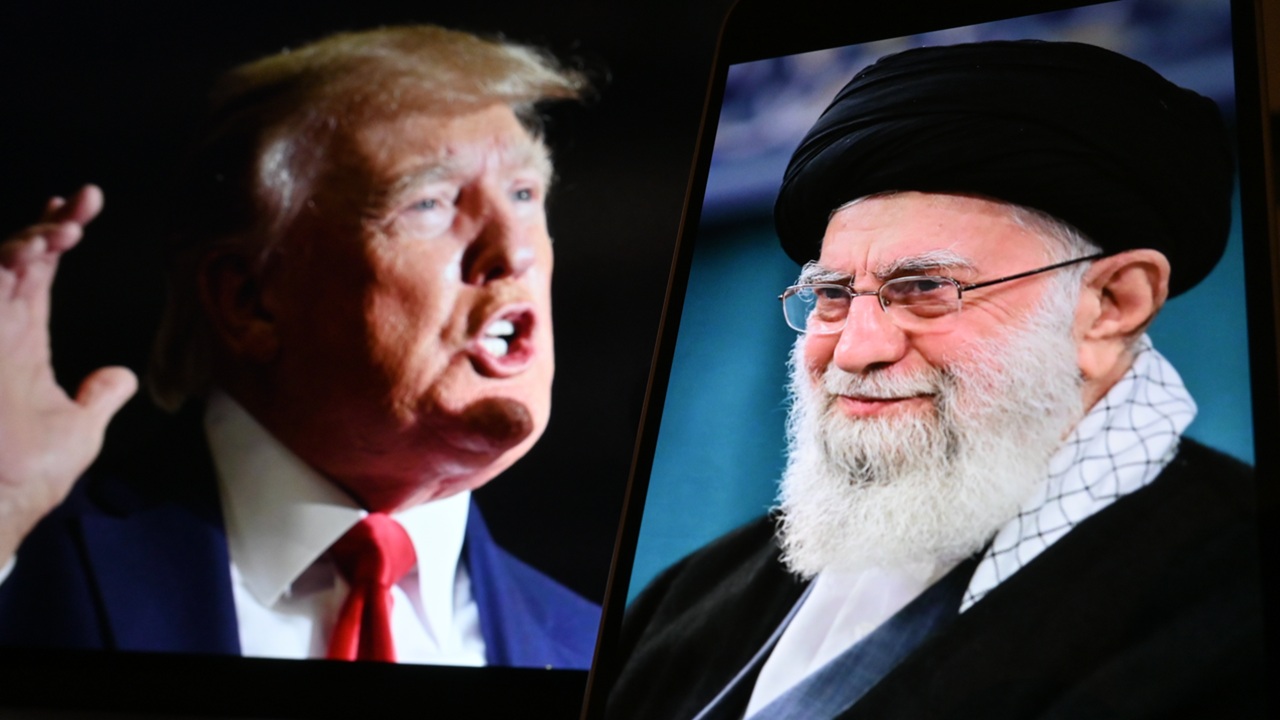
The Trump administration has usually conducted past high-profile military actions on the weekend—meaning that if a strike were to take place in Iran, it could happen as early as Saturday.
Shortly before the change of the year, the people of Iran took to the streets to protest against the collapse of the economy. It is not the first time. The theocratic regime of Tehran has often angered its people through backwards and often brutal governance. But this time seems different. The people of Iran are protesting with a vigor and resoluteness rarely seen before.
As many as 12,000 protestors could have been killed by regime forces since the start of the protests, and thousands more have been wounded or arrested. Tehran’s violent crackdown has received the world’s condemnation. Indeed, President Donald Trump has even threatened a military strike against the Iranian security forces.
Why Trump Likes to Attack on the Weekend
The latest reports indicated that Trump is seriously considering military action against Iran.
Evacuations of US military personnel from bases in the vicinity of Iran, including Qatar, Saudi Arabia, the United Arab Emirates, and Turkey, suggest that the White House is seriously considering a range of kinetic options against Iran. The Pentagon completed similar evacuations of certain military personnel ahead of Operation Midnight Hammer, the strikes against Iran’s nuclear program, in the summer of 2025.
Judging from past military operations under the two Trump administrations, a strike is possible over the weekend. Indeed, the White House under Trump prefers to strike on three specific days: Friday, Saturday, or Sunday, the days on which strikes are least likely to cause market disruptions. For example, Operation Midnight Hammer happened on June 22, 2025, a Sunday. Operation Absolute Resolve, the capture of Venezuelan President Nicolas Maduro, took place on January 3, a Saturday. And Operation Kayla Mueller, the mission to kill ISIS leader Abu Bakr al-Baghdadi, happened on October 26, 2019, a Saturday.
However, key US allies in the region are trying to prevent strikes against Iran. For example, Israeli Prime Minister Benjamin Netanyahu has reportedly asked President Trump to refrain from attacking Iran right now. Although Israel and Iran have often clashed—most recently a few months ago, after the IDF launched substantial air strikes against Tehran—the Israeli government is likely seeking to avoid another flare-up with Iran as it focuses on its immediate neighbors.
Moreover, Arab nations that host US troops are pushing for a de-escalation of the situation. These countries are looking to avoid collateral damage on their territory as a result of Iranian retaliation in the event of US strikes against regime forces.
What Can Iran Do In Response to a US Attack?
Iran has a handful of options if President Trump does decide to go forward with air and missile strikes against Tehran.
First, Iran might attempt to close the Strait of Hormuz through anti-ship missiles, mines, and kamikaze drones. One of the most important maritime lanes in the world, the Strait of Hormuz passes by the north Omani and southern Iranian coasts and is probably the world’s most valuable sea lane—and therefore a vital strategic chokepoint. Indeed, approximately 20 million barrels of oil sail through the Strait every day, representing around 20 percent of the world’s global oil supply.
A closure of the Strait of Hormuz would therefore be catastrophic for the world economy. It would cause skyrocketing oil prices and lead to economic crisis in many oil-importing nations. Not coincidentally, the United States has repeated on many occasions that it will pursue any actions necessary to keep the sea lanes open, making a closure of the strait tantamount to declaring war on the United States.
For a more limited option, Iran might attack nearby US bases in Iraq, Syria, or Jordan with missiles and drones. It could also order insurgent attacks by proxy forces across the region.
And yet, judging by Iran’s previous response against the US following the attacks on its nuclear weapons program—very likely the Iranian government’s most precious possession—a response might not achieve much besides showing a reaction. To be sure, now the survival of the regime might be in question. But Iran’s military capabilities, especially its long-range fires functions, have been severely depleted following the Israeli and US strikes in 2025.
About the Author: Stavros Atlamazoglou
Stavros Atlamazoglou is a seasoned defense journalist specializing in special operations and a Hellenic Army veteran (national service with the 575th Marine Battalion and Army HQ). He holds a BA from the Johns Hopkins University and an MA from the Johns Hopkins’ School of Advanced International Studies (SAIS). His work has been featured in Business Insider, Sandboxx, and SOFREP.
Image: Shutterstock / miss.cabul.