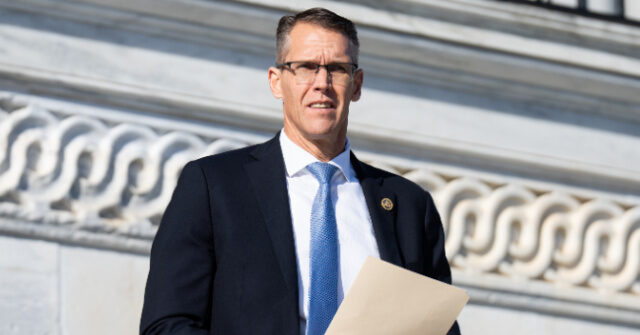
Rep. Randy Feenstra has introduced legislation aimed at preventing individuals receiving public assistance from wiring money internationally, citing taxpayer abuse and recent high-profile fraud scandals as key motivations for the measure.
This week, U.S. Representative Randy Feenstra (R-IA) unveiled the No American Benefits Abroad Act, a bill that would prohibit individuals receiving public assistance from initiating international wire transfers. The legislation would also require money transfer providers to obtain written certification from customers affirming they do not receive means-tested government welfare benefits.
“The $9-billion fraud scandal in Minnesota is a stark warning to the country that waste, fraud, and abuse of taxpayer dollars remains a serious and rampant issue,” Feenstra stated. “We cannot tolerate even a single taxpayer dollar being wasted due to fraudulent activity at the hands of criminals.”
The legislation aligns with broader efforts under President Donald Trump’s administration to curb the misuse of taxpayer funds. On January 14, the U.S. State Department announced a freeze on visa processing for nationals of 75 countries identified as contributing to disproportionately high levels of welfare-dependent migration. The freeze includes nations such as Somalia, Haiti, Iran, and Eritrea, and aims to prevent newcomers from immediately becoming financial burdens on American taxpayers.
Those actions followed the release of data by the Trump administration showing that upwards of 81 percent of migrant households from some countries—like Bhutan, Yemen, and Somalia—receive some form of welfare assistance upon resettlement in the U.S. In Minnesota, where the ongoing fraud scandal has escalated, 81 percent of Somali-headed households are on welfare, compared to just 21 percent of native-born households in the state.
In tandem with those enforcement efforts, U.S. Treasury Secretary Scott Bessent has ramped up the federal government’s pursuit of fraudsters linked to the Minnesota scandal. The case involves allegations of money laundering, illegal use of federal human services funds, and operations where daycare and food-distribution centers allegedly received millions of taxpayer dollars without providing any actual services. Last week, Bessent outlined plans to offer cash rewards to whistleblowers who come forward with credible information exposing fraud, including details such as who is involved, how it was carried out, and where it occurred.
He also confirmed that the Treasury Department is conducting in-depth investigations into four money services businesses that facilitate overseas remittances from Minnesota residents to foreign countries, particularly Somalia. While the businesses were not named, Bessent indicated that these firms are being scrutinized for their role in enabling fraudulent transfers of taxpayer-funded benefits overseas. The department is reviewing whether these financial services providers knowingly allowed individuals on public assistance to funnel money out of the country.
The legislative effort seeks to codify Treasury Secretary Scott Bessent’s push to ban welfare recipients from initiating international wire transfers or sending money abroad. According to Feenstra, “if someone has enough money to send to foreign countries, they should not be on welfare in the first place.”
The timing of his bill also comes as other lawmakers push for reforms targeting shortcomings in welfare-related immigration policy. On January 8, Rep. Troy Nehls (R-TX) and Sen. Roger Marshall (R-KS) introduced the Public Charge Clarification Act of 2025, a bill that would strengthen restrictions on immigrants likely to rely on public assistance, requiring them to demonstrate financial self-sufficiency and secure sponsorship before being granted legal status.
Feenstra underscored that the American safety net remains especially vulnerable to criminals who divert resources away from those truly in need. “These programs are supposed to be a temporary hand-up for our most vulnerable neighbors,” he said. “My bill codifies President Trump’s work to combat fraud while protecting Iowa taxpayers from footing the cost of foreign money transfers.”