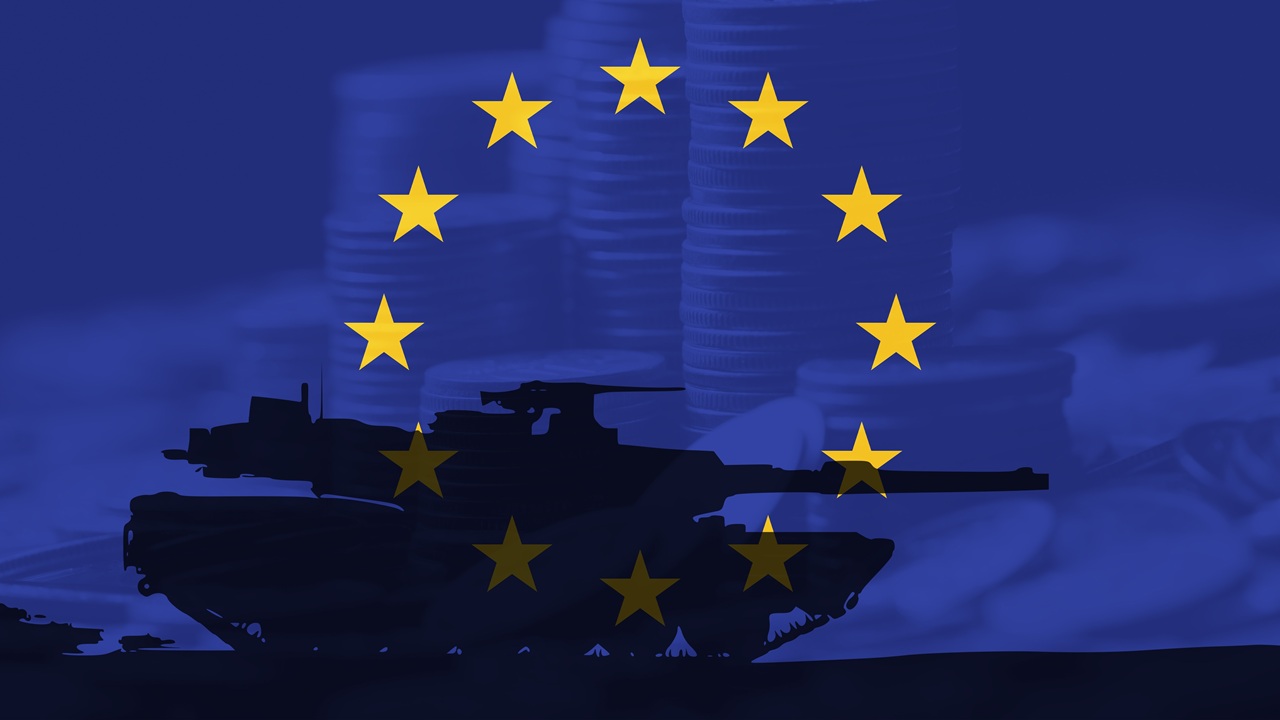
European Defense Commissioner Andrius Kubilius observed that the United States had one army, not 50—and was far stronger for it.
Should the European Union establish its own armed forces? According to European Union Defense Commissioner Andrius Kubilius, it is urgent for the international organization to do so as quickly as possible.
Can the EU Build a True “European” Army?
Kubilius, the most senior defense official in the European bloc, said that the EU should consider establishing a standing force of 100,000 troops to protect the continent from current and emerging threats. He also suggested that the EU needed to overhaul the political processes that are currently controlling defense and military expenditure in the bloc.
“Would the United States be militarily stronger if they would have 50 armies on the states level instead of a single federal army?” Kubilius asked at a European security conference over the weekend. “50 state defence policies and defense budgets on the states level, instead of a single federal defense policy and budget?”
If the answer of Europeans to these questions is no—and the US would not be stronger if in a similar position—then “what are we waiting for?” Kubilius challenged.
The idea of a European army is not novel. Since the end of World War II, the issue of a joint European military force has come up several times, but historically without success. Kubilius noted in his remarks that similar proposals had been floated after Russia’s invasion and seizure of Crimea in 2014, but little progress had been made due to a range of issues, including political fragmentation and interoperability challenges.
Now, however, there is an added pressure coming from the EU’s closest ally: the United States.
Kubilius’ statements come at a point in time when relations between the EU and the US are strained, to say the least. Greenland is one of the latest topics to have caused tensions between the two allies. The territory, which is part of Denmark, has been in the crosshairs of President Donald Trump. The White House has even indicated that military force could be used to acquire Greenland. Such a development could trigger a military response from the Europeans, resulting in a catastrophic scenario.
Would an EU Army Be Politically Legitimate?
Perhaps the most important hurdle in a European army is political division that can cripple a military force.
During wartime, the leader or government of a nation-state can deploy its armed forces uniformly without—usually—having to answer to others, thus offering an effective response to an emergency. But in a nation-state, armed forces come from the same population, and the leader or government theoretically has the legitimacy to order young people to war, having been elected by those people to lead them.
That is not the case with a multinational organization like the EU. In a hypothetical European army, a French commander would be ordering German or Polish units into the fire, creating an political problem—and giving euroskeptic politicians a new target. Indeed, the many political masters a European army would have to answer to would render the decision-making process an operational nightmare.
Still, the idea for a European army has once again resurfaced—and only time will tell if this time around the project can overcome political and logistical hurdles and become a reality.
About the Author: Stavros Atlamazoglou
Stavros Atlamazoglou is a seasoned defense journalist specializing in special operations and a Hellenic Army veteran (national service with the 575th Marine Battalion and Army HQ). He holds a BA from the Johns Hopkins University and an MA from the Johns Hopkins’ School of Advanced International Studies (SAIS). His work has been featured in Business Insider, Sandboxx, and SOFREP.
Image: Shutterstock / Jacek Wojnarowski.