To move nuclear energy forward in 2026, the Trump administration must deliver results—locking in reactor orders, accelerating fuel supply, and aligning hyperscaler demand with buildable projects.
The United States’ approach to nuclear energy in 2025 was characterized by typical Trumpian bravado. It offered expansive executive orders, a dose of new reactor rugged individualism, and a warm embrace of government-financed projects. But the cold reality is that the American nuclear build-out is not building much so far.
In 2026, President Donald Trump needs to demonstrate results. The administration is entering lame-duck territory with a mid-term election next November and a term-limited president. It now has to manage a populist political backlash to the growing energy demands for data centers while forging ahead in the artificial intelligence (AI) race with China. All these factors can dilute the focus on complicated and multifaceted nuclear energy objectives and present the administration with some serious challenges. That makes this year pivotal for achieving progress and anchoring success for the future.
Lagging Europe and Asia on Large Reactors
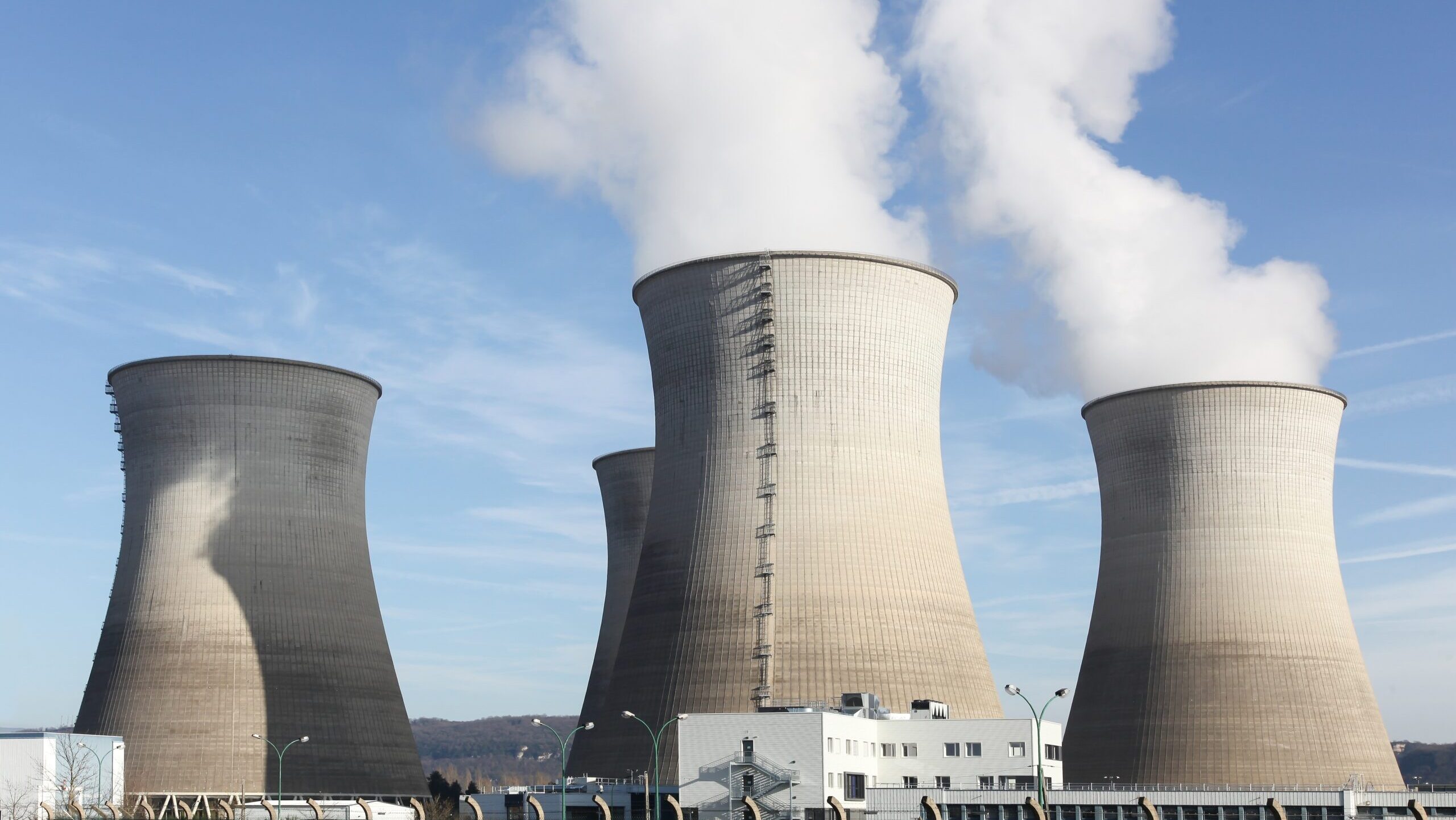
The lowest-hanging fruit is to move forward with Westinghouse AP-1000 reactors. They are licensed and have been built domestically and abroad. The Trump administration has promised to provide “at least $80 billion” for new Westinghouse reactors to be built at scale.
However, the announcement of the government’s financial commitment was not paired with a plan for actual deployment. It was a commitment to a result without a roadmap for success. It is possible that the first step will be to complete two partially constructed AP-1000s at the VC Summer site in South Carolina. Then, additional reactors could possibly be constructed at the Fermi America site in Texas. Or reactors could be constructed at other plant sites. But the lack of certainty at this point is a liability.
By contrast, nations in Eastern Europe and Asia are moving forward with large new reactors. Poland and Westinghouse continue to make progress on the deployment of three AP-1000s. The Czech Republic is moving forward on a contract for two South Korean APR-1400 reactors. South Korea has three reactors under construction. Slovakia seems to be on the verge of committing to a new AP-1000. All of these reactors have sites, are attracting financing, and are activating supply chains.
Even under ideal circumstances, the construction time for a gigawatt-sized reactor is eight years. And if past and current projects are any indication, the time needed just to get started on construction is longer than the remaining three years of the Trump administration. So, the United States needs a much better large-reactor strategy and to quickly incentivize a domestic order book.
Playing Catch-Up on SMRs
Small modular reactors (SMRs) and advanced reactors are also lagging the international competition, but substantial federal government financial backing, creative policy in the Trump executive orders, and collaboration with Canada could close that gap over this decade.
Despite the desire for a fusillade of fission from the Reactor Pilot Project on the nation’s 250th anniversary, the United States is well behind Russia and China on small modular and advanced reactor development and deployment. Russia has already deployed a floating SMR and is making progress on its first land-based version. China will begin commercial operation of its first SMR in 2026.
Right now, there is only one US-licensed SMR: the NuScale 77-megawatt (MW) Power Module. It is expected that there will be 25 new SMR license applications in the next five years, but many of these small reactors are pursuing exotic fuel cycles. These designs have important benefits but could create complications and delays in the reactor demonstration and licensing process.
Even assuming a smooth technical pathway and a substantially streamlined licensing process for these reactors, most exotically fueled US small reactors won’t be ready before the early-mid 2030’s. And even if the small reactors being demonstrated and potentially operated on federal land by the Departments of Energy and Defense are successful, the migration to commercial operation will require a license from the Nuclear Regulatory Commission (NRC).
A more accelerated path forward could be provided by the GE Vernova Hitachi BWRX-300 reactor, which runs on standard light water reactor fuel. Canada has already issued a license to construct the reactor at the Darlington nuclear site, and the Tennessee Valley Authority (TVA), which is collaborating with the Canadian authorities, has submitted a US construction application. If licensed for operation in Canada, operation is expected by the end of the decade. Because US and Canadian regulators have been working together on eliminating overlap in SMR reviews, Canadian deployment approval could fast-track progress in America.
Decoding Hyperscaler Hype
The major Silicon Valley hyperscalers (Microsoft, Google, Amazon, and Meta) are making a commitment to nuclear energy to power their data centers, and each announcement is received breathlessly. But the nature of the commitment is curious, with a glaring gap between existing and next-generation reactors.
All of these companies have signed deals with next-generation reactor companies, including Oklo, TerraPower, Kairos, and X-Energy. But these are mid-2030’s reactors. Most are also committed to purchasing nuclear power from operating or resurrected reactors, including in Pennsylvania and Iowa. These can produce power in the near term.
But none of these companies has yet committed substantial funds behind the AP-1000, which is large-sized, licensed, and ready for construction. This is despite the US government’s commitment to provide more than $80 billion. This raises questions about whether risking capital on new construction without a government-guaranteed cost overrun backstop is an impediment to private sector support. That is something the administration needs to tackle.
Also, the data center revolution is increasing pressure on hyperscalers to bring their own energy rather than siphoning offexisting power sources and raising energy bills for citizens and other businesses. Quelling this data center rebellion will be on the list of issues that the administration has to tackle in 2026, and the solution will have international security implications for the AI race with China.
Overcoming Fuel Concerns and Foreign Competition
There are two persistent headwinds that the administration will have to navigate this year—nuclear fuel supply and foreign competition.
The challenges from Russia and China are well known. China has 37 reactors under construction, and Russia is building reactors in Egypt, Turkey, Bangladesh, and India. These countries have deep supply chains and workforces and offer sweet state-financed financial deals to partners. The Trump executive orders are designed to compete more effectively with these countries.
The other US competitor in the international nuclear arena is South Korea. While a strong ally and an essential partner in all AP-1000 reactor projects, the South Korean government and its nuclear industry are determined to carve out an international role for its reactors. That has been a challenging objective, further complicated by internal South Korean politics and a corporate fight with Westinghouse over intellectual property.
But the opportunity to partner on constructing reactors in America is now available to the Korean industry. It is unrealistic for South Korean leaders to persist in their belief that new American reactors will bear their flag. They won’t. But if the AP-1000 is built in the United States at scale, South Korea will be a necessary financing and construction partner. That can then lead to other collaborations overseas, including potentially in Saudi Arabia. This is an opportunity that the Trump administration understands as critical to American foreign policy, but it needs to do a better job of incentivizing South Korean partnership for the benefit of both countries and broader global security goals.
The task of rebuilding the American nuclear fuel supply chain is a critical objective and one that the Trump administration has fully embraced. But the process is slow because the supply chains have become so degraded, and the market signals are muddled.
Existing reactors need an assured supply of low-enriched fuel as the ban on Russian fuel imports tightens. Many next-generation reactors that run on High-Assay Low-Enriched Uranium (HALEU) urgently need that fuel to demonstrate and then operate their reactor designs, and a commitment to its long-term supply. Most of this fuel is produced by Russia and China, and the United States won’t buy it. But America has produced almost one metric ton of the fuel. Projections are that 40 tons will be required by the end of the decade, and 3,500-7,200 metric tons (MT) will be required by 2050. So, fuel for advanced reactors is increasingly viewed as a critical bottleneck, and expanding production in 2026 is an important objective. The administration is pumping money into the problem, but the question is whether it can accelerate the results.
About the Author: Ken Luongo
Kenneth Luongo is the president and founder of the Partnership for Global Security (PGS) and the Center for a Secure Nuclear Future. His work is focused on the nexus of nuclear power, global security, and energy geopolitics. He previously served as senior advisor to the Secretary of Energy on nuclear and security affairs, as a senior fellow at Princeton University, on the staff of the House Armed Services Committee, and as an advisor to Senators Carl Levin and William Proxmire.
Image: ricochet64/shutterstock