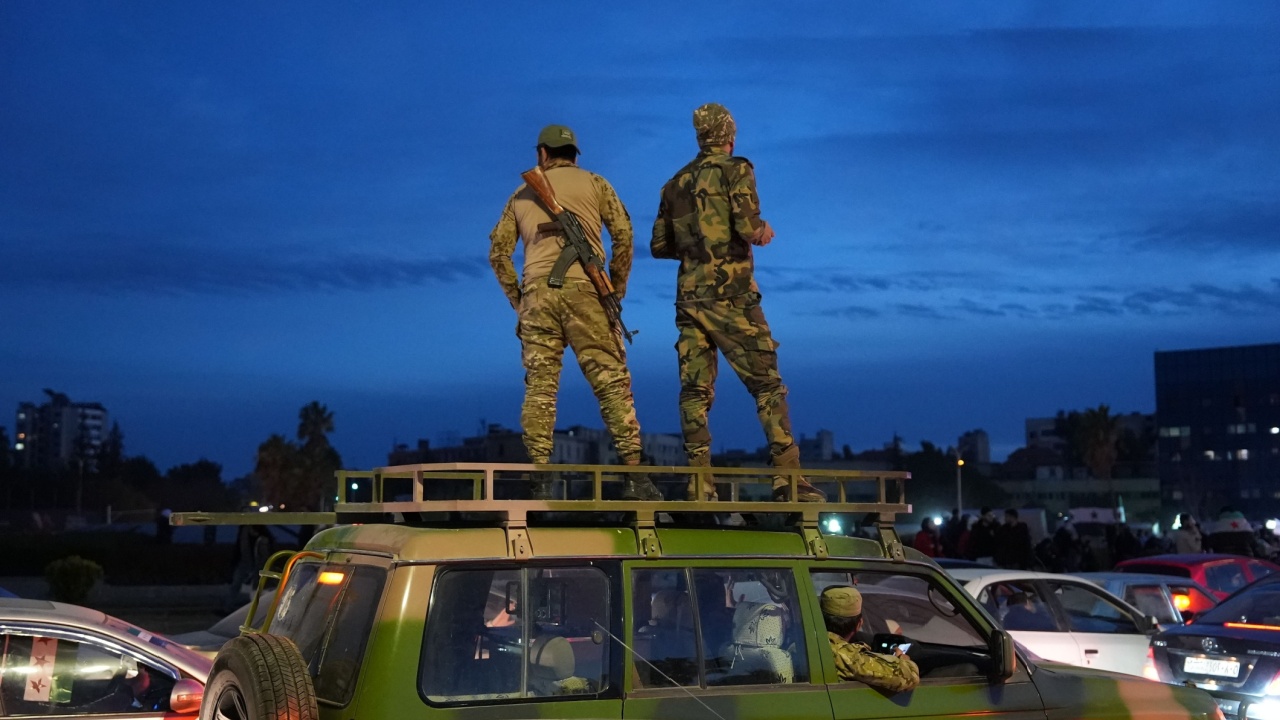
Multiple, intersecting Middle East crises combined with an unpredictable United States augur a tumultuous 2026 for the region.
The current protests in Iran and the Donald Trump administration’s threat to take military action against the Iranian regime, if it continues to suppress dissent violently, demonstrate how the domestic politics of Middle Eastern states are deeply intertwined with regional security and the balance of power. But turbulence in Iran is not the only source of disquiet. Events in Gaza, Syria, Sudan, and Yemen are driving the foreign policies of major powers, especially the United States.
The primary reason for this is that the Middle East rarely offers the world a single, contained crisis. Instead, it presents multiple, overlapping conflicts whose shockwaves cross borders in the form of refugees, rockets, trade flows, and ideologies. Today, the region feels unmistakably “on the boil” not because one war is intensifying, but because several pressure points are heating up at once, raising the temperature all around.
Protests in Iran are testing the regime’s resilience as never before; Gaza’s devastation remains unresolved; Syria is still battling political fragmentation; Israel continues to widen the battlespace into Lebanon; Yemen’s layered civil wars. All the while, the assertive, often contradictory postures of regional and external powers—notably Turkey and the United States—whose policies increasingly affect and intersect across several arenas.
The crises’ concurrency rather than their novelty characterizes the moment. No longer isolated, these flashpoints are unfolding together, interacting in ways that magnify risk and narrow diplomatic escape routes.
Iran: Domestic Unrest and Regional Risk
Iran’s protests represent an extreme stress test for the Islamic Republic’s governing model. Economic hardship, immeasurably worsened by decades of sanctions and regime mismanagement, political repression, and generational alienation, has led to repeated cycles of unrest, which the regime meets with force rather than reform. However, the current crisis seems to be the most acute since the establishment of the Islamic Republic in 1979. The leadership’s response has underscored a familiar pattern: increasing repression that compounds rather than solves the problem.
Historically, when under domestic pressure, the Iranian regime oscillates between restraint and defiance in its foreign policy. This has major regional consequences. On the one hand, Tehran may seek to avoid regional escalation, which could invite sanctions or military confrontation at a vulnerable moment. On the other hand, internal strain often empowers hardline elements that view regional assertiveness as essential to deterrence and revolutionary credibility as well as to deflecting the population’s grievances onto external actors.
This ambiguity reverberates outward. Iran’s relationships with Hezbollah, militias in Iraq and Syria, and the Houthis in Yemen mean that domestic instability in Tehran is never purely internal. It alters the risk calculus for Israel, the Gulf states, and—critically—the United States, which must decide whether deterrence, diplomacy, or strategic patience best serves its interests when Iran appears simultaneously constrained and unpredictable.
Gaza: Humanitarian Catastrophe and Political Accelerator
Gaza remains the emotional epicenter of the region’s turmoil. Even when active hostilities subside, the territory remains a political accelerant throughout the rest of the Middle East. The destruction, civilian suffering, and unresolved questions of governance ensure that whatever happens in Gaza will reverberate throughout Arab capitals.
For Arab publics, Gaza reinforces a narrative of injustice and double standards in international diplomacy. It also hangs like the sword of Damocles over the heads of Arab regimes, who are perceived as effete and feeble when confronted by Israeli depredations. For Israel, it intensifies existential security debates and invites international condemnation. For external actors—especially the United States—it has become a defining test of credibility, especially since the Trump administration has decided to “own” the “peace process” in Gaza.
Washington’s posture illustrates the dilemma. The United States remains Israel’s principal security partner, yet also the most influential external actor capable of shaping humanitarian access, ceasefire durability, and post-conflict arrangements. Attempts to balance these roles have satisfied no one: allies question American resolve, adversaries question American impartiality, and regional publics increasingly see US diplomacy as reactive rather than transformative and unduly influenced by domestic constituencies.
The result is not just diplomatic strain, but strategic drift. Without a viable political horizon for Gaza, each ceasefire becomes a pause rather than a resolution—and each pause simply stores energy for the next explosion.
Syria: Fragmentation as a Regional Condition
Syria is often described as being in a state of “frozen conflict.” However, this obscures its true reality. Syria is a permanently active fault line linking multiple regional rivalries. Its fragmentation enables foreign militaries, militias, and intelligence services to operate in overlapping zones, turning local incidents into regional issues.
Turkey’s role here is central. Ankara maintains a significant military presence in northern Syria, driven by two priorities: preventing Kurdish autonomous structures aligned with the PKK from taking root, and managing refugee flows that have become a major domestic political issue. Turkish operations intersect uneasily with US partnerships with Kurdish forces, exposing the limits of NATO cohesion in regard to the Middle East.
Meanwhile, the United States maintains a reduced but symbolically important footprint in eastern Syria, aimed at counterterrorism and constraining Iranian influence. This posture reflects Washington’s broader regional strategy: avoid large-scale entanglement while preventing adversaries from consolidating control.
The consequence is strategic ambiguity. Syria remains unstable not because any single actor wants chaos, but because no actor is willing—or able—to impose or even facilitate a comprehensive settlement.
Israel and Lebanon: Deterrence Under Strain
Israel’s northern frontier with Lebanon represents perhaps the most immediate risk of regional escalation. The logic on both sides is deterrence, but deterrence that relies on constant signalling through limited force is inherently unstable. Limited strikes, retaliatory fire, and rhetorical escalation create a rhythm in which miscalculation becomes increasingly likely and a full-scale war increasingly probable.
Iran’s shadow looms large here, but so do US calculations. Washington has invested heavily in preventing a full-scale Israel-Hezbollah war, not least because such a conflict would almost certainly draw in Iran and destabilize global markets. Yet American leverage is constrained by domestic politics and alliance commitments.
Yemen: A War That Refuses to Simplify
Yemen’s civil wars exemplify the region’s layered complexity. What began as a struggle between the Houthis and the internationally recognized government has evolved into multiple overlapping conflicts involving southern separatists, tribal forces, regional patrons, and international interests tied to maritime security.
The Houthis’ alignment with Iran places Yemen within the broader confrontation between Tehran and Washington. US naval deployments and strikes linked to Red Sea security underscore how a local conflict can escalate into a global concern. At the same time, fractures among anti-Houthi forces, Saudi Arabia, and the UAE, particularly in South Yemen, where the former supports the internationally recognized government and the latter the southern separatists, demonstrate how proxy coalitions can fracture under the strain of prolonged warfare when their local interests diverge.
Yemen’s strategic location commanding the Bab el-Mandeb through which shipping passes from the Red Sea to the Indian Ocean makes it a strategic prize, especially since 12 percent of the global trade is carried through the Red Sea, including 8–10 percent of seaborne oil and LNG trade. The Red Sea, via the Suez Canal, is the shortest route between Europe, Asia, and Africa. Any disruption of traffic at either point forces ships to reroute around the Cape of Good Hope, adding 10–15 days of sailing time and sharply increasing costs.
The Houthis have used this bottleneck to great effect recently, attacking American and Israeli shipping in 2024–5 in retaliation for the Israeli invasion and devastation of Gaza. This shows how local actors in one corner of the Middle East can impact conflicts beyond their vicinity, have major effects on the international economy, and threaten wider disruption.
Turkey and the United States: System Managers or Risk Multipliers?
Turkey and the United States occupy a unique position in today’s Middle East. Neither is a bystander; neither controls outcomes. Both operate across multiple theaters with overlapping—and sometimes conflicting—objectives.
Turkey projects itself as a regional power balancing security, nationalism, and pragmatic engagement. Its policies in Syria, its relations with Russia and Iran, its membership of NATO, its rhetorical positioning on Gaza, and its domestic political imperatives all shape how Ankara acts in the region. Turkey’s influence is real, but uneven—strong militarily, constrained diplomatically, and increasingly shaped by internal economic pressures.
The United States, by contrast, is a global power wrestling with regional fatigue. Washington seeks to deter Iran, support allies, especially Israel and Saudi Arabia, secure trade routes, and avoid another major war—all while managing domestic polarization and competing global priorities. The result is a posture that often appears reactive and, of late, highly personalized, thereby adding to the unpredictability of regional outcomes.
The Middle East System’s Overlapping Crises
The Middle East is “on the boil” because its crises no longer remain contained. Iran’s internal unrest affects regional stability. Gaza’s devastation shapes public opinion and militant strategy. Syria exports instability by default. Lebanon teeters under the weight of perpetual confrontation with Israel. Yemen’s wars mutate rather than end. And hovering over all of this are Turkey and the United States—powerful enough to influence but unable to determine outcomes.
In this volatile context, the Trump administration’s threats to intervene militarily in Iran if implemented as they seem increasingly likely, could turn out to be the proverbial kindling that lit the fire, thus resulting in the Middle East cauldron boiling over.
About the Author: Mohammed Ayoob
Mohammed Ayoob is a university distinguished professor emeritus of International Relations at Michigan State University and a senior fellow at the Center for Global Policy. His books include The Many Faces of Political Islam (University of Michigan Press, 2008), Will the Middle East Implode (2014), and, most recently, From Regional Security to Global IR: An Intellectual Journey (2024). He was also the editor of Assessing the War on Terror (2013).
Image: Mohammad Bash / Shutterstock.com.