On Saturday, January 3, the US military conducted a precision military operation in Venezuela. An assault force consisting of Army Delta Force commandos and FBI Hostage Rescue Team operators stormed the compound of Venezuelan President Nicolas Maduro and captured him and his wife.
The mission ultimately went off without a hitch, leading to widespread praise in the United States and astonishment from American adversaries. Yet the capturing and extraction of Maduro from Venezuela was the tip of a highly complex military operation that involved more than 150 combat aircraft, intensive intelligence gathering before the attack, and probably offensive cyber operations that brought the Venezuelan power grid down.
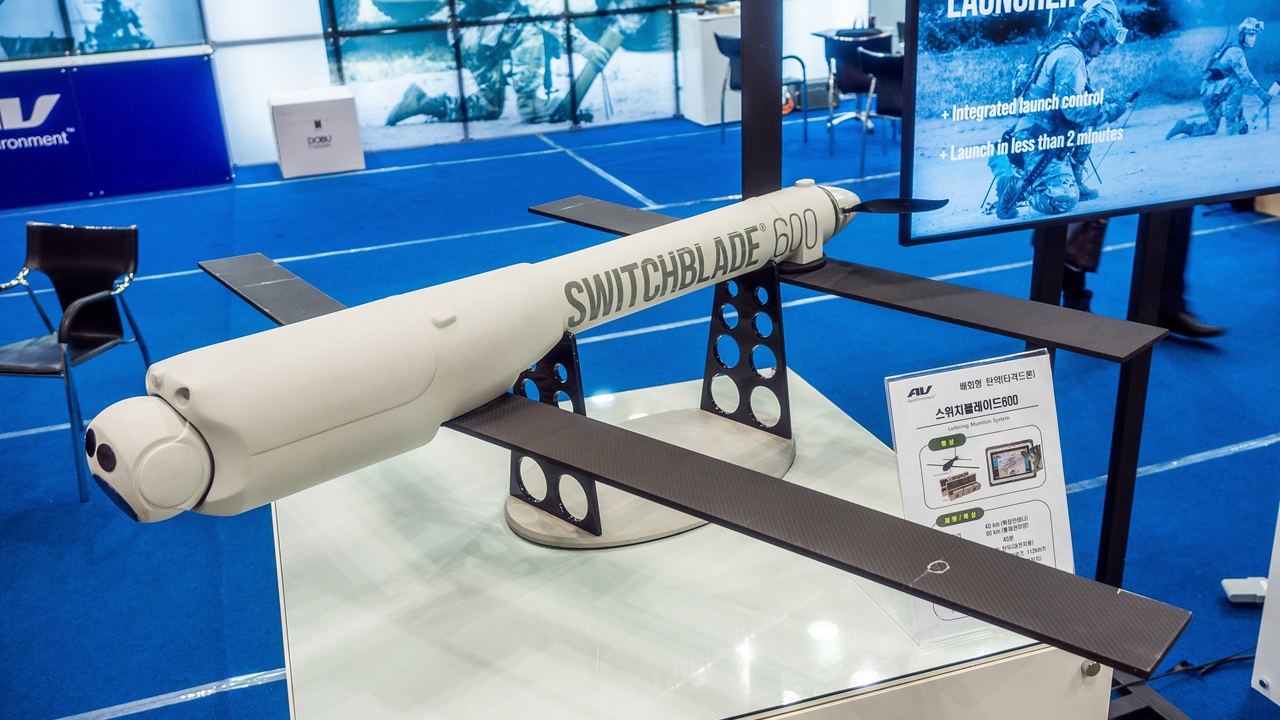
Moreover, despite complete superiority and control of the battlefield, the US military launched a string of air strikes against Venezuelan military targets. Evidence from the ground suggests that the US forces used one-way attack unmanned aerial systems, or “loitering munitions,” against a range of ground targets.
US Kamikaze Drones over Venezuela
The war in Ukraine has ushered in a new era in drone warfare. Small but lethal loitering munitions—better known as kamikaze drones—have entered the battlefield in great numbers. Russia, Ukraine, and Iran have been designing, developing, and fielding lethal one-way unmanned aerial systems.
Now, videos from Venezuela show that the US military is also relying on one-way unmanned aerial systems for kinetic effects on the battlefield. In multiple videos from the night of the attack shared on social media, one can hear high-pitched buzzing sounds preceding impacts and detonations. These sounds are characteristic of the propeller of a one-way kamikaze drone diving toward a target.
More conventional ordinance was used as well; in other videos, one can momentarily hear a roaring noise before impact and detonation, suggesting the use of a cruise missile. Due to their slower speed compared to ballistic and cruise missiles, suicide drones take longer to reach their target, thus making more noise during the final descent.
The US special operations community has taken the lead in developing new loitering munition technologies to match developments seen in Ukraine and around the world. In October, for example, the US Central Command, the combatant command responsible for the Middle East, revealed the existence of a special operations task force operating long-range one-way attack drones. The Naval Special Warfare Command is also looking to install suicide drones in its small commando craft. The conventional military is not far behind, though; the Navy recently tested launching one-way attack unmanned aerial systems from warships.
America Is Not New to the Drone Game
Drones are not a new concept to the US military. Indeed, the US military and Intelligence Community pioneered unmanned aerial aircraft development in the 1990s.
Thereafter, during the conflicts of the Global War on Terror in Iraq and Afghanistan, US special operations units began deploying suicide drones for tactical effects on the battlefield. Meanwhile, the Air Force and Intelligence Community provided an ever-increasing close air support and precision strike umbrella over the battlefield with unmanned aerial systems, such as the MQ-1 Predator and MQ-9 Reaper—both of which became synonymous with controversial “drone strikes” against suspected terrorists in the Middle East and Asia.
The absence of the US military from sustained combat operations after the withdrawal from Afghanistan meant that other countries took the torch in suicide drone development. Azerbaijan used the drones to great effect during its 2020 and brief 2023 wars with Armenia, and Ukraine did likewise following Russia’s invasion in February 2022.
Unfortunately, a common lesson throughout history is that there is no better incentive to invent and innovate than war. Now, however, the Pentagon is willing to spend big, not only to catch up with other militaries but surpass their technology.
About the Author: Stavros Atlamazoglou
Stavros Atlamazoglou is a seasoned defense journalist specializing in special operations and a Hellenic Army veteran (national service with the 575th Marine Battalion and Army HQ). He holds a BA from the Johns Hopkins University and an MA from the Johns Hopkins’ School of Advanced International Studies (SAIS). His work has been featured in Business Insider, Sandboxx, and SOFREP.
Image: Shutterstock / Flying Camera.