The chairman of the Joint Chiefs of Staff claimed that 150 aircraft of six types, plus drones, had taken part in the abduction of Venezuelan dictator Nicolas Maduro.
Chairman of the Joint Chiefs General Dan Caine said on Saturday that the capture of Venezuelan President Nicolas Maduro and his wife from their compound in Caracas, and their subsequent extraction from Venezuela, was conducted with the assistance of over 150 aircraft. Caine noted that these had included “F-22s, F-35s, F-18s, EA-18s, E-2s, B-1 bombers, and various other support aircraft, as well as numerous remotely piloted drones.”
At a glance, the scale and variety of the aircraft used may seem excessive for a mission focused on one person. But a high-risk extraction is complicated, requiring air-dominance, ISR, and electronic warfare. The end goal isn’t a force that can win a fight, but can control the airspace and the battle space entirely. The aircraft that Caine mentioned all have a specific role to play within this effort: detection, suppression, protection, deterrence, and so on. And while the wisdom of toppling the Maduro regime is debatable, the operation to extract the authoritarian leader appears to have been a tactically impressive operation.
Understanding the Six US Aircraft Used in Venezuela
Caine mentioned six specific aircraft used in the mission over Venezuela—each of which played a meaningful and distinct role in the operation.
- F-22 Raptor: The F-22 Raptor’s primary role is to establish uncontested air superiority. Using stealth and supercruise and a first-look/first-shot advantage, the F-22 was likely deployed to prevent hostile aircraft from launching and from deterring third-party interference. The F-22, objectively the most capable air superiority fighter in the world, forces adversary air defenses into a defensive posture, signaling that escalation attempts will fail.
- F-35 Lightning II: The F-35 is a stealth multirole strike and ISR fighter. Using sensor fusion, it grants unparalleled battle space awareness. In an extraction mission, the F-35 would likely be used to map air defenses, track radar emissions, and provide targeting data to other aircraft. Basically, the F-35 acts as a forward sensor node, the digital quarterback of the operation.
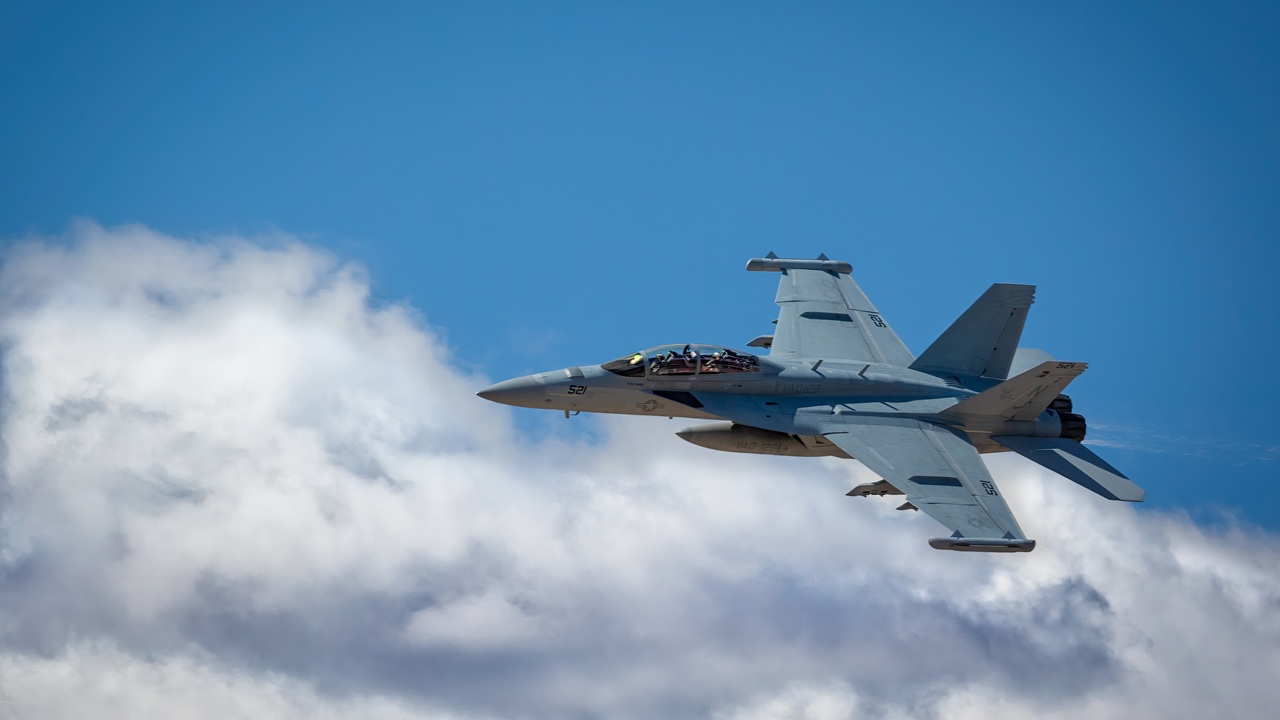
- F/A-18 Super Hornet: The F/A-18 Super Hornet is a carrier-capable fighter jet that has served as the backbone of the US carrier fleet since the late 1990s. It is a true multirole fighter, variously performing strike, escort, and defensive-counter air functions. In an extraction scenario, the F/A-18 can provide visible force presence, escort transport or special mission aircraft, or respond quickly to emergent threats. The F/A-18 is not stealthy, but adaptable, versatile, and available in large numbers from just offshore.
- EA-18G Growler: The EA-18G Growler is an F/A-18 variant specialized for electronic warfare. Its general role is in radar jamming and communications disruption. In the extraction operation, the EA-18G was clearly meant to suppress enemy air defenses—without firing a weapon—and degrade coordination among hostile forces, creating confusion and delay for Venezuelan forces on the ground. The platform is critical for reducing risk and avoiding escalation, enabling the rest of the operation to run smoothly.
- E-2D Hawkeye: The E-2D Hawkeye is an airborne early warning and control platform charged with airspace management and battle coordination. During extraction missions, the E-2D deconflict friendly aircraft, tracks potential threats, and maintains real-time picture. Essentially, the platform acts as an airborne command post, which is essential when so many aircraft are operating simultaneously in crowded air space.
- B-1B Lancer: The B-1B Lancer is a long-range supersonic bomber with a large payload. Calibrated for conventional strike and power projection, the B-1B likely served as deterrent and overwatch, giving the US an option in case of escalation, holding key targets at risk without having to act. The B-1B’s presence alone likely shaped adversary behavior, helping to ensure that the extraction remained relatively uncontested.
- Other: Lastly, various drone platforms were likely used for ISR, and potentially weapons deployment. The general role of unmanned platforms is surveillance and target tracking. In an extraction scenario, drones would be used to monitor ground movement, provide continuous coverage, and reduce the risk to manned aircraft.
The Maduro extraction was successful, without loss of American life. The large and intricately layered aircraft deployment helped facilitate that success, and prevented American casualties by ensuring that Venezuela’s response was chaotic, uncoordinated, and ineffective.
About the Author: Harrison Kass
Harrison Kass is a senior defense and national security writer at The National Interest. Kass is an attorney and former political candidate who joined the US Air Force as a pilot trainee before being medically discharged. He focuses on military strategy, aerospace, and global security affairs. He holds a JD from the University of Oregon and a master’s in Global Journalism and International Relations from NYU.
Image: Shutterstock / Bill Chizek.