|
Forwarded this email? Sign up for free to have it sent directly to your inbox.
|
|
|
Good morning,
Today, we’re looking at terrorism and urban violence, Nicolas Maduro’s arrest, California’s gubernatorial race, and Gary, Indiana’s potential comeback.
Don’t forget to write to us at editors@city-journal.org with questions or comments.
|
|
|
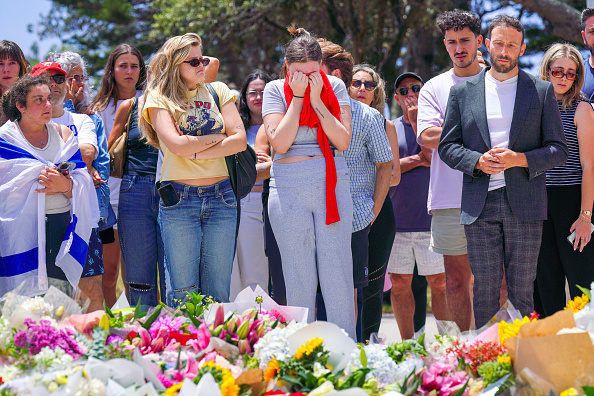
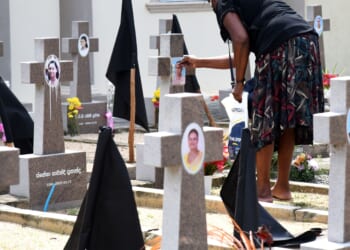
Last month’s massacre in Sydney that killed 15 and injured 39 is just the latest in a string of violent attacks in Australia, the U.S., and Europe. These include, among many others, the shooting of two National Guard soldiers in Washington, D.C. in November; the Yom Kippur synagogue attack in England; and the immolation of an elderly woman in Boulder, Colorado in June.
Street crimes, too, have seemingly become commonplace. Last month alone, a woman was stabbed to death in a Florida Barnes and Noble; a man was struck in the face with a bat while walking in Manhattan; another man was stabbed on a subway platform in Manhattan; and a mother was stabbed in a bathroom of Macy’s in New York.
“The ‘good’ news about the Islamic terrorism and domestic urban violence that have rocked Western nations in recent months is that the attacks were foreseeable—and thus preventable,” Heather Mac Donald writes. “The bad news is that the fear of being called ‘racist’ will stymie many governments’ ability to act on that foresight.”
Read her take.
|
|
|
Critics have portrayed the Trump administration’s capture and arrest of Nicolas Maduro over the weekend as an oil grab. But the facts paint a different picture, Santiago Vidal Calvo argues.
In 2020, the Justice Department charged Maduro and other figures in his circle with narcoterrorism, alleging that he had engaged in cocaine trafficking and worked with a Marxist guerilla group. In November, the State Department designated Cartel de los Soles—a criminal group Maduro heads—as a Foreign Terrorist Organization.
“Under Maduro, Venezuela became a failed narco-state that endangers regional stability and U.S. security,” Calvo observes. “As detailed in the indictment, Maduro’s regime allegedly pumped deadly drugs into our communities and used the profits to entrench his dictatorship.” And he has given U.S. adversaries a foothold in the Americas.
“America’s intervention in Venezuela could enhance U.S. security, liberate an oppressed nation, and expand freedom in our hemisphere,” Calvo writes.
|
|
|
This November, Californians will elect a new governor to succeed Gavin Newsom. “The current uninspiring field is enough to make one yearn for the days of cranky-but-smart Jerry Brown,” Joel Kotkin writes, “or even of the opportunistic chameleon Newsom.”
Read about some of the current and potential candidates, and what they could mean for the state’s future.
|
|
|
The Manhattan Institute is proud to serve as the Principal Institutional Partner for the Sun Valley Policy Forum’s 2026 Winter Summit in the iconic resort town of Sun Valley, Idaho on February 11, 2026.
We are thrilled to join Joe Lonsdale and MI senior fellow Christopher F. Rufo for an evening on principled leadership and the future of American institutions in an AI-driven era. Please click here to learn more about the Sun Valley Policy Forum and our partnership and to purchase tickets at a discounted rate for friends of the Manhattan Institute.
|
|
|
Founded in 1906, Gary, Indiana has seen a wildly rapid rise and fall. Home to U.S. Steel’s largest mill, the city made the steel that powered the nation and the world during the twentieth century. By 1930, its population had boomed to 100,000, peaking at 178,000 in 1960.
Then decline set in.
“Automation led to massive permanent layoffs within the industry,” Robert Ordway writes, “and steel faced numerous other challenges, including higher labor costs, a lack of reinvestment in new technology, economic stagnation, and new environmental regulations that gave rising imports even more of an advantage.” Gary became dangerous, too, earning the title “murder capital of the nation” in 1994.
But the city appears to be on the verge of a turnaround. Read more about its efforts.
|
|
|
“In the battle between individualism and collectivism, it is possible for individuals to freely choose collectivism, but it is not possible for the collective to freely choose individualism. Both Communism and Islam require commitments to a singular and unbending ideology. In both instances, any deviation from the ideology is severely punished, disagreement is labeled deviant, and the noncompliant are eliminated.”
|
|
|
Photo credit: Anadolu / Contributor / Anadolu via Getty Images
|
|
|
A quarterly magazine of urban affairs, published by the Manhattan Institute, edited by Brian C. Anderson.
|
|
|
Copyright © 2025 Manhattan Institute, All rights reserved.
|
|
|
|