“Post-stall maneuvering” gives a plane excellent maneuverability—but the equipment needed to boost it comes with tradeoffs, as all advanced aircraft features do.
The post-stall maneuvers, like the Cobra, Tail Slide, and Kulbit are often dismissed as airshow tricks, for the sake of entertainment value, but that’s not quite right. Post-stall capabilities reflect deeper technological advances in flight control surfaces, thrust vectoring, and high-alpha aerodynamics. So, from a technological standpoint, post-stall maneuvers are absolutely impressive. The question, however, is how relevant are these capabilities to modern air combat?
What Exactly Is a “Post-Stall Maneuver”?
In traditional flight envelopes, control surfaces (i.e., wing, ailerons, elevators, stabilizers) require attach airflow. But in a stall, an aircraft operates beyond the critical angle of attack, meaning airflow is interrupted over one or more control surfaces and that lift is no longer the primary control mechanism. Instead, control must be achieved through some other method, like thrust vectoring or differential thrust.
Through these methods, an aircraft in a stall does not suffer from a loss of control, in the traditional sense, but experiences instead controlled flight beyond classical envelopes. This is difficult to achieve with a purely human operator, and leans heavily on assistance from digital fly-by-wire, advanced flight computers, and airframes with relaxed static stability.
Do Post-Stall Maneuvers Still Matter?
Post-stall maneuvers do matter. They expand the recoverable flight envelope, which is not just a useful safety feature but a useful combat feature. It allows for extreme nose-pointing authority and rapid energy-state changes, both useful in close-in dogfighting. The tactical implications are that missile shots can be snapped off at high off-boresight angles, that pilots can escape from overshoots in WVR combat. So post-stall maneuvering is less about sustained maneuvering and more about momentary positional advantage over an opponent. The key enablers are high thrust-to-weight ratio, TVC integration with flight controls, and the structural strength required for high-alpha flight attitudes.
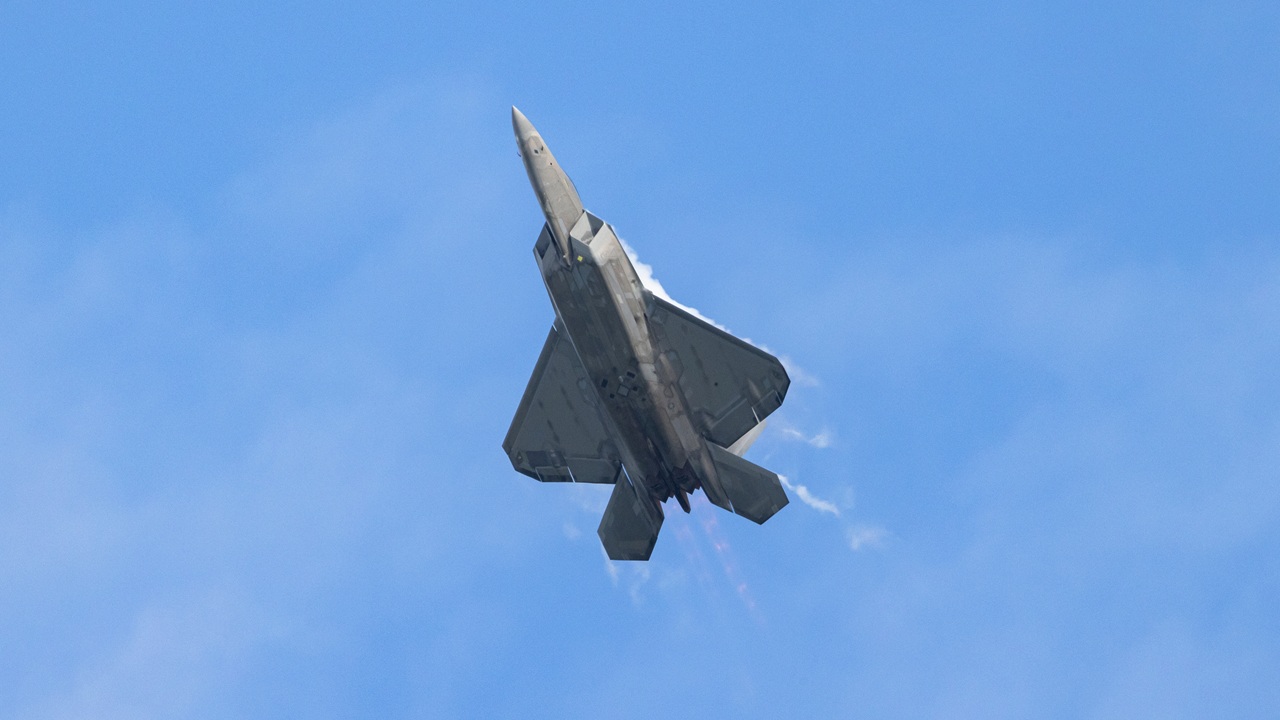
Of course, not all aircraft are capable of post-stall maneuvers. In fact, the vast majority of aircraft are not capable of post-stall maneuvers. Soviet/Russian aircraft, which adhere to the Soviet/Russian doctrine that emphasizes close-in capabilities, often feature super maneuverability. The Su-27 family, the Su-30MKI, and the Su-35 all have post-stall capabilities. The Su-57, too. In the West, the capability is harder to find. The F-22, has 2D thrust vectoring (pitch-only), which allows for some post-stall maneuvering. Notably, the fifth-generation F-35 does not have post-stall capabilities, as it was not built for WVR combat, and lacks the agility commonly associated with ultra-modern aircraft.
Why the Pentagon Left Post-Stall Maneuvering Off the F-35
The F-35 is an insightful case study in this regard. The lack of post-stall capabilities is an acknowledgement that modern air combat depends more on sensors and missiles, not guns or maneuvering. Still, post-stall can aid weapon employment, if not dogfighting theatrics. And regardless, the training and survivability benefits of post-stall are real.
But post-stall comes with tradeoffs. The technology adds weight and mechanical complexity to an aircraft, which in turn imposes a higher maintenance burden. And thrust vectoring can reduce range, payload, and stealth optimization—all important design elements in modern aircraft.
As BVR combat and autonomous teaming expand, the relevance of post-stall maneuvering may decline. The concept is not meaningless, but it’s not vital either. Whether future aircraft employ the capability will depend upon doctrine and trade-off decisions, rather than technical capacity.
About the Author: Harrison Kass
Harrison Kass is a senior defense and national security writer at The National Interest. Kass is an attorney and former political candidate who joined the US Air Force as a pilot trainee before being medically discharged. He focuses on military strategy, aerospace, and global security affairs. He holds a JD from the University of Oregon and a master’s in Global Journalism and International Relations from NYU.
Image: Shutterstock / Victor Maschek.