Among contemporary Polish mystics, none is better known than St. Faustina Kowalska, whose Diary has earned a place among the treasures of mystical literature. Yet another, almost wholly unfamiliar outside Poland, also bore the invisible stigmata: Alicja Lenczewska. With January 5, 2026, marking the fourteenth anniversary of her death, I offer these brief reflections in her honor.
Alicja Lenczewska was born in Warsaw in 1934 and spent the greater part of her life in Western Pomerania. Until her conversion in 1985, her faith, as she later acknowledged, was mostly superficial. “There were several years when I lived outside the Church,” she wrote, “almost entirely in clear contradiction to the commandments of God.”
Although Alicja never married, she did receive proposals. One suitor struggled with alcoholism; another—a man from Bologna she met in the 1970s—she declined, unwilling to enter a relationship that was not grounded in marriage. Looking back on her path, she would say simply: “I am called to a life of solitude, and I am at peace with it.”
The true turning point occurred during a religious retreat in Gostyń in 1985. As she later confessed, “Something happened there that completely changed my life.” On another occasion, she admitted, “Everything I had longed for and chased after in the world for so many years, He gave to me.”
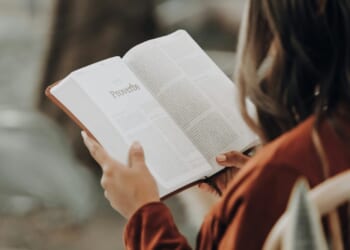
Alicja began attending daily Mass, spending blessed moments in Adoration, immersing herself in Scripture, and praying the Liturgy of the Hours and the Rosary. She also embraced fasting on bread and water on Wednesdays and Fridays.
She was granted the grace of regular mystical encounters with Jesus, during which she could ask questions and hear His replies. He told her to write everything down, and in time two spiritual diaries emerged: A Word of Instruction and Testimony.
Alicja’s spiritual journals reached Archbishop Andrzej Dzięga, who appointed a theological commission to evaluate them. The reviewers found her writings to possess remarkable theological and spiritual depth and to be fully consistent with Catholic teaching. On this basis, Bishop Henryk Wejman, the vicar general, gave the imprimatur on them.
Once these journals found their way into Catholic bookstores, they quickly flew off the shelves. No wonder: the words attributed to Jesus often bear metaphysical power and align with the deep currents of our mystical literary tradition.
On July 22, 1986, Alicja recorded:
“Offer up all your thoughts and feelings, acts, yourself. Keep on doing this, so that you have nothing left but Me. You will have everything in Me.”
This instruction closely corresponds with St. Faustina’ diary:
“And Jesus said, for you, I am mercy itself; therefore, I ask you to offer Me your misery and this very helplessness of yours, and in this way, you will delight My Heart.” (1775)
Like a small child, we often need to hear the same truth repeated many times before it finally takes root in our hearts. On July 23, 1986, our current Polish mystic wrote of the true value of weakness and the threat of rebellion against God:
[Alicja]: “I am sinful. What should I do in response to your call and love?”
[Jesus]: “Extremely simple. Devote and offer all your sinfulness and weakness to Me. Accept with peace filling your heart and love towards other people whatever comes your way. Don’t you know that everything comes from Me? When you rebel against the circumstances of your life you rebel against Me. Showing impatience, even in your heart, towards another—you show impatience with Me.”
“My grace is sufficient for you, for power is made perfect in weakness. I will rather boast most gladly of my weaknesses, in order that the power of Christ may dwell with me”—we read in 2 Corinthians 12:9.
The paradox of divine strength revealed through human weakness, a theme quietly woven throughout the writings of many mystics, is also expressed in Our Lord’s dialogue with Alicja Lenczewska on April 27, 1986:
[Alicja]: “A deep sense of helplessness overwhelms me; I even cannot desire as I should: sincerely and unceasingly. What must I do?”
[Jesus]: “Trust and ask. It is good that you feel helpless. Helplessness is the beginning of My power in yourself. I can only give My power to those who lose faith in their own capacity and strength. Only these can become strong through My power. Be helpless as a child.”
Compare this with the Doctor of the Little Way: “I am only a weak and helpless child, yet it is my very weakness which has made me daring enough to offer myself to You, Jesus, as the victim of Your love.”
In 2010, her mystical communications ceased, and Alicja entered a period of serious illness. She accepted her condition as “a gift from God,” carrying it with a quiet cheerfulness until the end, as those who walked with her attested.
In her final days, Alicja chose St. John’s hospice, not wishing to weigh on her brother Sławomir and his wife, Dorota, and consoled by the promise of daily Mass. The morning before her admission, her cancer-thinned femur snapped at dawn. She remained alone with the pain for almost two hours before calling Dorota—likely unwilling to wake the household, and perhaps offering the pain, silently, for some intention. Only afterward did she allow an ambulance to take her to the hospital.
Alicja calmly passed away in 2012. Just before her death, she reportedly had a brief vision of the afterlife. She uttered: “It is so beautiful there! I saw my parents. How He loves us! I was beyond time. I hear everything. I am dying happy.”
An ever-growing number of people now visit the mystic’s grave to seek God’s graces for themselves and for others. They arrive individually from all parts of Poland—priests, nuns, and laypeople alike.
The journals can be found in countless Catholic homes; excerpts from her spiritual conversations with Jesus circulate widely on social-media profiles, priests often quote them in their homilies, retreats are built around them, and many use them as texts for meditation. Today, alongside St. Faustina Kowalska’s diary, Lenczewska’s writings appear to be the most frequently read works of female mysticism in Poland.
Reflecting on the spiritual journey of this Polish mystic, one can clearly perceive the distinctive grace of offering everything to God. For in truth, nothing—apart from sin—truly belongs to us; all is His gift. And, paradoxically, even our sin is something that ought to be given over to Him. Thus, Jesus is to receive not only the major decisions of our lives: purchasing a home, moving to a new city or country, choosing a field of study, but also the most mundane matters: brushing our teeth, our sleep, loading the dishwasher, or filling the car at the gas station. In this way every act of our will, every task, takes on a supernatural character, becoming, as it were, divinized. Christ Himself adjusts and purifies these actions, guarding us from falling: “So, whether you eat or drink, or whatever you do, do everything for the glory of God” (1 Cor. 10:31).
Alicja’s path to holiness is not paved with heroic feats or superhuman effort but with a childlike confidence and surrender, as St. Thérèse taught. All we need to do is allow Jesus to carry us, especially in our weakness. Then one may say, “yet I live, no longer I, but Christ lives in me” (Gal. 2:20).
Photo by Taylor Walling on Unsplash