Effective pressure on Maduro requires US leadership with Latin American allies, regional energy investment, and humanitarian engagement—not confrontation alone.
China and Russia have expressed support for Venezuela as the South American country confronts a complete blockade on sanctioned oil tankers going to and from Venezuela. President Donald Trump is ratcheting up pressure against Nicolás Maduro, the President of Venezuela. Trump has accused Maduro of using oil money to finance “drug terrorism, human trafficking, murder, and kidnapping,” and declared Maduro’s government a “foreign terrorist organization.” Trump said it would be “smart” for Maduro to step down and reiterated that the United States could keep or sell the oil it had seized off the coast of Venezuela in recent weeks.
Moscow has promised “full support” against what it calls US hostilities, while Beijing has condemned the US’s latest moves as a “serious violation of international law.” However, the support for Venezuela seems symbolic, with statements being given in support rather than military or financial support.
The Risk of Escalation in the Caribbean
Tensions between the two nations are reaching a dangerous tipping point. Trump’s moves have unknown possibilities, inviting risk. The US military has been carrying out airstrikes near Venezuela on alleged drug smuggling boats since September, which have killed at least 95 people in 25 attacks. The United States needs a strategy that isolates Maduro without handing Russia and China more influence in the backyard—balancing tough sanctions with smart diplomacy to encourage a peaceful transition in Venezuela.
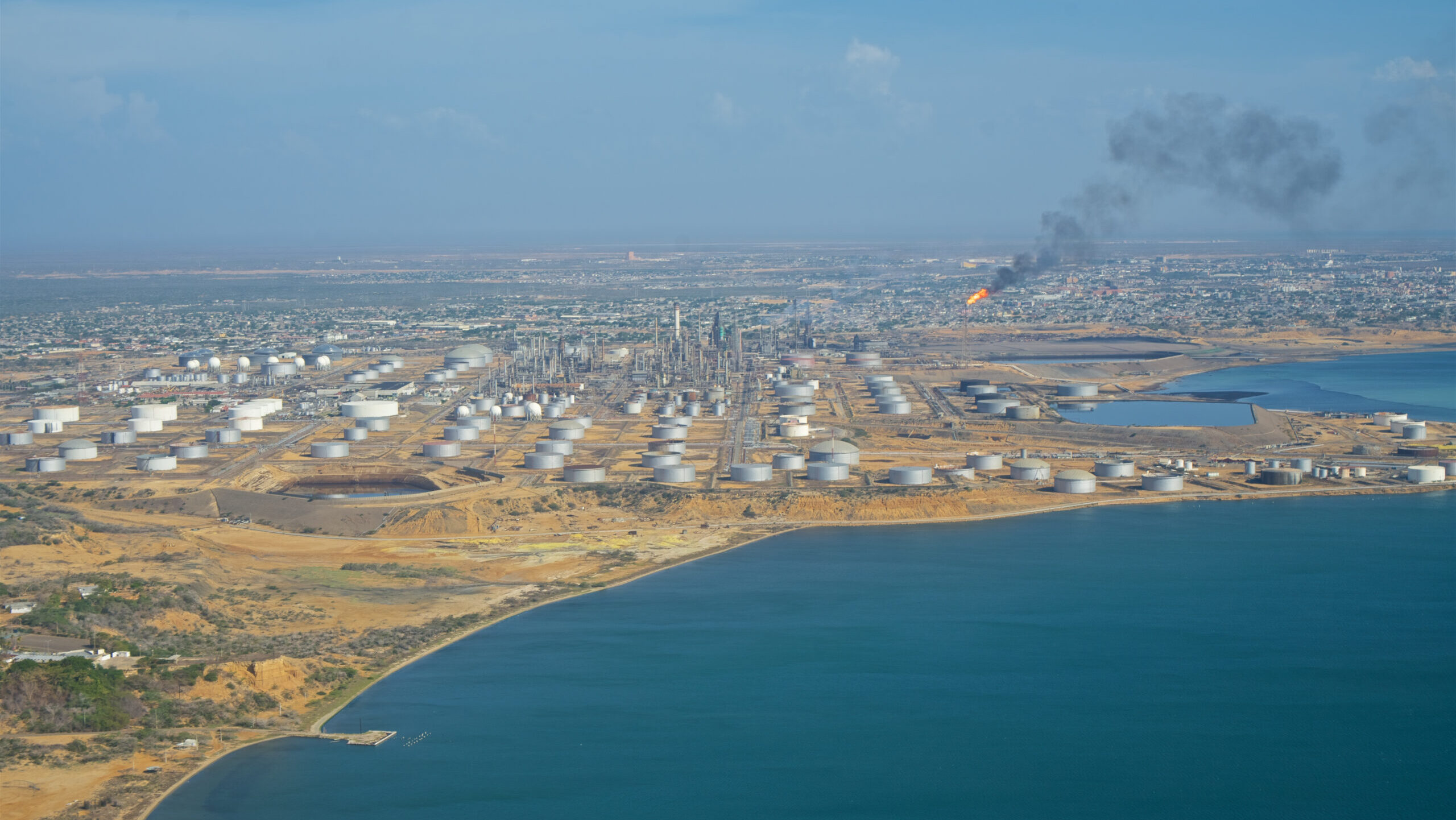
The recent move by Trump could significantly affect Venezuela’s oil exports. Venezuela has the world’s largest proven oil reserves, which play a vital role in its economy. Venezuela depends completely on tankers to export its oil to world markets. Trump also suggested Venezuela give up land, oil, and assets to his country.
How the United States Can Limit Maduro Without Empowering Beijing and Moscow
China may continue criticizing the United States’s move, but it may not go further by providing military and financial aid. However, the United States needs smart strategies without handing more influence to the South American nation. The United States should work to rally Latin American nations behind a unified front.
The United States should invest in regional energy alternatives, such as boosting liquefied natural gas (LNG) exports to Europe and Asia, to reduce global dependence on Venezuelan oil. This would undercut Maduro’s leverage without direct confrontation. Trump’s administration should engage quietly with Maduro’s inner circle too.
Additionally, the government should also encourage US companies to partner with Venezuelan firms on humanitarian projects, such as food distribution or infrastructure repairs, to build goodwill and show that life could improve post-Maduro. This humanizes the United States’s role, making it harder for Russia and China to increase their influence.
Trump’s supporters have a point: diplomacy alone hasn’t worked. A show of force might be the jolt needed to bring Maduro to the table seriously, but without a broader regional and humanitarian strategy, escalation alone risks backfiring and empowering China and Russia. And in a world where autocrats are emboldened, backing down could signal weakness to Beijing and Moscow.
Still, pure confrontation risks escalation amid other global crises. America’s strength lies in smart power, not just muscle. Let’s push for a Venezuela where democracy thrives.
About the Author: Brabim Karki
Brabim Karki is a contributor to The Independent, The Economic Times, Nikkei Asia, The Firstpost, The Globe and Mail, The Hill, South China Morning Post, The Japan Times, The Straits Times, and others. He is also the author of two novels, “Mayur Albatross” and “Osin Fisher.” He can be contacted at [email protected].
Image: Alejandro Solo/shutterstock