Iran’s setbacks in 2025 should not lull US policymakers into thinking that Tehran is finished with destabilizing the region.
President Donald Trump’s newly released National Security Strategy (NSS) is right-sizing the Middle East for American foreign policy thinking, claiming it is no longer a “constant irritant.”
Throughout 2025, the Trump administration pursued a combination of sound domestic energy policy, hard-nosed regional diplomacy, and prudent military action to bring about this reframing. Nowhere is this clearer than with Iran, which is only mentioned three times in the entire document.
Unsurprisingly, one of those references is to Operation Midnight Hammer, President Trump’s historic use of force against Iran’s nuclear facilities. The operation—which came near the end of the 12-Day War between Israel and Iran this summer—brought about what no combination of negotiations, deals, sanctions, or sabotage was able to achieve: the first cessation of all uranium enrichment at known Iranian nuclear sites since 2006. As a reminder, this is what numerous UN Security Council Resolutions sought, and failed, to attain.
But post-Operation Midnight Hammer, one question lingers.
If “the region’s chief destabilizing force,” per the NSS, remains the Islamic Republic of Iran—a terrorist state that has threatened the life of the president—how can “partnership, friendship, and investment” be meaningfully pursued in the Middle East absent a larger strategy to deal with Iran?
Here, some may take solace in the policy of Maximum Pressure, which was revived early in 2025 to reduce Iran’s oil exports and curb its access to revenue. But hope that economic coercion could substitute for strategy appears increasingly misplaced.
For the past three months, Iran’s oil exports have hovered at just over 2 million barrels per day. This is despite Treasury Secretary Scott Bessent seeking to limit Iran’s exports to 100,000 barrels per day. While the administration deserves credit for raising the issue of sanctions adherence globally and continuing to target tankers and their associated shipping companies, these numbers look like the opposite of maximum pressure.
Moreover, if sanctions are intended to hobble Tehran’s economy and prevent it from building back better, then enforcement must be significantly stepped up to augment the handicapping effect sanctions can have on sectors that support Iran’s military industries or illicit weapons procurement networks.
But there’s another reason to worry about slippage.
The vast majority of Iran’s oil is sold at a discount to America’s near-peer competitor, China. In fact, China has been the largest importer of Iranian oil for over a decade and is a major sanctions buster. Yet the administration appears hesitant to nest the Iran problem into the larger China challenge. This is despite the administration’s focus on China and great power competition in both the 2017 and 2025 NSS.
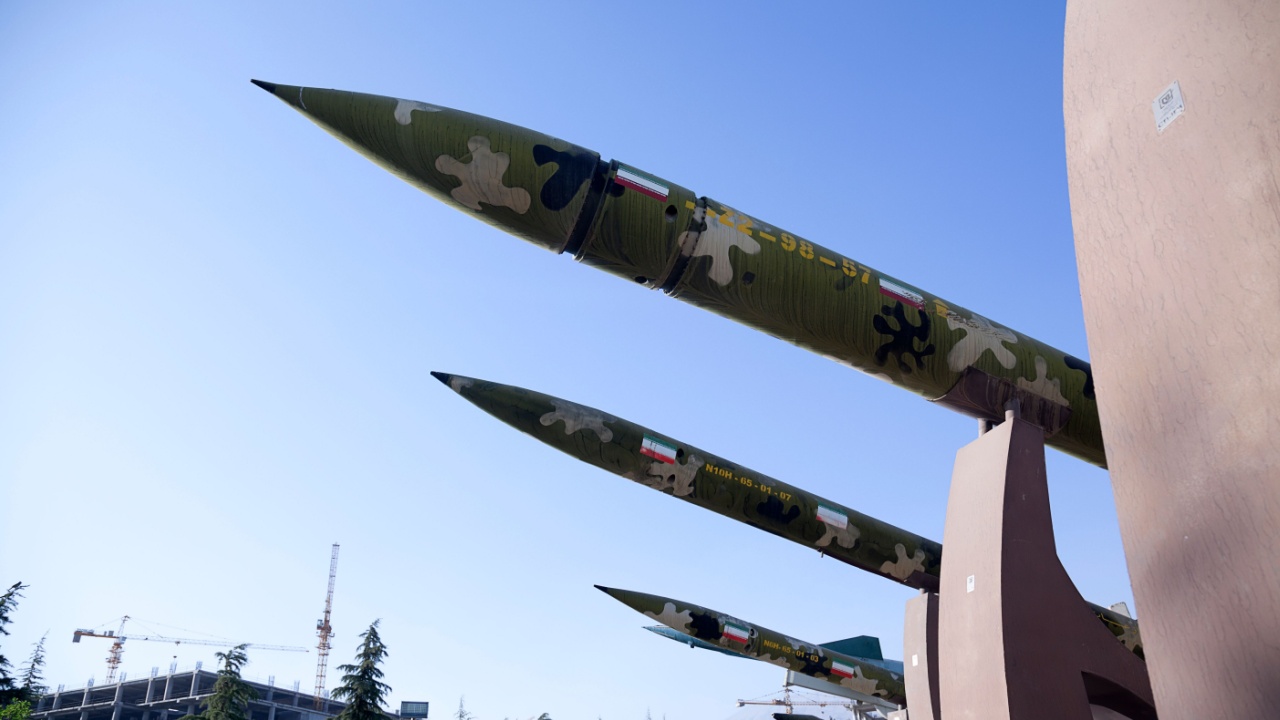
And while Beijing did not rush to defend Tehran during the 12-Day War, it has shipped dangerous chemicals both before and after the war to help Iran reconstitute and grow its ballistic missile arsenal. These missiles have not just been fired at Israel, but at US bases in the region in 2020 and 2025. To therefore disconnect the dots between Tehran and Beijing is strategic malpractice.
Faced with this record, others may take solace in the administration’s preference for burden-sharing, empowering partners through arms sales as the next-best backstop against Iran. That’s where Israel enters the picture.
Israel’s military performance against the Iranian threat network and the regime itself certainly offers room for optimism. But studied closely, Israel’s battlefield successes vindicate the utility of a military option, rather than pointing to a military solution for the region’s challenges. Case in point is Hamas. Despite being the weakest of Iran’s proxies, Hamas continues to cling to power, causing chaos even after two years of war in Gaza.
While there can be no doubt that Israel’s strikes have set back Iran’s proxies considerably, Tehran does not appear sufficiently deterred to let its network atrophy.
In fact, less than a month after the 12-Day War, the Islamic Republic resumed shipping missile and drone components to Yemen’s Houthi rebels. And despite losing the “land bridge” that ran through Assad’s Syria to support Lebanese Hezbollah, the regime is reportedly diversifying its supply routes to make sure its most important proxy can limp along.
Put simply, the failed states these groups find themselves in remain fertile ground for the reconstitution of armed anti-American and anti-Israel terror. Iran’s proxies are therefore down, but not out.
This brings the focus back to Washington.
While Trump has promised to use force again if Iran reconstitutes its nuclear program, there has been very little said about where the red line will be drawn, as well as what to do about Iran’s non-nuclear threats in the interim.
Apathy or indifference on Iran policy fostered by an assumption that sanctions are “working” or that Israel has things “under control” risks replicating the mistakes of previous administrations, which President Trump himself has critiqued.
Indeed, the last time an administration sensed calm and the potential for regional transformation was just days before the October 7, 2023 terrorist attacks against Israel that launched the Middle East into its latest cycle of violence.
Should a strategy not be devised now against the Islamic Republic—when it is weaker than ever before—the chief regional destabilizer is almost certain to return with a vengeance as an irritant both to headlines and to policymakers in the near future.
About the Author: Behnam Ben Taleblu
Behnam Ben Taleblu is the senior director of the Iran program at the Foundation for Defense of Democracies (FDD) in Washington, DC. For well over a decade, Behnam has supported FDD’s Iran program as a senior fellow, research fellow, and senior Iran analyst. Prior to his time at FDD, Behnam worked on non-proliferation issues at an arms control think tank in Washington. Leveraging his subject-matter expertise and native Persian-language skills, Behnam closely tracks a wide range of Iran-related functional and regional topics, including nuclear non-proliferation, ballistic missiles and drones, sanctions, the Islamic Revolutionary Guard Corps and its proxies, the foreign and security policy of the Islamic Republic, and internal Iranian politics.
Image: Saeediex / Shutterstock.com.