President Donald Trump has the chance to begin the reconstruction of the Gaza Strip. Delay will only destabilize the situation.
President Donald Trump’s peace plan for Gaza, and his best hope for a Nobel Peace Prize, needs a big push when he meets with Israeli prime minister Benjamin Netanyahu on December 29. As of Christmas, the plan appears to have stalled, but that is only partly true. Hamas’s refusal to surrender its weapons is the big problem—but the solution is far more in President Trump’s hands than most realize.
I led postwar planning for Iraq at the US State Department and worked on post-conflict operations in Bosnia, Kosovo, Iraq, East Timor, Libya, and Afghanistan. After Hamas’ terrorist attack on October 7, 2023, along with many others, I warned of the dangers of failing to plan for postwar Gaza and joined a group of former senior officials to develop a plan for postwar Gaza. President Trump and his team, working with Israel and Arab allies, deserve the credit for Trump’s twenty-point peace plan, codified in United Nations Security Council Resolution 2803.
Our plan got closer to Trump’s final plan than anyone else: international governance for a transitional period, an international oversight board, working with Palestinians from Gaza, backed up by an international stabilization force, authorized by a United Nations Security Council resolution, with a non-American in charge of the civilian effort and a US general heading up the International Stabilization Force (ISF).
All living and all but one deceased Israeli hostages have been returned, but Hamas has neither disarmed nor given up governance of the west of a “Yellow Line” that divides Gaza in half. Apart from a Civil-Military Coordination Center in Kiryat Gat, Israel, no country has sent forces for the ISF that will provide security, oversee Hamas’s disarmament, and allow the Israeli army to withdraw to Gaza’s borders.
The Board of Peace, which Trump will chair, will not be announced until January. The Palestinian technocratic committee tasked with rebuilding Gaza’s infrastructure has not yet been named. An executive committee that will handle vital day-to-day coordination among internationals, Palestinians, Israelis, Egyptians, and donor states has only four known names: highly respected Bulgarian diplomat Nikolay Mladenov, US envoy Steve Witkoff, Trump’s son-in-law Jared Kushner, and former British prime minister Tony Blair.
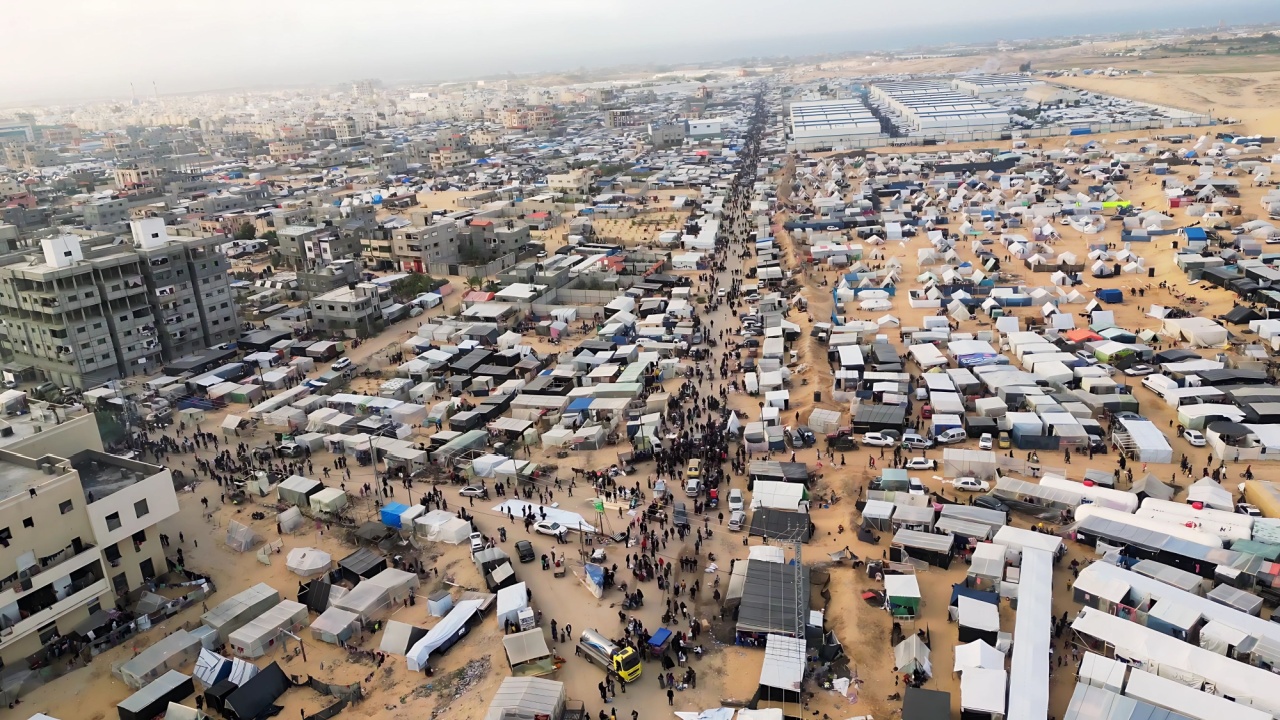
While visionary plans exist, nobody has put up the money needed to start anything. Arab governments will not finance Gaza’s reconstruction as long as Hamas retains its weapons, the use of which would invite Israeli retaliation, destroying whatever was rebuilt. Some think both Hamas and Israel are slow-rolling Trump’s plan, increasing the suffering of the two million Gazans living in desperate circumstances and putting the security of both Israelis and Palestinians at risk while Hamas increases its chokehold over half of Gaza’s territory and most of Gaza’s people.
Despite this, much has been going on behind the scenes, but Trump now has to make a key choice among three clashing visions.
One, which Prime Minister Netanyahu will likely push, is Trump’s approval for Israeli military action against Hamas fighters. The strategic logic is that a further weakened Hamas would eventually be unable to interfere with Trump’s peace plan. However, this would result in Israeli and many Gazan casualties and disruption of humanitarian aid. How long this would take is unclear. Also, Netanyahu reportedly wants US support for an attack on Iran’s missile program, which Iran is actively rebuilding. He may also ask for Trump’s authorization to attack Hezbollah if it refuses to turn over its weapons to the Lebanese armed forces. Trump may agree to one of these ideas, but he will not agree to all of them.
The second is the plan that the Tony Blair Institute developed last summer. A leaked draft from September in Haaretz has a small international “executive secretariat” with five “commissioners” overseeing a Palestinian Executive Authority (PEA) that actually runs Gaza. This plan puts substantial responsibilities on the local Palestinians, who would not be affiliated with Hamas. Still, the leaked draft is weak on how Hamas would be disarmed and how to keep Hamas from extorting or coercing Gazans, including those in the PEA, into obeying its will.
It calls for partial deployment in the first two years, with full operations only in Year Three, which is too late. Audit mechanisms appear significantly understaffed. Corruption is a major reason many Palestinians mistrust the Palestinian Authority in Ramallah, and support for Gaza’s reconstruction will evaporate if it replicates this failure.
With a total budget of only $90 million in the first year, the plan appears too small to oversee the amount of work required to start Gaza’s physical and social reconstruction. This plan has almost certainly been improved since September, but Trump will want to know whether these problems have been addressed.
The third option is the Gaza Supply System, developed by Americans reporting to Witkoff and Kushner, which would use private capital to jump-start Gaza’s physical and social reconstruction east of the Yellow Line, while employing private security contractors in roles the International Stabilization Force is unwilling to undertake. This would get around two roadblocks: first, no Arab governments have actually contributed billions of dollars to Gaza’s reconstruction, and second, private security contractors are willing to work in Gaza even while the United States insists on no US boots on the ground, and other countries are unwilling to have their troops confront Hamas.
According to an article from The Guardian, private investors would be repaid for jump-starting Gaza’s reconstruction through tariffs or tolls on aid and commercial trucks entering Gaza. The United States government similarly relied on customs duties and tariffs to fund public services and security until the advent of the income tax.
Historically, Hamas also charged tolls on aid trucks and taxed Gazans bringing in cash from jobs in Israel. And charging tolls on incoming trucks provides private investors with a positive incentive to increase the number of trucks entering Gaza, aligning their interests with those of the Gazan people while ensuring robust but not excessive security inspections.
Trump will have to decide soon which of these three competing proposals he will support. Waiting on Hamas to voluntarily disarm is unlikely to succeed, prolonging both the misery of 2 million Gazans and the security risk to both Israelis and Palestinians. Arab governments have not embraced Blair’s plan.
The people of Gaza and Israel need to see progress, and waiting for an enlarged version of a postwar governance plan to be funded and staffed in mid-2026 is dangerously late. President Trump should approve a plan that starts, urgently, Gaza’s physical and social reconstruction. The Gaza Supply System model, for all its limitations, is currently the best available approach to jump-start some level of security and reconstruction in at least half of Gaza. We have to start somewhere—and we need to start now.
About the Author: Thomas Warrick
Thomas Warrick is a nonresident senior fellow with the Scowcroft Middle East Security Initiative in the Middle East Programs at the Atlantic Council. From 1997 to 2007, he served in the US Department of State on Middle East and international justice issues, including heading postwar planning on Iraq from 2002 to 2003.
Image: Shutterstock.com.