Christmas Day: The Fulfillment of Advent
Advent has a way of quietly correcting our assumptions about the spiritual life. Many of us begin the season thinking of it as a checklist for preparation. We plan to restart prayer habits, curb distractions, and set better intentions, only to discover, if we stay with Advent long enough, that it is doing something subtler and more unsettling. It is not training us to climb higher or perform better. It is teaching us how to wait without trying to control the outcome.
That distinction matters because Christmas does not arrive as a reward for effort well spent. It comes as a gift that interrupts us, whether we feel ready or not. Advent ends not with completion, but with presence.
At the heart of Christmas is a truth we hear every year and still struggle to absorb fully. Humanity does not reach God. God crosses the threshold toward humanity. The gate we have been contemplating throughout this retreat opens not because we have managed to order our lives ideally, but because God chooses to come anyway. Grace does not wait for ideal conditions.
This is what Christians mean when they speak of the Incarnation, and it is far more disruptive than our familiar Christmas imagery often allows.
The Risk God Takes
God does not enter history from a position of visible strength. He does not arrive immune to consequence or insulated from harm. Instead, He binds Himself to the slow and vulnerable reality of human life. He is born into a particular family, in a particular place, at a particular moment in history. From the beginning, He is subject to political instability, poverty, danger, and uncertainty.
This is not a symbolic gesture or a temporary disguise. In the Incarnation, God commits Himself fully to the human condition. He experiences time from the inside. He grows, learns, waits, hungers, and tires. He accepts the limits of a body that can be injured and a life that can be threatened. Even as an infant, He is already exposed to rejection and violence.
We tend to underestimate how radical this choice is. Power, as we usually understand it, seeks protection and control. Christmas reveals a God who chooses the opposite. He willingly places Himself in the hands of others and accepts suffering as the cost of love.
This is not divine strategy. It is divine self gift.
Why the Incarnation Refuses to Remain Abstract
One of the reasons Christmas matters so deeply is that it prevents us from turning God into a purely theoretical presence. God refuses to remain an idea, a principle, or a distant moral authority. In becoming flesh, He insists on being encountered within the texture of real life.
This can be uncomfortable for those of us who prefer a manageable spirituality. We often treat faith as something to be mastered through effort or understanding. We look for clear metrics, visible progress, and reassurance that we are doing things correctly. The Incarnation quietly dismantles that framework.
God does not come to affirm our competence. He comes to share our condition. He does not meet us at our strongest, but at our most human. In Jesus, God knows hunger, fatigue, obscurity, and dependence not as an observer, but as a participant. Intimacy with God is no longer about proximity to ideas, but closeness to a person.
A Child at the Center
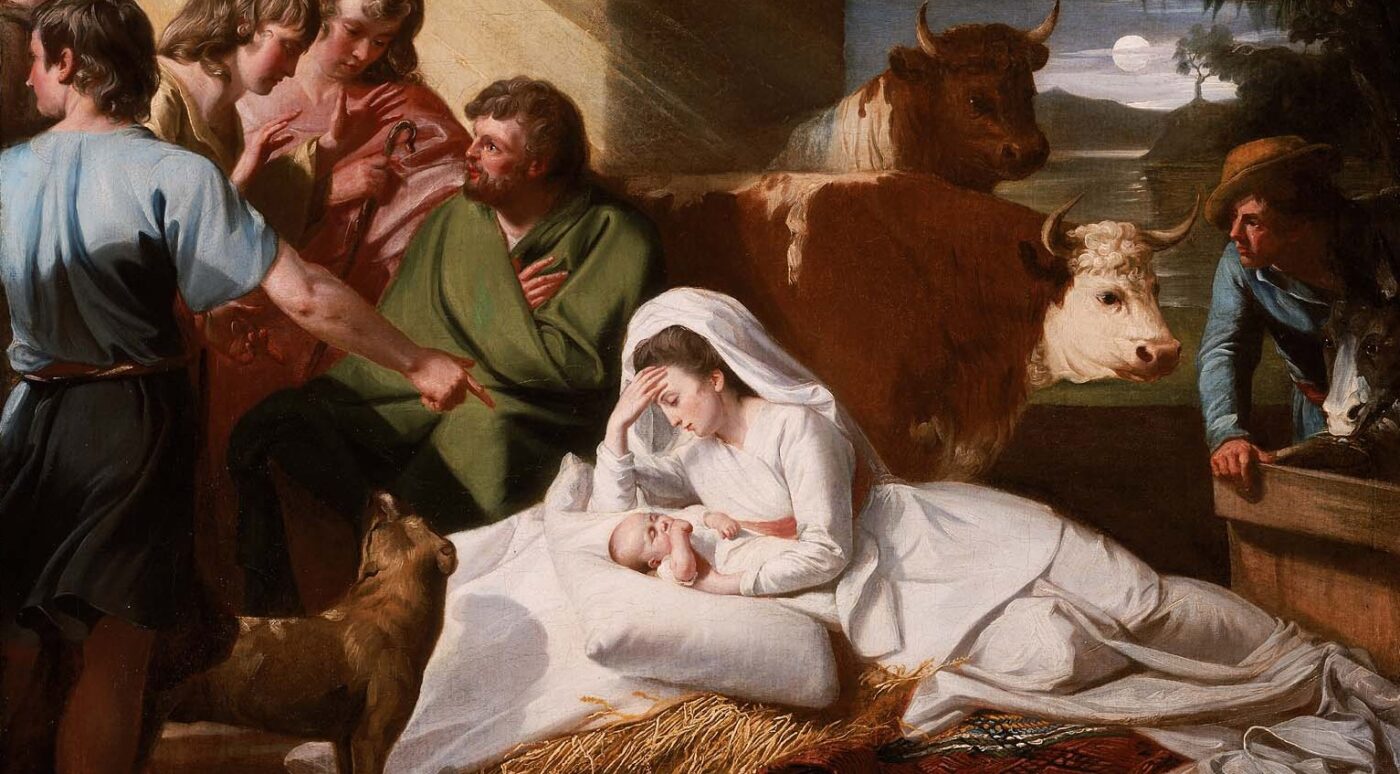
That God comes as a child is not incidental. A child cannot be controlled or negotiated with. A child demands attention, patience, and presence. You cannot rush a child or reduce one to a concept. You can only receive.
The first witnesses of Christmas seem to understand this instinctively. The shepherds do not pause to analyze what they have been told. They go to see. The Magi leave home without certainty, following a sign they cannot fully explain. Mary resists the urge to resolve the mystery quickly. She holds it, reflects on it, and allows it to unfold over time.
Their response suggests that faith does not begin with clarity. It begins with approach.
God Enters Ordinary Life
Christmas also confronts one of our most persistent spiritual illusions. We often believe that God will meet us once life becomes simpler or more orderly. We imagine holiness existing somewhere beyond the noise of work, family, fatigue, and responsibility.
The Incarnation does not wait for ideal conditions. God enters ordinary life precisely as it is. He is born into a family navigating uncertainty. He grows up in obscurity. He lives within the rhythms and limits of daily human existence.
Which means the place of encounter has not changed.
It is still found in homes and workplaces, in strained relationships and unfinished tasks, in weariness and hope held together. The gate God opens at Christmas does not lead away from real life. It opens directly into it.
Arrival, Not Resolution
This retreat does not end with everything neatly resolved. Christmas is not a conclusion. It is an arrival. The practices of Advent do not disappear. They deepen. Waiting becomes watchfulness. Silence becomes companionship. Love begins to demand more than admiration.
There will be a Cross. There will be loss. There will be confusion and failure along the way. Christmas does not deny any of that.
But today, the Church invites us to pause before the weight of what has already happened.
God is here.
Not as an abstraction.
Not as a project.
But as a presence.
Do not rush past the manger. Allow yourself to receive what you did not earn and could not manufacture. Let yourself believe, perhaps more quietly than before, that God desires to be with you in the life you are actually living.
The gate stands open because God has stepped through it.
Merry Christmas.
Christmas Meditation Challenge: Staying at the Manger
Christmas is not a day to rush through, even when it is busy. This Meditation Challenge is an invitation to remain near the mystery of the Incarnation, allowing God’s nearness to settle rather than immediately move on.
At some point today, physically place yourself near a Nativity scene, a crucifix, or an image of the Holy Family. If none are available, sit quietly and imagine the stable at Bethlehem. Take a moment to notice where you are, how your body feels, and what is stirring in you. Do not try to fix or improve anything. Simply arrive.
2. Read the Gospel Slowly
Read Luke 2:1–20 once, slowly and without commentary. Pay attention to what draws your attention naturally. It may be a person, a word, a detail, or even something that unsettles you. Do not analyze it. Let it remain.
If helpful, read it a second time, placing yourself quietly within the scene.
Using your own words, speak to God as you would to someone present beside you. You do not need eloquence or insight. Tell Him what you notice. Tell Him what you feel. If words do not come easily, allow silence to stand in their place. Presence is enough.
4. Practice One Act of Attentive Presence
Choose one ordinary moment today and give it your full attention. This might be a conversation, a shared meal, a quiet moment with your family, or a simple task done without distraction. Receive it as a place where God has chosen to dwell.
5. Close with Gratitude
Before the day ends, take a moment to thank God for one specific grace from today. It does not need to be dramatic. Name it plainly. Offer it back to Him as a gift.
A Grace to Ask For
Ask for the grace to remain with Christ.
Not to rush ahead.
Not to resolve everything.
But to live from the nearness He has already given.
Editor’s Note: Join us in praying A Prayer at the Open Gate, a prayer for Christmas Day, concluding our Advent Ignatian Meditation series. Thank you for journeying with us this Advent. Have a very merry Christmas!
Image from Wikimedia Commons