Between Hamas disarmament, transitional governance, and international stabilization, the second phase of the Gaza peace plan juggles multiple and clashing moving parts.
As January 2026 nears, global attention has shifted to the next phase of the ceasefire. Building on the US-brokered 20-point peace plan endorsed by UN Security Council Resolution 2803 on November 17, 2025, Phase Two aims for the demilitarization of Hamas, Israeli withdrawal from Gaza, the deployment of an International Stabilization Force (ISF), the creation of a technocratic Palestinian committee under a Board of Peace, and the transfer of authority to a reformed Palestinian Authority (PA).
While the plan states the right things in many parts, several details and their sequencing remain unclear. Besides, mutual accusations of violations severely undermine trust. Current diplomatic efforts, research-based analytical models, and benchmarks from other Middle East agreements indicate a 20–30 percent success rate for Phase Two. This aligns with a 75 percent historical failure rate for transitional governance in occupied territories.
This bleak assessment stems from two opposing conditions: Israel’s military dominance clashes with Hamas’s intransigence. Without renewed US resolve and diplomacy, appeasement will remain slim.
Phase Two primarily focuses on disarming Hamas, whereas the plan proposed by President Donald Trump called for a process of complete demilitarization. Yet, Hamas has outright rejected disarmament, and the interim period has allowed the group to regain civilian control in parts of Gaza quietly. Hanas recently indicated that it is open to freezing or storing its arms, but this is not what the plan envisions.
Other UN-monitored disarmaments in Bosnia (1995) and Lebanon (2005) met with resistance and rarely succeeded. These operations usually required an overwhelming force that alienated civilians. A managed transition similar to Northern Ireland’s IRA decommissioning process, which put arms “completely and verifiably beyond use,” seems well out of reach for the moment.
Unless there is a clear path toward a Palestinian state or, at least, an end to the Israeli occupation of Gaza, even countries that have leverage over Hamas, such as Turkey and Qatar, might not be able to push the militant group to lay down its arms. Handing them over to the PA, as foreseen in the French-Saudi plan, is not a workable solution either.
Regarding Israel’s withdrawal from Gaza, the Comprehensive Plan involves reducing forces gradually through trust-building and progressive redeployment. Diplomatic pressure from the United States and Arab states may force adherence. However, Israel’s final authority on standards, milestones, and timeframes, including the full bi-directional opening of the Rafah crossing in line with the ceasefire terms, gives it leverage to delay.
One key part of the Trump plan is the establishment of a transitional governance administration led by an apolitical and technocratic Palestinian committee. To prevent the political vacuum that caused instability in post-Hussein Iraq, this body would operate under the aegis of an international Board of Peace (BoP), itself a transitional entity expected to operate independently, but in consultation with Israel and Egypt on security issues.
The composition of the board remains vague, with no defined criteria for membership appointment, decision-making processes, or potential UN oversight. In imposing external oversight on governance, the economy, and public services, it shifts legitimacy to the technocratic committee. Unless an inclusive framework is established, US flexibility and multilateral pressure will be necessary to prioritize Palestinian agency over unilateral control.
The ISF is expected to comprise an initial force of anywhere between 6,000 and 20,000 personnel from a wide range of nations. It may be led by a US two-star general to ensure credibility with Israel. While the command structure, troop housing, training protocols, and rules of engagement are still being planned, this mission will likely focus primarily on post-conflict stabilization and peace enforcement, with Resolution 2803 mentioning the use of “all necessary measures.”
Absent robust enforcement and with a low-level insurgency persisting, Phase Two’s failure increases dramatically. Significant challenges remain due to limited commitments from potential contributors, Hamas’s rejection without a clear path to Palestinian statehood, and unresolved operational details.
Although Italy has reportedly indicated willingness to contribute troops, and Indonesia is rumored to bring personnel for health services, construction, and humanitarian support, other countries under consideration are still seeking details. They include Egypt (for a border security coordination command center in El Arish), Azerbaijan, Australia, Malaysia, Canada, France, Cyprus, and Pakistan. While this may change, Israel has explicitly opposed Turkish troop involvement.
The structure has many models to draw on, but few that may satisfy Israel: UNIFIL, the UN’s peacekeeping mission in Southern Lebanon; KFOR, the NATO-led Kosovo Force; or the security mission established in the Balkans under the Dayton peace agreements in 1995. Stronger enforcement powers are likely, but they are contingent on demilitarization milestones, such as Hamas disarmament and the destruction of offensive infrastructure.
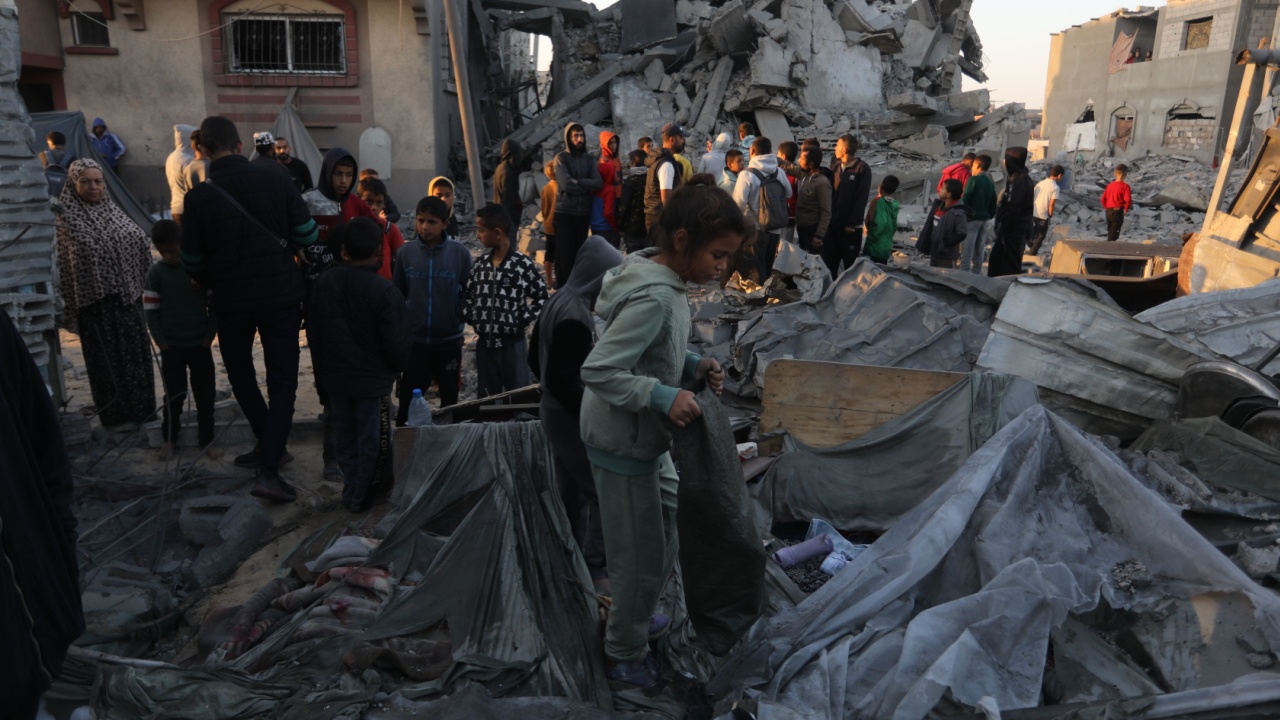
A key challenge is to ensure humanitarian aid flows without disruption. Phase Two requires unrestricted access and continued coordinated deliveries while maintaining order and minimizing the number of famine alerts. Clearing debris is also a prerequisite for Phase Two reconstruction, as seen previously in Beirut and Mosul. Recent reports indicate Israel’s acceptance of a limited pilot project in the IDF-controlled southern city of Rafah, to finance and oversee a multi-billion-dollar operation. These aspects will need to expand rapidly, as they constitute a critical test of resilience.
Without changes, the process could be vulnerable to external threats, logistical challenges, or internal political issues. Known pressures include the Israeli public’s 70 percent opposition to Palestinian statehood, Hamas’s refusal to leave Gaza, and funding gaps that might hinder reconstruction efforts. Overall, Phase Two remains a fragile bet.
About the Author: Eric Alter
Eric Alter is the dean of the Anwar Gargash Diplomatic Academy in Abu Dhabi and a professor of international law and diplomacy. A former United Nations civil servant and a senior consultant/team leader with various international organisations such as the WTO, the World Bank, IFC, UNDP, UNEP, and FAO, Professor Alter has been seconded abroad and worked with embassies in an advisory capacity, in particular in Aden, Beirut, and Cairo. “Agrégé des Facultés francaises de Droit,” he received his PhD from Paris I Pantheon Sorbonne, is an alumnus of the Institute of Higher International Studies of Paris II Pantheon Assas, and has an LLM from Southwestern Law School in Entertainment and Media Law.
Image: Anas-Mohammed / Shutterstock.com.