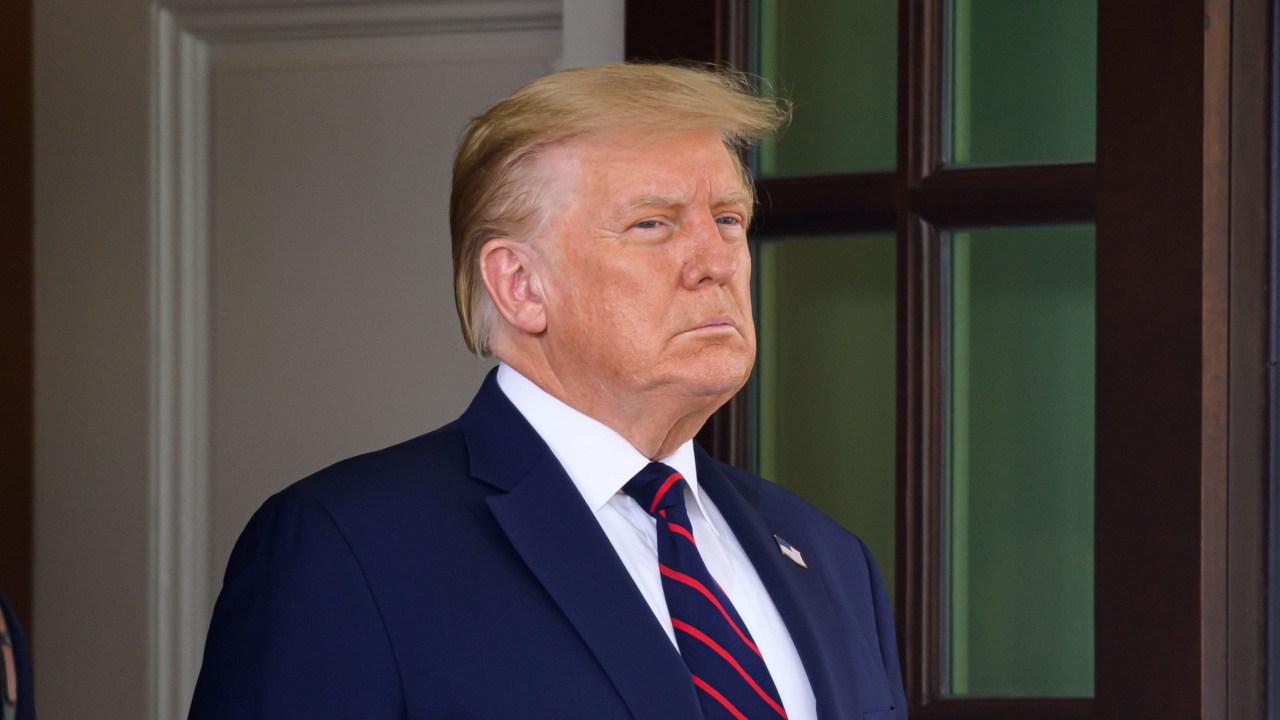
President Donald Trump’s strikes on ISIS in Syria exemplify the doctrine needed to deliver long-term security and stability in the region.
When President Donald Trump speaks of “peace through strength,” he is not reviving a slogan. He is restoring a principle of statecraft that once anchored American power—and whose erosion created the permissive environment in which terrorism, proxy warfare, and strategic defiance flourished. The United States has now demonstrated that this doctrine is no longer rhetorical.
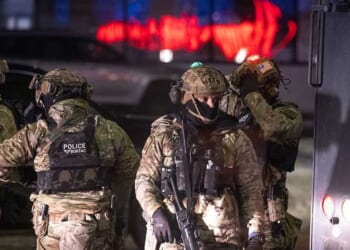
Following a December ambush near Palmyra that killed two American soldiers and a civilian interpreter, Washington launched a large-scale air campaign against Islamic State targets across central and eastern Syria, including command nodes, weapons depots, and logistical infrastructure. The message was unambiguous: attacks on American personnel carry consequences. These facts establish a short-term baseline of deterrence. But the strategic significance of the operation lies in the credibility it restored.
For more than a decade, American policy in the Middle East has been constrained by a pathological fear of escalation. In practice, this meant absorbing provocations, deferring enforcement, and mistaking rhetorical restraint for strategy. The result was not stability, but the harmful accumulation of militias, missiles, and confidence among its regional adversaries.
Deterrence did not fail because it is outdated. It failed because it was applied selectively and inconsistently.
The Syria strikes correct that imbalance. As Secretary of Defense Pete Hegseth emphasized, “This is not the beginning of a war—it is a declaration of vengeance. The United States of America, under President Trump’s leadership, will never hesitate and never relent to defend our people.” However, in realist terms, punishment is not merely revenge. Rather, it is a means of shaping the expectations of an opponent. Actors remember what is enforced, not what is announced.
For too long, the lesson learned by terrorist organizations was that American patience was elastic. That lesson has now been revised. The December ambush shattered this complacency. ISIS remains capable of killing Americans. Any strategy that tolerates that reality without response invites repetition.
The United States maintains roughly 1,000 troops in eastern Syria. Their presence is justified only if backed by credible force. Otherwise, the deployment is just a vulnerable exposure, inviting provocation.
Middle East Peace Requires Leverage and Clarity
Trump’s approach is often caricatured as inherently bellicose. The historical record suggests the opposite. His tenure demonstrated that strength and diplomacy are not adversaries, but complements.
The Abraham Accords reshaped the Middle East precisely because they were negotiated from a position of unquestioned American leverage. They succeeded not because ideology softened, but because incentives and power were aligned. Likewise, Trump’s mediation efforts aimed at de-escalating the conflict between Russia and Ukraine reflect the same logic. Negotiations backed by hard power are the surest guarantor of peace. It is therefore no surprise that Jared Kushner, a disciplined and results-oriented negotiator, has been entrusted with a central role in these efforts.
But being a man of peace means understanding when war is unavoidable. Terrorist organizations do not negotiate in good faith. They do not respect ceasefires. They do not interpret restraint as virtue. They interpret it as an opportunity. Against such actors, force is a prerequisite for diplomacy.
ISIS does not exist in isolation. Neither do Hamas nor Hezbollah. These organizations are components of a broader ecosystem of militancy sustained by ideology, financing, and—most critically—time. Time is the terrorist’s most valuable asset.
Every pause mislabeled as “de-escalation” becomes an opportunity to rearm. Every negotiation conducted without leverage becomes a cover for reconstruction. The last decade demonstrated that restraint, when unreciprocated, does not moderate adversaries—it emboldens them.
This dynamic is clearest in the proxy architecture surrounding Iran. No serious effort to dismantle terrorist organizations can succeed without a clear-eyed policy toward the Iranian regime, which continues to terrorize its own population while financing, arming, and directing militias across the region. Its proxies are designed to bleed adversaries, destabilize neighbors, and exhaust Western will while maintaining deniability.
This demands more than episodic strikes. It requires sustained pressure and doctrinal clarity. The Muslim Brotherhood and its ideological offshoots provide the intellectual fuel for this ecosystem, shaping narratives that normalize violence, sanctify martyrdom, and radicalize generations of young Muslims worldwide.
The Trump administration took a decisive step by naming the problem rather than euphemizing it. But strategy cannot end with one presidency; continuity is essential. The objective is to free societies, and especially young minds, from a doctrine that weaponizes grievance and glorifies death. Military force degrades networks; ideological clarity dismantles movements. One without the other guarantees recurrence.
Israel and the Asymmetry of Expectations
No state has absorbed the consequences of this failure more directly than Israel. Israel is routinely urged to show restraint against actors openly committed to its destruction, while those same actors are granted unlimited time to prepare the next round of violence. This asymmetry is neither moral nor strategic. Instead, it is corrosive of both Israeli and US security.
Hamas must be dismantled. Hezbollah must not be allowed to rebuild uncontested. These are not maximalist positions; they are prerequisites for deterrence. Unresolved threats do not decay. They metastasize.
Critics portray peace through strength as dangerous. History suggests the opposite. The most stable periods in international politics occurred when power hierarchies were clear and enforcement was credible.
Strength narrows the space for miscalculation. Weakness expands it. The strikes in Syria will be read carefully in Tehran, Beirut, and Sanaa. Their meaning is unmistakable: American lives are not bargaining chips; patience is not inexhaustible; ambiguity has costs.
One operation does not constitute a grand strategy. But it can restore the conditions under which strategy becomes possible. In geopolitics, clarity is power. And power, when exercised decisively, is not the enemy of peace but its condition.
About the Author: Ahmed Charai
Ahmed Charai is the chairman and CEO of World Herald Tribune, Inc., and the publisher of The Jerusalem Strategic Tribune, TV Abraham, and Radio Abraham. He serves on the boards of several prominent institutions, including the Atlantic Council, the Center for the National Interest, and the Foreign Policy Research Institute. He is also an international councilor and a member of the Advisory Board at the Center for Strategic and International Studies, and a member of the Board of Advisors of The Jerusalem Institute for Strategy and Security (JISS).
Image: Noam Galai / Shutterstock.com.