Disingenuous uses of the term “genocide” are making it difficult to discuss the real thing.
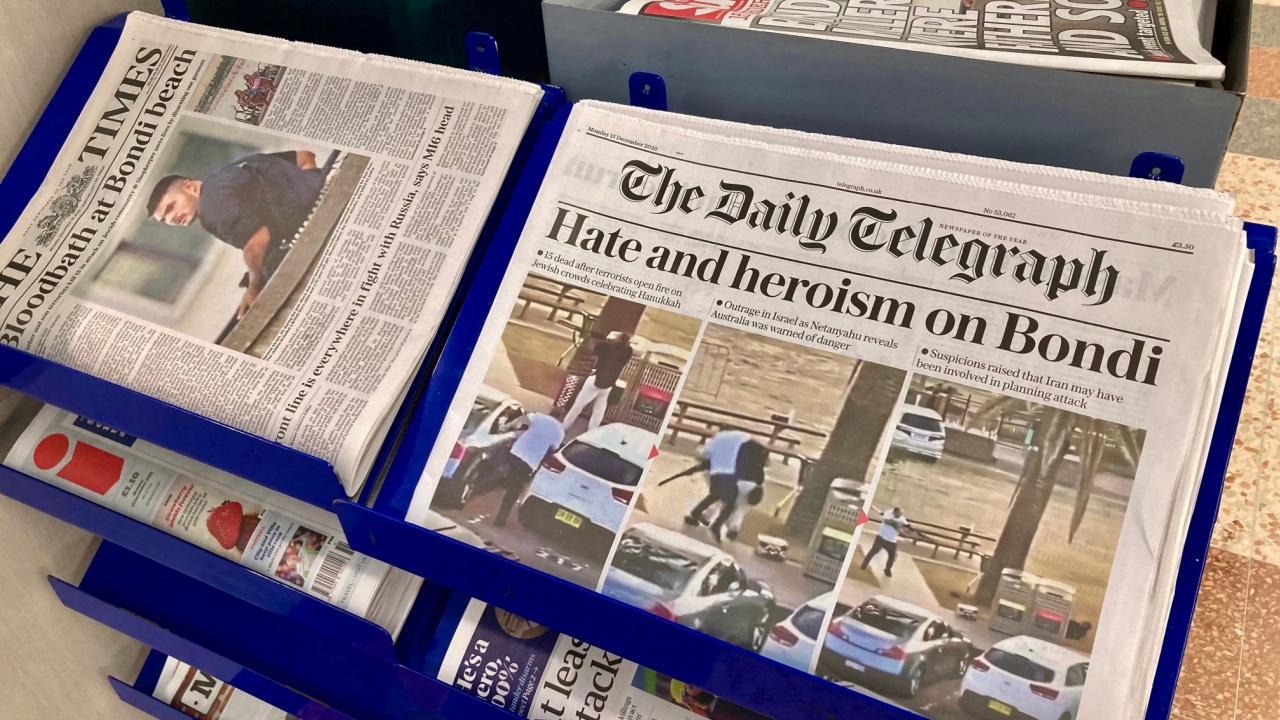
Last week’s massacre in Bondi Beach, Australia, underscores the lethality of anti-semitism. Two gunmen killed 15 people and wounded 40 as they celebrated Hanukkah. Always preceding such acts comes the ideological incitement to hatred. And in Australia, that incitement exists in phrases calling for murder (“globalize the Intifada”) and the accusation that Israel is perpetrating a genocide. This last canard reflects the fact that ours is a time of semantic inflation and depreciation.
Once-clear terms are hijacked and turned upside down in ways George Orwell would recognize all too well. A case in point is the term “genocide.” Coined by the prominent Polish-Jewish international lawyer Raphael Lemkin to describe the Nazis’ mass murder of European Jewry during World War II, it has long since been subjected to this inflation-depreciation process. Nevertheless, real genocides or attempts to launch them are occurring right before our eyes, even as political figures, either seeking to score profits or points, or simply ignorant and misinformed, aid and abet the process by which this term is devalued.
For example, there can be little doubt that Russia’s aggression against Ukraine fully conforms to the UN’s definition of the term genocide. Russian president Vladimir Putin’s 2021 manifesto, “On the Historical Unity of Russians and Ukrainians,” depicted an independent Ukrainian state as a “betrayal” of Russian nationhood. The conduct of Russian forces, the mass murders, rapes, and kidnappings of Ukrainian children into Russia, and the ongoing Russification of the territories occupied by Russia, all confirm the genocidal intent behind this invasion.
Likewise, the wars in Sudan, especially in Darfur, both in 2003-05 and now, and Nigeria are arguably also genocides. Similarly, Hamas and Hezbollah’s attacks, not to mention those of their Iranian sponsor, against Israel, have always been genocidal in intent as their founding documents and continuing rhetoric make clear.
On the other hand, charges that Israel is committing genocide against Palestinians exemplify the devaluation of the term genocide. The UN has long functioned as an anti-Israel platform, as demonstrated by the infamous 1975 “Zionism is racism” resolution passed by the General Assembly. This was only overturned in 1991, long after the damage had been done. Most recently, this anti-Israel stance informed the report of a UN commission of inquiry accusing Israel of “genocide” and demonstrating precisely the semantic depreciation of the term.
It is a classic propaganda trick to accuse an opponent of doing precisely what one intends to do or has done anyway. Indeed, it was a hallmark of both the Nazi and Soviet regimes. Notwithstanding robust population growth, libelous and deliberately inflammatory genocide charges long predated Israel’s retaliatory military actions against Hamas after the terrorist group carried out its spectacularly genocidal massacre of October 7, 2023. Indeed, long before Hamas’ attacks, Arab media and their sympathizers were systematically claiming that Israel’s War of Independence, launched by Arab states in the wake of the UN decision to partition Palestine in 1947, was an act of supposed “slow-motion genocide” or “settler colonialism.”
In other words, the charge of genocide was manufactured to cover for the failure, first of Arab governments and more recently of Arab terrorist groups and Iran, to destroy Israel despite their stated aims to do so, as well as a duplicitous policy to justify and mask their own repeated attempts at genocide of the Jewish people. So, while war remains hell, the charge of genocide in Gaza, despite the enormous suffering of the Palestinians there, has dubious roots to say the least.
For this reason, the Lemkin Institute for Genocide Prevention and Human Security, located in Pennsylvania, has taken Raphael Lemkin’s name in vain, much against the will of his surviving relatives. Despite everything happening in the Middle East and elsewhere, the institute systematically defames Israel as a genocidal state. Previous attempts to contact the organization and inquire about its activities have received no response.
This refusal to comment, in and of itself, discredits the institute’s repeated charges and the deliberate politicization and devaluation of the charge of genocide on behalf of a dubious political cause. Since Hamas continues to say it will not lay down its arms or repudiate its genocidal charter, this silence also calls into question the Lemkin Institute’s authority on the matter. By criticizing Israel and a few additional targets (such as the Trump administration) to the exclusion of all others, it has embraced the posture of an anti-Israel attack dog.
This institute’s posture suggests that much of the global hue and cry about Israel’s alleged genocide displays both a profound lack of understanding of the Middle East and the fruits of a sustained and skillful disinformation campaign systematically generated by anti-Israel regimes and organizations. Gresham’s law, whereby bad money eventually drives out good money, is applicable to the realm of information; an excess of propaganda and disinformation eventually drives out the truth.
It is imperative to redouble our efforts to avoid succumbing to disinformation and deliberately politicized use of the term genocide and to expose and disseminate the truth. Justice Brandeis famously observed that “sunlight is said to be the best of disinfectants.” And when it comes to accusations of genocide, sunlight, not disinformation, is what we most need today.
About the Author: Steven Blank
Dr. Stephen J. Blank is a non-resident senior fellow at the Foreign Policy Research Institute’s Eurasia Program. He has published over 900 articles and monographs on Soviet, Russian, US, Asian, and European military and foreign policies, testified frequently before Congress on Russia, China, and Central Asia, and consulted for the Central Intelligence Agency, major think tanks, and major foundations.
Image: Steve Travelguide / Shutterstock.com.