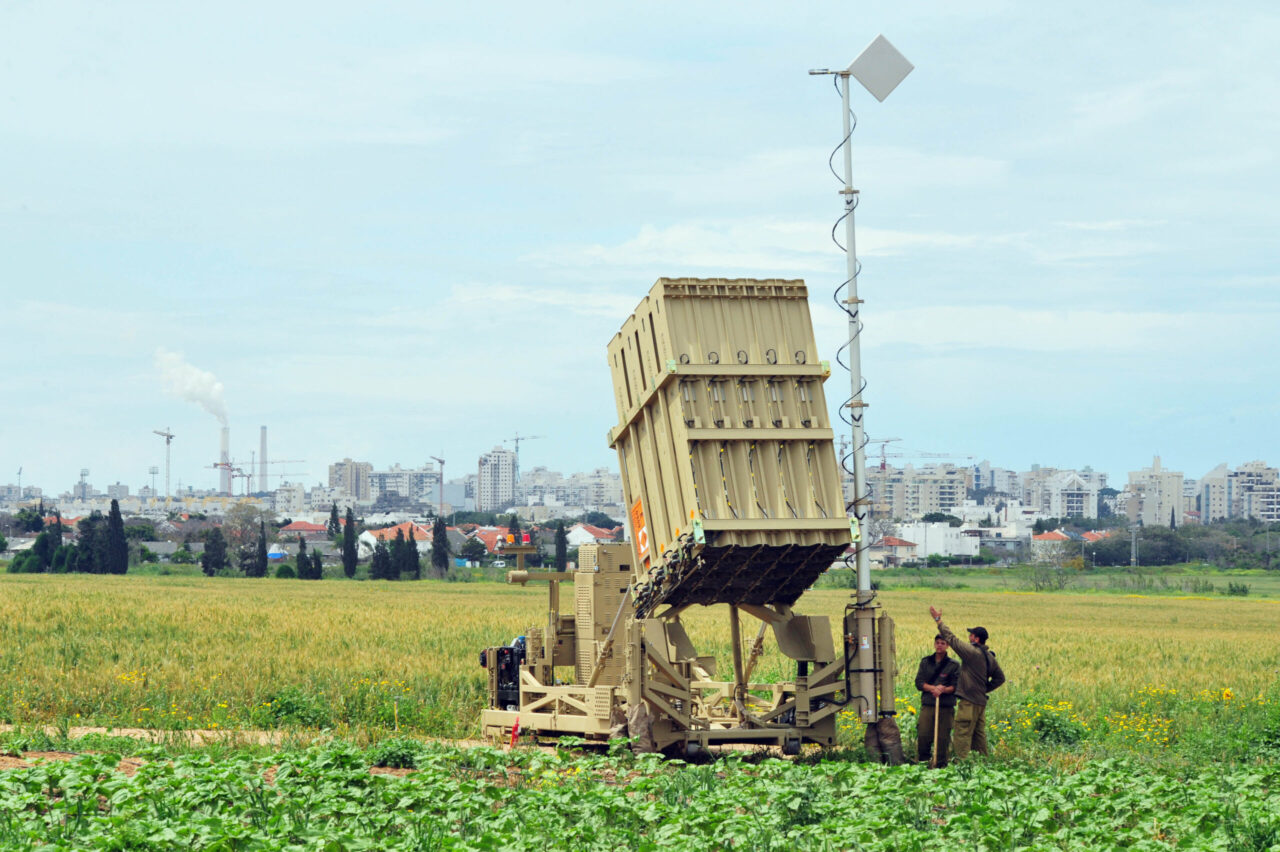
The Iron Beam will cost significantly less than the Iron Dome’s specialized interceptors, which range from $20,000 to $30,000 each.
Israel continues to overperform in terms of military exports. In fact, the Jewish state officially became the eighth-largest arms exporter across the globe in 2024 when it sold roughly $15 billion in defense products. Israel’s Ministry of Defense announced this unprecedented figure earlier this summer, which represents a 13 percent increase over the previous year.
Of course, Israel is not only selling old weapons, but also making new ones. By the end of the month, the Israel Defense Forces (IDF) is expected to field its Iron Beam laser interceptors, which will “fundamentally change the rules of engagement,” as an Israeli Defense Ministry official has boasted. Speaking at the DefenseTech Summit earlier this month, DDR&D head Danny Gold said that “with development complete and a comprehensive testing program that has validated the system’s capabilities, we are prepared to deliver initial operational capability to the IDF on December 30, 2025.”
When the Iron Beam officially enters service with the IDF, it will play a key role among the nation’s multitiered air defense products. Manufacturer Rafael Advanced Defense Systems developed the cutting-edge technology behind the Iron Beam with backing from the US-based Lockheed Martin and more than $1 billion from the Pentagon. According to Israeli officials, the technology driving the unparalleled laser weapon is already being shared with the US Army’s directed energy program. The Iron Beam was initially unveiled by Rafael at the Singapore Airshow in 2014, and when it reaches operational capacity, it will represent the first working HELWS in its class.
About the Iron Beam
As a solid-state laser, Iron Beam uses a solid crystalline material to focus the beam, instead of the gas or liquid that many of the larger chemical lasers developed in the Cold War era. Notably, the Iron Beam reportedly costs a mere $2 per interception, which is much cheaper than the Iron Dome’s specialized interceptors, which can range in cost from $20,000-$1,00,000 each. “With the laser, the only cost is electricity,” says Yuval Steinitz, chairman of Rafael Defense Industries, manufacturer of the Iron Beam. “It is like between $1 and $2, less than the price of a hot dog in New York.”
While the Iron Beam is expected to play a pivotal role in Israel’s defense against drones and other projectiles launched by the Iranian-backed proxy groups, the laser weapon will not be singularly protecting the nation’s air defense. Israel’s Iron Dome, David’s Sling, and Arrow 2/3 systems all work together to secure the country’s territory from drone, missile, and rocket barrages frequently launched by surrounding non-state actors and terror groups.
About the Author: Maya Carlin
Maya Carlin, national security writer with The National Interest, is an analyst with the Center for Security Policy and a former Anna Sobol Levy Fellow at IDC Herzliya in Israel. She has over 1,000 articles published over the last several years on various defense issues. Carlin has bylines in many publications, including The National Interest, Jerusalem Post, and Times of Israel. You can follow her on Twitter: @MayaCarlin.
Image: Shutterstock.com / ChameleonsEye