We speak often of Mary’s Fiat, and rightly so. Her yes stands at the center of salvation history. But Scripture gives us another yes, one that is quieter and almost hidden in the background. It is the yes of a man who receives no annunciation from an angel in broad daylight, who hears God not through a message addressed to him by name but through a dream.
Joseph wakes from that dream and obeys.
No speech.
No song.
No recorded prayer or canticle.
Just obedience.
A man who hears God in the dark and rises to do what is asked of him.
Advent leads us straight to Joseph because Advent is the season where God shows His glory by becoming small. The Incarnation reveals a God who works in quietness, in shadows, in places where human strength falls short. And Joseph meets that God not with heroic display, but with the kind of masculinity Scripture rarely celebrates publicly: fidelity, restraint, presence, and courage that has no need to be seen.
The Righteous Man Who Was Also Afraid
Matthew tells us that Joseph was a righteous man. He also tells us that Joseph was afraid.
We are not used to holding those two truths together. Righteousness and fear. Strength and uncertainty. But Joseph embodies both without contradiction. He discovers Mary is pregnant. He knows the child is not his. His world narrows into a small, painful question, and he tries to choose the most merciful path he can see.
This is important: Joseph does not default to pride or anger or self-protection. He defaults to mercy.
Before God even reveals His plan, Joseph is already acting like the kind of man God can trust with His Son.
When the angel speaks the truth and calls him to take Mary into his home, Scripture says Joseph wakes and does as he was commanded. Not after weighing the pros and cons. Not after asking for a second sign. Not after demanding clarity or comfort.
He obeys in the space between fear and trust.
This is masculine faith at its best.
Not bravado.
Not posturing.
Not strength for strength’s sake.
It is the strength that comes from yielding to God.
Obedience Without Applause
If most of us were entrusted with the protection of the Messiah, we would be tempted to turn it into a mission statement. We would gather a plan, a circle of advisors, maybe even a few public marks of honor.
Joseph receives nothing of the sort. God gives him responsibilities without explanation and without fanfare.
Take Mary into your home.
Name the child Jesus.
Flee to Egypt.
Return when I tell you.
Move your family again.
Work with your hands.
Stay hidden.
It is a life that looks unremarkable from the outside. Yet every one of Joseph’s actions shields the Holy Family. His obedience becomes the quiet architecture of God’s plan. Without Joseph’s hidden faithfulness, the story of the Incarnation does not unfold the way it does.
And yet there is no canticle of St. Joseph. No recorded prayer. No long speech that reveals his inner world. God chose a silent man and gave the care of His Son to hands that worked, protected, and prayed without drawing attention.
Joseph’s silence is not emptiness. It is consent.
Divine Vulnerability and the Man Who Received It
The humility of the Incarnation is not an idea. It is a scandal. The Son of God becomes an infant who cannot walk or speak. He entrusts Himself entirely to two people of no worldly rank. A child who cannot defend Himself needs a man who can.
Joseph’s strength is therefore part of the nativity. Not the loud strength of conquest, but the daily strength of presence. The strength that carries burdens without being recognized for carrying them. The strength that works long hours, makes hard choices, and stays faithful when no one is watching.
This is the kind of strength that the world rarely applauds but which God has depended on since the beginning.
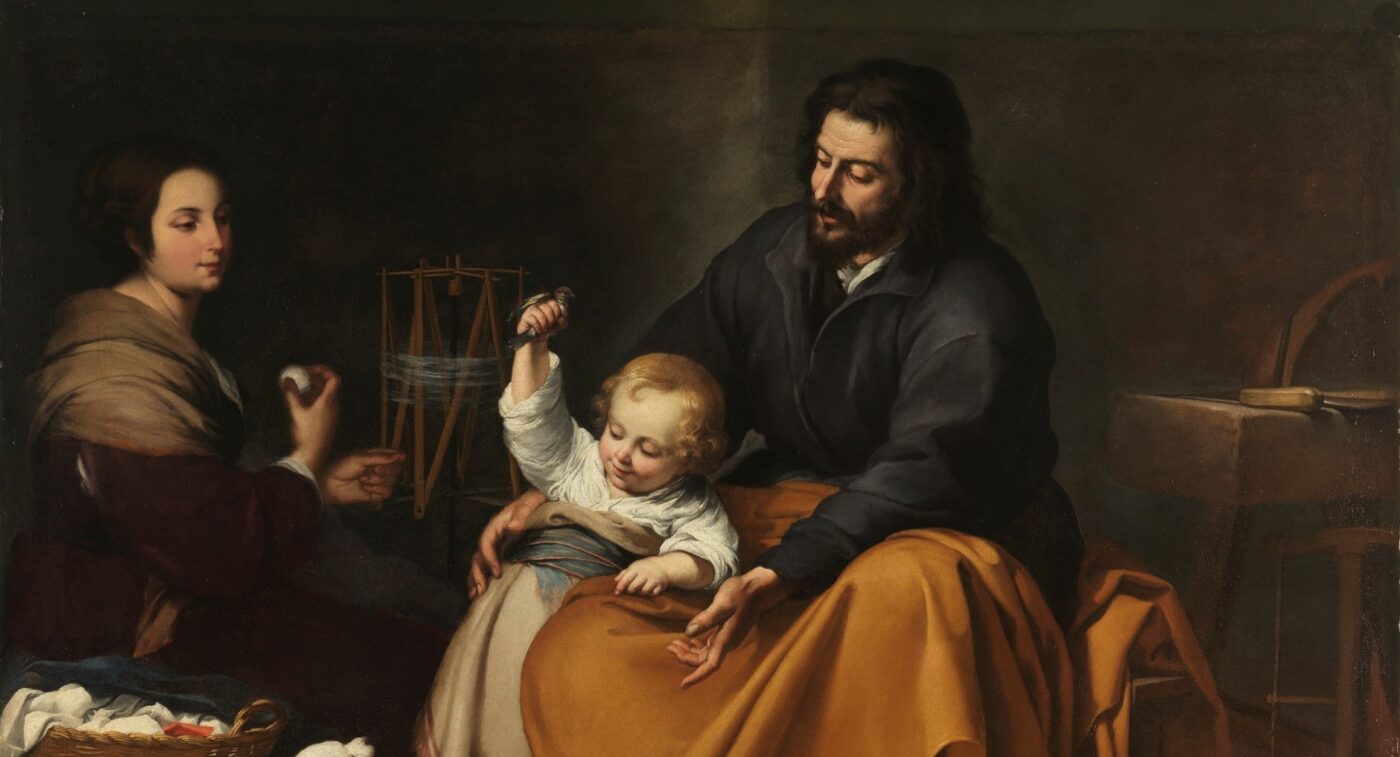
Joseph receives the vulnerability of God and does not shrink from it. He makes space for a mystery he cannot fully understand. He takes responsibility for something that will never belong to him completely. He holds the Child who created him and teaches that Child how to work with wood.
There is no blueprint for this kind of life. There is only trust.
The Hidden Path That Forms a Holy Family
Advent invites us to stand in Joseph’s shadow for a while. Most of our obedience resembles his more than Mary’s. Daily, quiet, unseen. The world will not praise it. Many people will not notice it. But God sees it.
Every father who wakes early for work.
Every man who chooses mercy in conflict.
Every husband who protects the peace of his home.
Every person who listens for God in the dark.
Every believer who obeys without understanding the whole plan.
All of these movements echo Joseph. They form the structure of a holy life in the same way his obedience formed the structure of the Holy Family.
Joseph teaches us that holiness is not loud. It is steady. It is courageous enough to act even when fear is present. It is humble enough to take the last place if that is where God is found.
And above all, it is open enough to receive Christ in whatever vulnerable form He comes.
This Advent, Step Into Joseph’s Quiet Strength
Let Joseph be your companion this week. Notice the places where God is asking you to trust Him without guaranteed clarity. Notice where your strength is needed, not to conquer but to protect. Notice the invitations to obedience that appear small but contain the weight of grace.
Joseph’s life shows us that God often builds the greatest things in silence. The Savior of the world enters a home guarded by a quiet man who listens to God at night and rises before dawn to do His will.
May we learn to obey with that same courage.
May we learn to love with that same steadiness.
And may the humility of the Incarnation reshape our understanding of what strength truly is.
This Week’s Meditation Challenge
1. Sit with Joseph’s silence.
Find two minutes of real stillness. No words. No petitions. Just sit before God like Joseph stood before mystery. Ask for a heart that listens even when God speaks quietly.
2. Offer God one fear you would rather hide.
Joseph obeyed in the presence of fear, not the absence of it. Name your fear honestly and hand it to the Lord without dressing it up.
3. Perform one hidden act of love today.
Choose something that benefits your family or community but will likely go unnoticed. Let it be your “Joseph moment” for the day. Quiet generosity trains the heart toward holy obscurity.
4. Reflect on the responsibilities God has entrusted to you.
Ask: Where is God inviting me to protect, guide, or steady something fragile? Where am I being asked to lead with humility rather than control?
5. Engage Scripture through imaginative prayer.
Spend time with Matthew 1:18–25. Watch Joseph wake from the dream. Watch him choose obedience without clarity. Let the scene show you what masculine spiritual courage looks like. Ask God to shape that courage within you.
Editor’s Note: Catch up on the rest of our Advent Ignatian Meditation series here!
Image from Wikimedia Commons