
NEWYou can now listen to Fox News articles!
Many families fight around Christmastime.
House Republicans are no exception.
You’ve been at the dinner table about to enjoy a slab of pumpkin pie when uncle-somebody or cousin-someone enters the dining room on a bender, thanks to Santa dropping a little too much bourbon in their Christmas stocking.
You know what happens next.
“Fighting” inside the House Republican “family” didn’t go like that this year. But some Republicans are frustrated with how things have gone lately. There is particular frustration with the party’s efforts to address healthcare. But also about whether House Republicans “wasted” their majority when House Speaker Mike Johnson, R-La., recessed the body for nearly two months during the government shutdown.
THE HITCHHIKER’S GUIDE TO WHERE WE STAND WITH A HEALTHCARE PACKAGE: CHRISTMAS OR GROUNDHOG DAY?
Here’s the latest intrafamily fight: The decision by four House Republicans to bolt from their party and align with Democrats in their effort to renew expiring Obamacare subsidies for three years.
Reps. Brian Fitzpatrick, R-Pa., Rob Bresnahan, R-Pa., Ryan Mackenzie, R-Pa., and Mike Lawler, R-N.Y., are all centrist GOPers representing battleground districts. The quartet hoped the House Rules Committee would make in order one of four plans they supported to temporarily renew expiring Obamacare credits. But the panel blocked them from offering their legislation on the House floor.
“I tried very hard over the last several weeks and even through the weekend and as late as yesterday trying to engineer a way for them to have a vote on the floor so they could show that priority,” said Johnson. “But it was not to be.”
The term you’ll hear a lot over the coming weeks is “discharge petition.” Discharge petitions are a parliamentary artifice for lawmakers to go around the Speaker and deposit their bill on the floor — if the leadership won’t do it for them. The gambit was rarely successful for two decades. But there have been multiple successful discharge petitions since Johnson became speaker in the fall of 2023.

House Speaker Mike Johnson, R-La., “tried very hard” to engineer a means for a floor vote, but ultimately said “it was not to be.” (Yuri Gripas/CNP/Bloomberg via Getty Images)
A discharge petition requires 218 signatures before it forces House action. It’s about the math — 218 is the majority of all 435 House members. And 218 is the magic number, regardless of the current House membership. For instance, the House is presently at 434 members with one vacancy — 218 is still the number. Once it has the signatures, the discharge petition only ripens after seven legislative days.
Moderate Republicans defected from their party on Wednesday.
“We were really left with no choice,” said Lawler after signing on to the Democrats’ discharge petition to greenlight the subsidies for three years.
The GOP brass rationalized.
“I have not lost control of the House,” said Johnson. “These are not normal times.”
THE SPEAKER’S LOBBY: WHAT CONGRESS’ DECEMBER SCRIPT MEANS FOR HEALTHCARE NEXT YEAR
Democrats seized on the Republican infighting.
“It shows that the demand by the American people for Congress, the House and the Senate to extend the ACA and premium tax credits is undeniable,” said Senate Minority Leader Chuck Schumer, D-N.Y.
The “Fed-up Foursome” believed they had no alternative. Even if that meant signing the Democratic discharge petition.
“We exhausted every effort to find an agreement within our conference,” said Lawler. “If they don’t want that to pass, then they should be working to find an alternative vehicle now.”
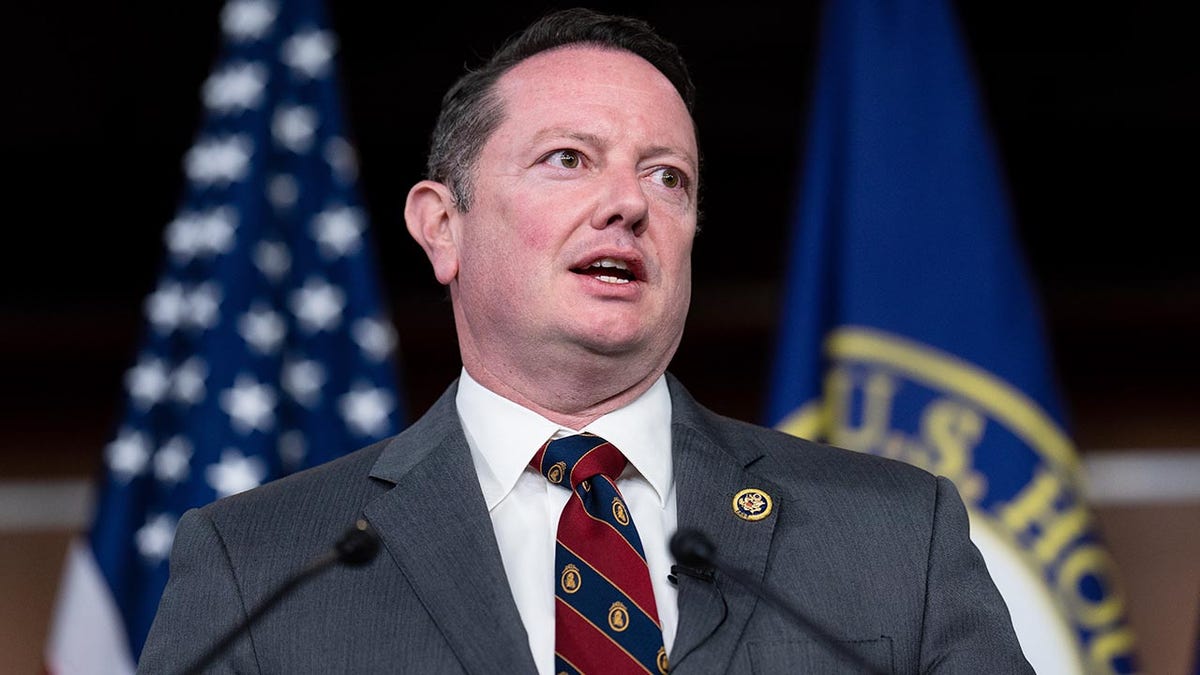
Rep. Eric Burlison, R-Mo., said the four were “betraying the party.” (Bill Clark/CQ-Roll Call, Inc via Getty Images)
And that’s where the family feuding began.
Rep. Eric Burlison, R-Mo., accused the four of “betraying the party” by sidling up to the Democrats’ plan and bypassing Johnson. Burlison questioned why moderate Republicans got to “drive the agenda.” He added that those centrist policies don’t resonate in his conservative Missouri district. However, Republicans wouldn’t wield the House majority at all were it not for moderate GOPers holding swing districts. In particular, districts in New York and Pennsylvania.
Rep. Nick LaLota, R-N.Y., crafted a plan to block the premium hikes. Rather than a subsidy, people would receive a tax deduction. The Rules Committee blocked LaLota’s effort. He didn’t sign onto the Democrats’ discharge petition. But the New York Republican appreciated the effort of his four GOP colleagues.
“Three years is probably better than nothing. But again, it always solves the short-term issue of short-term affordability,” said LaLota.
FOUR REPUBLICANS BUCK MIKE JOHNSON TO JOIN HAKEEM JEFFRIES’ OBAMACARE PUSH
But many conservatives balk at any extension.
“We’re not interested in perpetuating a failed Obamacare that’s just made costs skyrocket,” said House Budget Committee Chairman Jodey Arrington, R-Texas.
However, what most House Republicans were interested in was passing a bill allowing groups of people to pool resources and purchase health insurance as a group. Republicans argued that so-called “association” plans could defray premium costs. The Congressional Budget Office declared that the bill saved $36 billion. But noted that 100,000 people would lose insurance via this method over the next decade.
The bill didn’t address premium spikes. So Democrats skewered the Republican bill as a fig leaf before it passed on Wednesday.
“Instead of a fix, we get a stupid, pathetic, last minute bill designed to let Republicans cover their ass before they flee town for the holidays,” said Rep. Jim McGovern, D-Mass., the top Democrat on the Rules Committee.
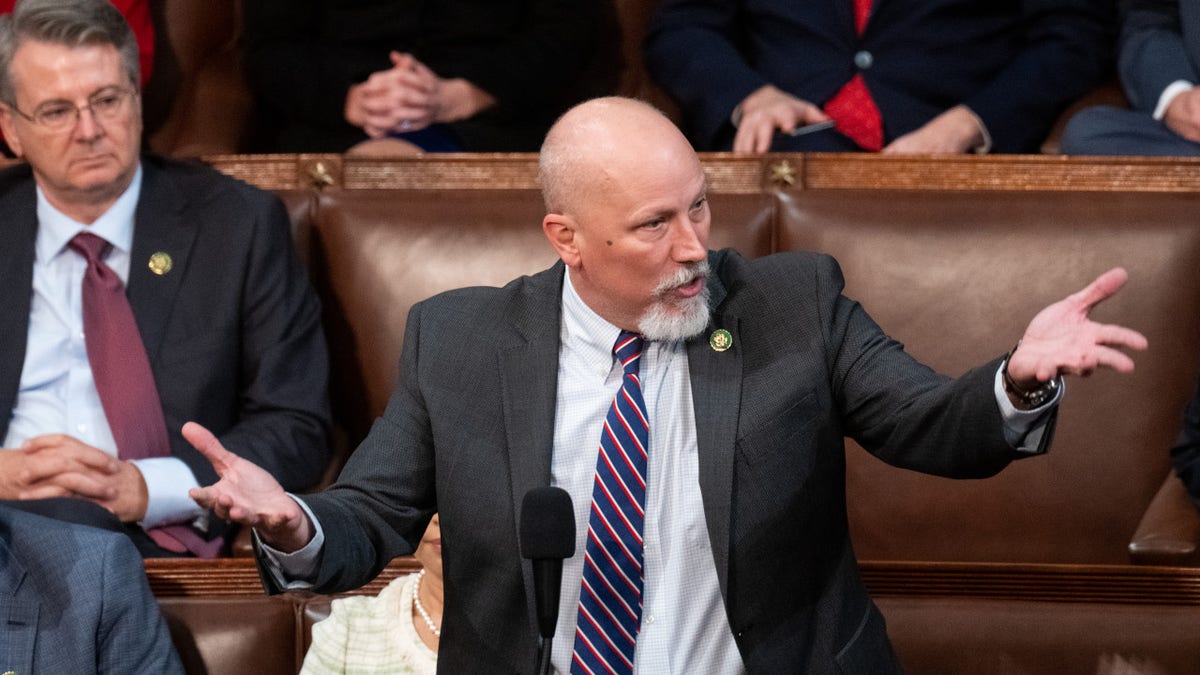
Rep. Chip Roy, R-Texas, believed the association bill was weak and passed only to stave off pre-midterm attacks. (Bill Clark/CQ-Roll Call, Inc via Getty Images)
Rep. Chip Roy, R-Texas, voted for the Republican association healthcare bill. But Roy believed it was weak tea from a party which promised big things. Roy suggested Republicans only passed the bill to stave off political attacks ahead of the midterms that they weren’t addressing healthcare costs.
“Republicans will complain about it, and then they’ll offer milquetoast garbage like we’re offering this week and then go home at Christmas and say, ‘Look at what we’re doing! We’re campaigning on reducing healthcare!’ Well, congratulatufrigginlations,” fumed Roy.
Rep. Kevin Kiley, R-Calif., has expressed displeasure with how Republican leaders handled the government shutdown. Like Roy, Kiley voted for the GOP healthcare legislation Wednesday night. But Kiley has reservations.
“The bill does not address the immediate urgent problem in front of us, which is that 22 million people are about to pay a lot more for health insurance,” said Kiley. “What are we supposed to tell these folks? ‘Oh, don’t worry. It’s Obama’s fault?’”
HOUSE GOP TENSIONS ERUPT AS REPUBLICANS TURN ON EACH OTHER HEADING INTO YEAR’S END
Kiley added that the healthcare debate “encapsulates what is wrong with this institution.” The California Republican argued that “party leaders focus most of their time and energy on trying to blame problems on the other side, rather than trying to solve those problems.”
Here’s the reality about the bill the House did pass:
House Republicans felt that they had to approve SOMETHING. Otherwise, Democrats and the public might hammer them. So something was better than nothing. Thus, Republicans settled on the association healthcare bill. However, adding a provision to the bill on Obamacare subsidies — in any form — may have tanked the legislation. So Republicans kept the package as clean. The bill passed — semi-inoculating Republicans from political criticism.
For now.
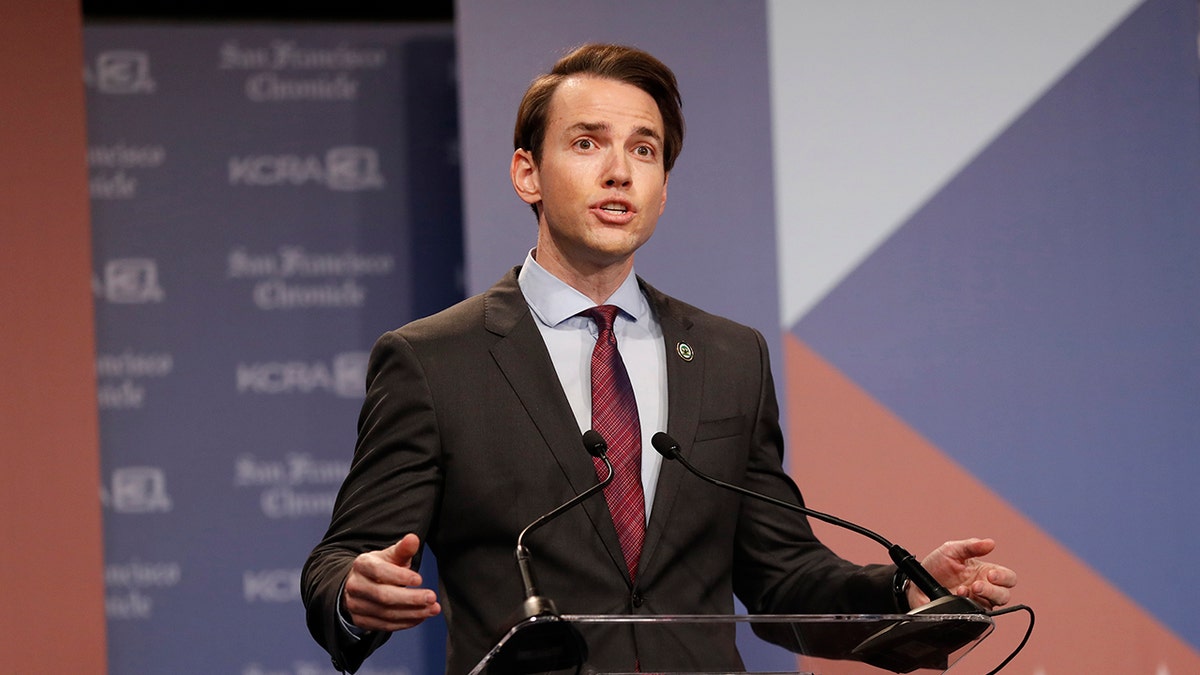
Rep. Kevin Kiley, R-Calif., castigated leadership for failure to problem-solve. (Scott Strazzante-Pool/Getty Images)
But expect a vote tied to healthcare in January, thanks to the discharge petition.
The House is now gone for the year. Everyone is home for the holidays. The House GOP family won’t have to deal with one another face to face for 18 days.
That’s probably a good thing.
CLICK HERE TO DOWNLOAD THE FOX NEWS APP
Imagine if lawmakers were in session during Festivus, the airing of the grievances.
However, that may come soon enough when Congress reconvenes in January.