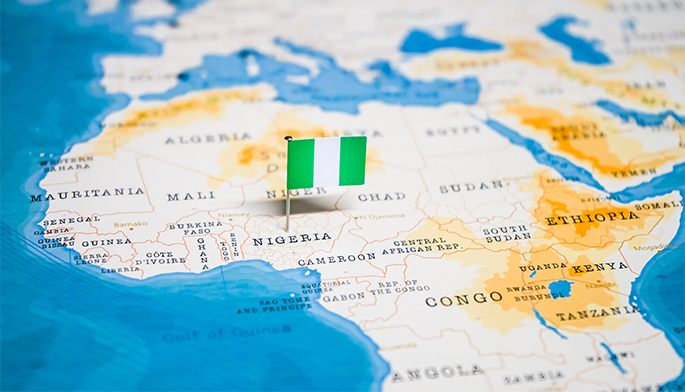
Across Africa, faith is a profound source of hope, charity, and community. Yet in nations like Nigeria, it has also become the continent’s most volatile political fault line, often manipulated for power and dominance. In a recent essay at VoiceAfrique titled “Faith Weaponized: The Crisis of Religion and Africa’s Deepest Political Fault Line,” Fr. Augustine Anwuchie, a Nigerian priest serving in the Niger Republic, dissects this dangerous paradox.
Fr. Anwuchie argues that the violence against Christians is not merely extremist terrorism, but a symptom of a deeper, systemic crisis he defines as the “politicization of religion and the religionization of politics.”
In a wide-ranging interview with CWR, he traces the historical roots of this entanglement from the Fulani Caliphate to modern-day state bias, exposes a complicity that blurs the line between persecution and genocide, and challenges both citizens and international actors to reclaim faith from those who exploit it as a weapon.
CWR: In your essay, you say that calling the violence a “purely anti-Christian genocide” is an oversimplification, but you conclude that state complicity makes the accusation “impossible to dismiss.” At what point does systemic persecution, enabled by a failure to protect, cross the legal and moral threshold into genocide?
Fr. Augustine Anwuchie: Of course, it would be an oversimplification to describe the violence as a purely anti-Christian genocide because terrorism in Nigeria does not always distinguish between Christian and Muslim victims. Yet, there are undeniable patterns that make the charge of genocide against Christians difficult to dismiss.
To understand this, one must grasp the historical roots of Islam in Northern Nigeria.
The Islam that developed there was shaped by a jihadist conquest led by Uthman Dan Fodio—an Islamic scholar and trader—who, under the pretext of religious reform, overthrew the Hausa rulers who practiced a more moderate Islam and established a Fulani Caliphate. When the Nigerian government institutionalized Sharia law in parts of the North during the Fourth Republic (beginning in 1999), many perceived it as a continuation of that jihadist legacy. Some Muslim clerics even hailed it as a step toward establishing an Islamic state, disregarding the presence and rights of Northern Christians.
When Boko Haram began targeting Christians, many Northern Muslims, including politicians, were either overtly or tacitly sympathetic. It was only when Boko Haram started attacking Muslims as well that broader condemnation began. Consider the 2022 lynching of Deborah Samuel, a Christian student murdered by her classmates over alleged blasphemy. Many Muslims who condemned Boko Haram defended her killers in the name of religion. Even former Vice President Atiku Abubakar deleted his tweet condemning the act after facing backlash from Muslims who threatened to withdraw their support for him in the next election, where he hoped to contest.
Nigeria’s political structure allows this bias to persist. Northern Muslim elites hold deep influence across the civil service, judiciary, military, and political system—often carrying a hardline religious worldview into policymaking. Take the case of Roda Jataí, a Christian mother of five from Bauchi State, detained for 19 months after sharing a video condemning Deborah Samuel’s murder.
Or Mubarak Bala, a humanist and atheist, sentenced by a secular court in Kano for blasphemy against Islam—despite constitutional guarantees of free expression. Such cases show how the entanglement of Sharia law with Nigeria’s secular constitution creates systemic bias and moral dilemmas in legal and political decisions.
Reports estimate that since 2009, over 52,000 Christians have been killed in Nigeria, and in 2022 alone, about 5,000 Christians were murdered for their faith. Between 2017 and 2024, at least 91 people—mostly Christians or minorities—were victims of mob violence under religious pretexts.
At this point, when a state fails to protect a particular faith group, and its institutions act with bias or complicity, the situation crosses both the moral and legal thresholds into what international law would call genocidal persecution.
CWR: You frame the crisis as the “politicization of religion and the religionization of politics.” How can we practically disentangle genuine theological fervor from calculated political manipulation?
Fr. Augustine Anwuchie: The Islam practiced in much of Northern Nigeria is political in nature—rooted in the jihad of Uthman Dan Fodio. Many Northern elites view political dominance as a continuation of that historical conquest. The advocacy for Sharia law, for instance, is often less about piety and more about preserving power and cultural hegemony under religious guise.
For fundamentalists, Sharia is the beginning of a vision that Nigeria will one day become an Islamic state—symbolically expressed in the slogan that “the Qur’an will be dipped into the Atlantic Ocean.” For politicians, however, religion becomes a vote-winning tool. By appealing to religious sentiment, they secure loyalty from a largely devout electorate.
Thus, what appears as theological fervor is often a calculated political strategy.
CWR: How can a government seen as part of the problem credibly initiate and enforce the kind of impartial justice you advocate for, and what role, if any, should international justice mechanisms play?
Fr. Augustine Anwuchie: The current APC government has been accused of deepening religious and regional divisions. Former President Muhammadu Buhari’s administration, for example, was often described as both Northernized and Islamized, with nearly all key appointments going to Northern Muslims, many from his Fulani ethnic group. His government granted amnesty to “repentant” Boko Haram members while neglecting justice for thousands of Christian and Muslim victims still languishing in IDP camps.
The Muslim-Muslim presidential ticket in 2023 further entrenched fears of Islamization. A video later surfaced of Kaduna’s former governor, Nasir El-Rufai, telling clerics that the Muslim–Muslim ticket was designed to secure Islamic dominance, a statement widely condemned by the Christian Association of Nigeria (CAN).
Several respected figures, including former CBN governor Obadiah Mailafia, ex-APC chieftain Abubakar Kawu Baraje, and Baba Ahmed Datti of the Labour Party, have alleged that Fulani mercenaries were brought into Nigeria in 2015 to help the APC win elections, many of whom later became bandits. Reports suggest that some “repentant bandits” were even integrated into the army, and that the National Security Agency made payments to them.
How can a government so implicated be trusted to ensure justice? It cannot. The only credible path forward is through political accountability, democratic change, and international pressure. Sanctions and investigations by international bodies are necessary against those aiding or enabling terror.
CWR: You seem to say the weaponisation of faith is an “African pandemic,” citing the CAR and Ethiopia. While the pattern of weaponizing faith is compelling, what are the key contextual differences that risk being overlooked by this continental framing?
Fr. Augustine Anwuchie: While the weaponization of religion is widespread across Africa, the contexts differ. In the Central African Republic (CAR) and Ethiopia, religious conflict often arises from wartime dynamics. In Nigeria, however, religion is woven into the very foundation of the state—its political structure, colonial legacy, and post-independence power arrangements.
Thus, while the same phenomenon manifests across the continent, each case must be understood within its historical and political context. A continental lens should not obscure each nation’s unique history or domestic solutions.
CWR: Your essay opens with the U.S. government’s designation of Nigeria as a “Country of Particular Concern.” What is your assessment of the impact of such external pressure?
Fr. Augustine Anwuchie: The U.S. designation of Nigeria as a Country of Particular Concern (CPC) was long overdue. Although Nigeria is a sovereign nation, the Buhari–Tinubu administrations’ indifference and possible complicity in religiously motivated violence warranted international censure.
The designation has finally pressured the Nigerian government and military to act with greater seriousness against terrorism and banditry. It represents a moral wake-up call, even if external pressure alone cannot resolve Nigeria’s internal crisis.
CWR: President Donald Trump has threatened to send US soldiers to Nigeria to fight what he calls the killers of Christians. Do you think Trump genuinely cares about the welfare of Christians in Nigeria, given his “America First” policy?
Fr. Augustine Anwuchie: At face value, such statements may seem motivated by concern for Christians. Indeed, Nigerian bishops like Bishop Wilfred Anagbe of Makurdi in May 2025 called for Nigeria to be tagged as a CPC country. Bishop Matthew Kukah of Sokoto had repeatedly appealed to the U.S. Congress to recognize Nigeria’s crisis as one of religious persecution during the Buhari regime.
Yet, given Trump’s “America First” philosophy, his motives likely go beyond humanitarian concern.
Nigeria’s terrorism crisis intersects religion, politics, and economics. While Boko Haram and ISWAP seek religious domination, many armed groups are driven by economic interests, particularly illegal mining linked with powerful Nigerian politicians, some military generals, bandits, and China. Credible reports—including investigations by Arise TV—have linked Chinese interests to illegal mining in conflict zones such as Zamfara and other states where local politicians and militants collaborate to displace communities and exploit mineral-rich land.
Trump’s rhetoric may therefore also reflect geo-strategic rivalry with China, as controlling Nigeria’s rare-earth minerals could shape the next frontier of global technological competition.
CWR: You warn that Africa’s religiosity is its most “volatile … political fault line.” Yet, for many, faith is also a profound source of hope, charity, and peace. Beyond the failures of political elites, what examples have you seen of interfaith dialogue or grassroots initiatives successfully working to de-weaponize faith?
Fr. Augustine Anwuchie: I serve in Maradi, Niger Republic, where I frequently cross the Niger–Nigeria border. My mission involves what we call “evangelization by presence”—building relationships of trust and peace. Here, Christians and Muslims often transcend religious divisions. They share meals during festivals, pray together in times of need, and offer mutual support.
One remarkable example is Imam Abubakar Abdullahi, who in June 2018 sheltered nearly 300 Christians from Fulani militants because, as he said, “every life is sacred.” Acts like these prove that interfaith dialogue is bearing fruit. The Catholic Bishops’ Conference of Nigeria and Caritas Nigeria continue to invest heavily in dialogue and peace building.
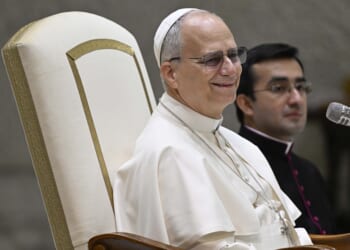
As Pope Leo has emphasized in some of his Vatican addresses—especially in his conversation with Grand Imam Ahmed al-Tayeb of Al-Azhar—our shared humanity and fraternity must prevail over religious division.
CWR: How can ordinary citizens and religious leaders reclaim this “sacred trust” from those who exploit it?
Fr. Augustine Anwuchie: It all comes down to accountability and equity. When citizens begin to prioritize competence over religious identity, and when leaders are held accountable regardless of faith, we weaken the hold of religious manipulation. We must separate politics from religion and end both the politicization of religion and the religionization of politics.
The weakness of many Africans is that politicians easily manipulate them through religious blackmail—much like when the Persian commander in ancient Egypt painted cats (a sacred symbol) on his soldiers’ shields. The Egyptian army, unwilling to harm what was sacred, surrendered—and lost the war.
When religion becomes a weapon, it blinds the people. But when we unmask the hypocrisy behind it, religion regains its rightful place as a sacred trust for the common good.
(Editor’s note: This interview has been edited for length.)
If you value the news and views Catholic World Report provides, please consider donating to support our efforts. Your contribution will help us continue to make CWR available to all readers worldwide for free, without a subscription. Thank you for your generosity!
Click here for more information on donating to CWR. Click here to sign up for our newsletter.