
In September, President Donald Trump announced that the future headquarters of the United States Space Command would be relocated from Colorado Springs, Colorado, to Huntsville, Alabama. It was the last chapter in a seemingly endless saga for the Department of Defense’s (DoD’s) 11th and newest unified combat command, which was reestablished in August 2019 to focus on military operations in space.
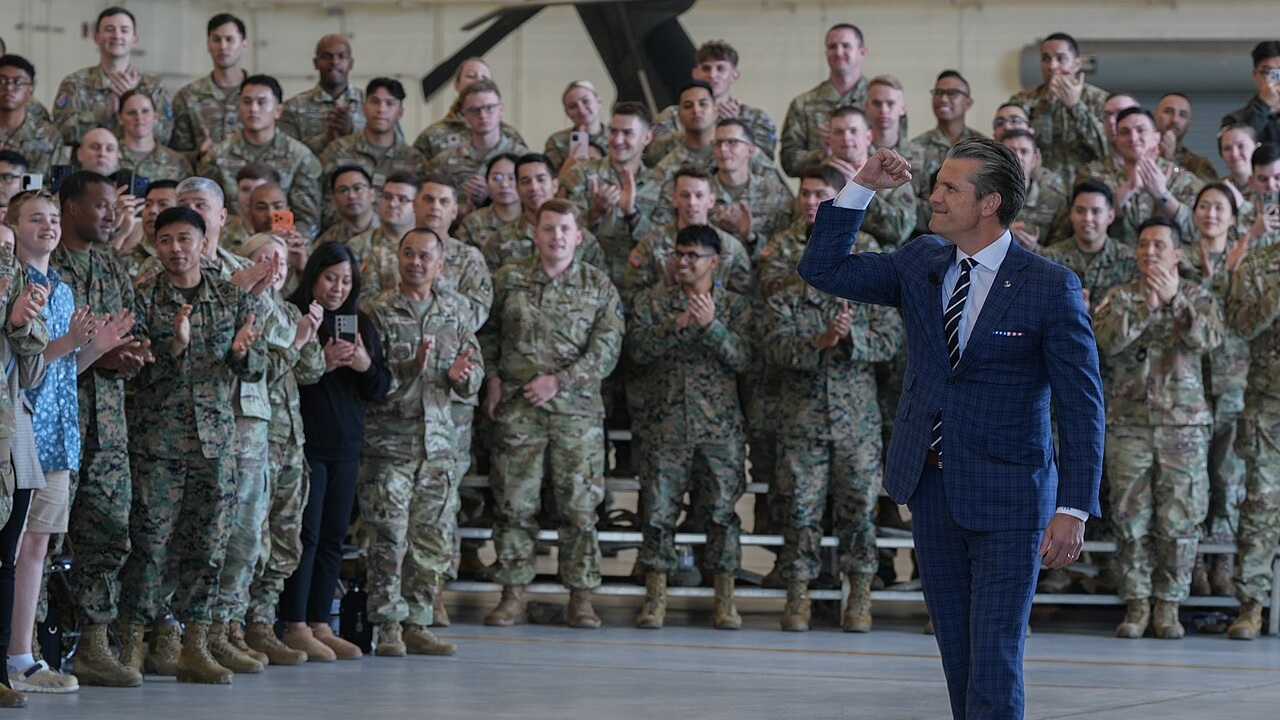
Last week, Secretary of Defense Pete Hegseth was joined by lawmakers and senior military officials to mark the formal relocation of US Space Command (USSPACECOM) from Peterson Space Force Base (SFB) in Colorado to Redstone Arsenal in Alabama.
“It’s common sense that this is precisely where Space Command should be; it’s common sense that we need to move rapidly and expeditiously, and we will,” Hegseth said in his remarks. “We are deadly serious in committing to cutting every piece of red tape and bureaucracy to get this headquarters established as quickly as humanly possible.”
The move to Redstone Arsenal has been seen as a significant victory for Alabama, as the location had been designated as the command’s future HQ during Trump’s first term.
Huntsville, also known as “Rocket City” and the birthplace of America’s space program, was where German scientists—notably former Nazi rocketeer Wernher von Braun—developed the rockets for NASA. The Redstone Arsenal is also home to the Marshall Space Flight Center.
Those factors led to it being selected as the preferred final location for the command, edging out Kirtland Air Force Base (AFB) in New Mexico, Offutt AFB in Nebraska, Joint Base San Antonio in Texas, and Patrick Space Force Base in Florida—as well as SPACECOM’s interim location at Peterson AFB, Colorado Springs.
Alabama Has a Rich Space History
Almost immediately after it was announced that Huntsville was selected, lawmakers in the other states voiced their objections.
Politics was seen to come into play in the selection process, and the Biden administration decided to temporarily keep the headquarters in Colorado, citing concerns about the costs and disruption that a relocation would cause. That move (or lack thereof) was supported by multiple US military commanders, who warned that uprooting the command would interfere with space operations. Currently, about 64 percent of SPACECOM’s personnel are in Colorado.
However, since then, a bipartisan coalition of Alabama lawmakers has found common ground in working to see the base returned to the Heart of Dixie. After Donald Trump won the 2024 presidential election, it became clear it was a matter of when, not if, such an announcement could be made that SPACECOM would relocate.
“From the very beginning, our delegation worked together across party lines to make clear that Huntsville is the best location for Space Command based on the merits,” said Terri Sewell (D-AL). “I am honored to have done my part and thrilled that Alabama will continue to lead the nation in aerospace, defense, and innovation. This is not just a win for Huntsville. It is a win for Alabama and for America’s national security.”
Alabama has already pledged to invest $425 million to secure the future HQ, including $10 million for temporary office space and an additional $385 million for infrastructure and other upgrades.
One point that the Alabama coalition may not want Americans to recall is that von Braun was one of several former Nazis who came to the United States after World War II as part of “Operation Paperclip,” which sought to utilize their expertise to help kick-start America’s rocket development and the subsequent space program ahead of the Soviet Union. The Redstone Arsenal became the foundation for the NASA Marshal Space Flight Center in 1960, but the nickname “Rocket City” was first used by the Huntsville Chamber of Commerce in 1953.
Colorado Still Has a Huge Space Program
Last month, lawmakers in Colorado attempted to sue to block the move, even as it was considered a last-ditch effort unlikely to succeed.
The Centennial State’s lawmakers have also tried to put a positive spin on the matter, noting that Colorado will remain very much in the space game. Beyond the fact that the SPACECOM move could take years to complete, other programs could head to the Rockies.
“It’s unfortunate to see Space Command go, but we will still have a presence in Colorado,” said Rep. Lauren Boebert (R-CO). “A lot of Golden Dome opportunities there. The majority of Space Force is in Colorado, and that’s going to continue to grow. We’re not losing our defense and aerospace industries. I believe that there’s still many more opportunities for that, and we will continue to fight for more missions.”
About the Author: Peter Suciu
Peter Suciu has contributed over 3,200 published pieces to more than four dozen magazines and websites over a 30-year career in journalism. He regularly writes about military hardware, firearms history, cybersecurity, politics, and international affairs. Peter is also a contributing writer for Forbes and Clearance Jobs. He is based in Michigan. You can follow him on Twitter: @PeterSuciu. You can email the author: [email protected].
Image: Wikimedia Commons.
















.jpg)