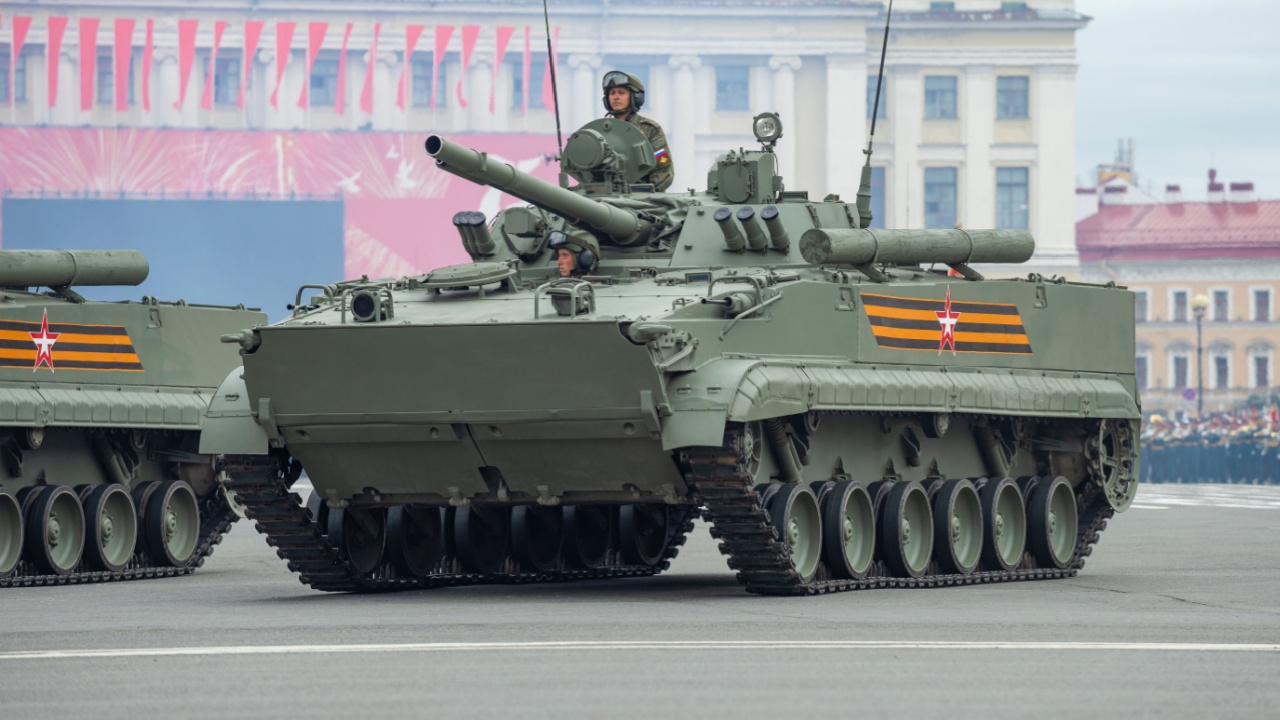
Russia’s strategy of a multi-prong advance prevents the Russian military from using its numerical and firepower superiority to achieve quick victories.
Despite claims by senior Russian officials, the Russian military does not have the ability to achieve an operational breakthrough on the battlefield in Ukraine.
Instead, the Russian forces are engaged in a drawn-out campaign to capture Ukrainian territory at a slow pace and terrible cost.
The Russian Military’s Offensive Weaknesses
Although the Russian military is currently winning on the battlefield and maintains the strategic initiative, its poor offensive resources and lack of sufficient combined arms capabilities prevent an operational breakthrough that could force Ukraine to capitulate.
Instead, the Russian military is engaged in a protracted campaign of attrition that favors Ukraine.
“Russian forces will likely continue to struggle to maintain the Kremlin’s desired multi-pronged offensive operations in different operational directions due to the long-term materiel and manpower costs of such operations,” the Institute for the Study of War assessed in its latest estimate on the conflict in Ukraine.
In recent days, the Kremlin has been pushing for advances across the frontline, often exaggerating claims about the progress of the Russian forces. Currently, the Russian military is focusing on the Donbas and eastern and southeastern Ukraine, particularly in the direction of Vovchansk, Kupyansk, Siversk, Pokrovsk-Myrnohrad, and Hulyaipole. Progress, however, has been slow and without the prospect of an operational breakthrough.
Attacking along several directions requires a large number of forces and resources. According to the conventional military doctrine, the attacker needs to have at least three times more troops to prevail. But the Kremlin’s strategy of a multi-prong advance prevents the Russian military from using its numerical and firepower superiority to achieve quick victories.
“Russia will likely need to concentrate even more forces and deprioritize other frontline sectors to exploit tactical advances around Hulyaipole or to attempt to seize the rest of Donetsk Oblast,” the Institute for the Study of War stated.
The Russian military has shown an inability to sustain large-scale multi-pronged offensive operations. At the same time, the Ukrainian military has also not been able to take advantage of this Russian inability to launch counteroffensives in other parts of the contact line, thereby lessening the impact of the Russian attacks in the Donbas. The last time Kyiv managed to conduct a large-scale counteroffensive was in the summer of 2024, when a Ukrainian mechanized force invaded Russia’s Kursk Oblast and established a foothold in enemy territory.
The Ukrainian Fortress Belt
The Fortress Belt has served as Kyiv’s main fortified defensive line in the Donbas since the war began in 2014. Since 2022, the Ukrainian military has expanded the defensive fortifications. The defensive line is comprised of urban strongholds, such as Slovyansk and Kramatorsk, and is designed to act as a wave breaker against Russian attacks.
Any attempts by the Russian military to directly engage the Ukrainian Fortress Belt will very likely stretch Russian offensive resources and further slow down any progress.
Nevertheless, the Kremlin has shown a remarkable ability to regenerate forces. Even after suffering approximately 1.2 million casualties (and likely 250,000 troops killed in action), Moscow still manages to put enough men on the front lines to maintain pressure on the Ukrainian forces.
But without a clear offensive strategy that prioritizes certain directions, Russia’s advantages are wasted, thus giving Ukraine valuable space to further fortify the frontline in depth and negotiate better outcomes.
About the Author: Stavros Atlamazoglou
Stavros Atlamazoglou is a seasoned defense journalist specializing in special operations and a Hellenic Army veteran (national service with the 575th Marine Battalion and Army HQ). He holds a BA from the Johns Hopkins University and an MA from the Johns Hopkins’ School of Advanced International Studies (SAIS). His work has been featured in Business Insider, Sandboxx, and SOFREP.
Image: Shutterstock.com / shushonok