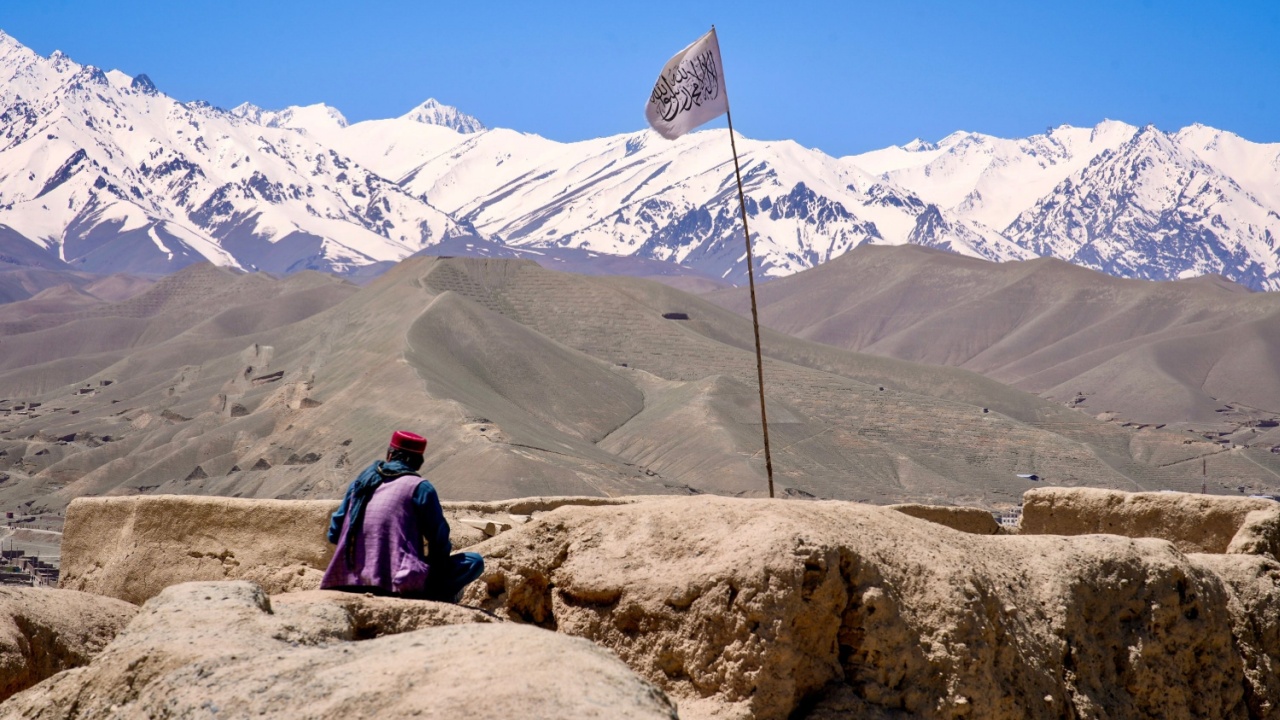
Since 2021, the Taliban has encouraged madrasa schools, raising concerns about religious indoctrination and the spread of extremism in Afghanistan.
The madrasa-based education system has a long and respected history across the Islamic world, including the Persianate intellectual sphere. For more than a millennium, these institutions cultivated a rich tradition of scholars and philosophers. Historically, they reflected an intellectual culture that embraced diversity, free inquiry, and cosmopolitanism. Yet the modern politicization of the madrasa, shaped by colonial disruption, nationalism, and the rise of Islamism, has transformed a tradition of learning into a vehicle of ideology.
Today, this politicization has reached its most extreme form in Afghanistan under the Taliban government. Contrary to their own mythology, the Taliban do not represent a cultural continuity with Afghan or Pashtun traditions. Their interpretation of Islam is a pseudo-ideological, totalitarian project designed not to preserve heritage but to overwrite it.
The Taliban emerged from a politicized clerical infrastructure, specifically, the vast madrasa networks that spread across the Afghanistan-Pakistan frontier from the 1980s onward. After their return to power in August 2021, they moved swiftly to intensify the politicization of both the madrasa and the broader education system, seeking to transform Afghanistan’s classroom into a pipeline of indoctrinated foot soldiers for a long-term agenda of global jihad.
In December 2022, Hasht-e Subh, a daily online newspaper, leaked the Taliban’s internal assessment of Afghanistan’s school curriculum. Produced during the Doha negotiations, it proposed a complete overhaul designed to “Islamize” the system. The Taliban have been explicit: schools for girls will not reopen normally until the curriculum is replaced with one reflecting their ideology. That ideology is not about education; it is about engineering obedience.
Here lies a critical point often overlooked in global advocacy campaigns. While we rightly demand the reopening of schools for girls, we must also ask: what kind of education will these girls receive? A school reopened only to impose indoctrination is not liberation. It is the consolidation of authoritarian control. If the Taliban succeed in reshaping education in their own image, they will have secured not merely the present but Afghanistan’s future, and weaponized that future against the region and the world.
To understand the depth of this threat, we must revisit the intellectual lineage from which the Taliban claim legitimacy.
The Taliban’s Distortion of the Madrasa Tradition
For centuries, madrasas offered instruction in diverse fields, from jurisprudence and theology to philosophy, cosmology, and literature. Scholars like al-Farabi, al-Biruni, and Ibn Sina flourished within their spaces. Their existence refutes the claim that “Islamization” of knowledge requires intellectual narrowness.
Turkish political scientist Ahmet Kuru argues that early madrasas were independent of state control and were instead patronized by merchants and political elites through endowments. The Seljuk era (1040–1194) saw the first attempts to centralise religious learning, and over time, the ulema-state alliance entrenched. With colonial disruption in the 19th century, especially in South Asia, reformist movements such as the Deoband arose to preserve Muslim identity. But as Barbara Metcalf chronicled in Islamic Revival in British India: Deoband, 1860–1900, this shift came at a cost: a curriculum that narrowed from reason to tradition, from philosophical inquiry to legalistic rigidity.
With the rise of modern nation-states and the anchoring of sovereignty in Islamic identity, ethno-nationalism, or a blend of both, the Deoband system became further radicalised, now acting as an instrument of the state and politics. In this worldview, diversity and pluralism were seen as a travesty, tantamount to kufr (irreligiosity).
The Taliban’s claim that their approach to Islam is rooted in rural Pashtun culture is misleading. Pashtun (or Afghan) rural Islam has long been part of the Persianate world, embracing pluralistic and pragmatic traditions, where, as Muzzafer Alam describes, the understanding of political culture has prevailed for centuries. In fact, the Taliban represent the extremist culmination of the Deoband trajectory. Their worldview shares more with modern Islamism and jihadism than with the rural Pashtun and broader Afghanistan traditions they claim to embody. It is not Afghan culture they are defending, but a manufactured ideology engineered for geopolitical utility, constructed in foreign madrasas, designed to suit regional power politics, and funded by external actors for strategic ends.
To be sure, it is not unusual for victors to rewrite history, reshape national narratives, or revise curricula to reflect their worldview. We have seen this in the Soviet Union, Cuba, North Korea, and other authoritarian regimes. But in Afghanistan’s case, the danger is far more acute. Those regimes imposed narratives at least rooted in domestic political histories. The Taliban, by contrast, are not rooted in Afghanistan’s rich cultural, intellectual, and religious heritage. They are attempting to overwrite a millennium of Persianate Islamic traditions with an imported, exclusionary, and hyper-political ideology.
This makes Afghanistan’s case uniquely dangerous not only to the people of Afghanistan but also to regional stability and the global community. Afghanistan is being refashioned as a platform for transnational jihadist mobilization, with an indoctrinated youth population serving as the backbone of this project.
The Stakes for Afghanistan and the World
Leaked documents indicate that the Taliban’s “spiritual leader” Hibatullah Akhundzada envisions a long-term global jihadist mission. The strategy is not very different from their partner group, Al Qaeda, or their rival, ISIS: consolidate absolute control over Afghanistan, radicalise the population, especially the youth, through the madrasa system, and then export this worldview beyond Afghanistan’s borders.
UN reports confirm that the Taliban maintain symbiotic relations with over 20 regional and global terrorist organisations. The killing of Al Qaeda leader Ayman al-Zawahiri in a house belonging to the head of the feared Haqqani Network exposed the depth of this nexus. The Taliban’s ongoing tensions with Pakistan stem partly from their support of the former to the Tehreek-e-Taliban Pakistan (TTP), which seeks to replicate Taliban rule there.
The explosion of madrasas under Taliban rule, now numbering over 23,000, is hardly an educational expansion. Food distribution, employment opportunities, and social services are increasingly tied to families’ willingness to send their children to Taliban-approved schools, ensuring the next generation undergoes jihadist indoctrination.
It would be unwise to dismiss the Taliban’s education strategy as mere domestic authoritarianism in a distant land. It is a transnational threat with the potential to destabilize South and Central Asia, expand extremist networks across the Middle East and Africa, and inspire ideologically aligned movements far beyond the region.
If the Taliban succeed in embedding their ideology into Afghanistan’s educational DNA, the world will soon face a generation raised not with the tools for critical thought or civic engagement, but with the conviction that global jihad is a religious duty.
This is a calculated effort to erase intellectual diversity, pluralistic traditions, and peaceful co-existence rooted in the Persianate Islamic heritage by weaponizing education to create a loyal, indoctrinated cadre capable of sustaining both their domestic rule and their global ambitions.
International responses must move beyond symbolic campaigns and the reduction of the issue to girls’ or women’s rights and instead recognize the deeper ideological crisis at hand. We must ask the harder question: What education will any child receive under Taliban rule? Without addressing the ideological engineering underway, we risk normalizing a system designed to fuel extremism for generations.
Only by confronting the Taliban’s totalitarian project head-on can the international community safeguard Afghanistan’s future and protect regional peace and global stability.
About the Author: Zalmai Nishat
Zalmai Nishat is the founder and executive chair of Mosaic Global Foundation, a charity registered in the UK, focusing on Afghanistan and Central Asia. Previously, he was the program lead for Central & South Asia at the Tony Blair Institute. Follow him on X: @ZalNishat.
Image: Shutterstock.com.