Russia has used its Shadow Fleet to export seized Ukrainian grain, as well as oil.
Since Russian president Vladimir Putin decided to invade Ukraine in 2022, his country has moved steadily toward becoming an international pariah, at least in the West. Heavy international sanctions by scores of countries have limited the ability of Russians to transact and travel in many parts of the world. The Russian economy has also suffered heavily.
The Kremlin has turned to its shadow fleet to overcome these obstacles and continue to bring in money to support the “special military operation” in Ukraine.
The Russian Shadow Fleet
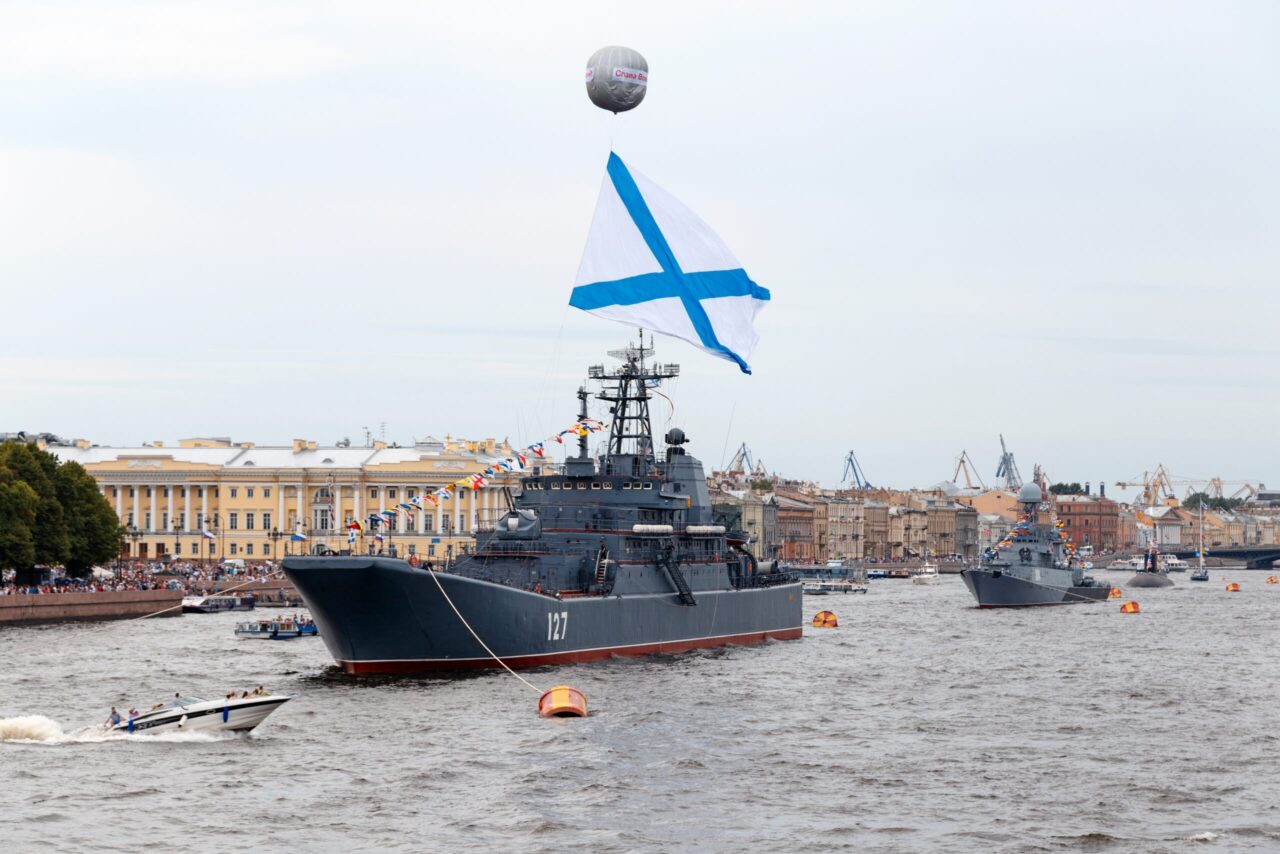
Following Russia’s large-scale invasion of Ukraine, the international community imposed heavy sanctions on Moscow. The measures included restrictions on trade and exports. But Moscow did not want to stop its overseas trade. So, starting in earnest in the spring of 2022, the Kremlin has been using a shadow fleet of hundreds of vessels to export and import goods, bypassing sanctions.
Russia has used these ships to export grain seized from captured Ukrainian territories, as well as oil. Indeed, smuggling sanctioned Russian oil is the main goal of the Russian shadow fleet. Although numbers vary, analysts estimate that the shadow fleet may have from 600 to 1,600 vessels.
The Russian shadow fleet “uses opaque ownership, ship-to-ship transfers, and false Automatic Identification System positions to sustain Russia’s oil exports,” the British Ministry of Defence assessed in a recent intelligence estimate on the Ukrainian conflict.
Some of these vessels are sanctioned by the United States, NATO, and the European Union, thus limiting their utility to the Kremlin. However, the shadow fleet’s deep bench allows Russia to easily replace sanctioned ships with other vessels and continue its illegal operations.
As of late, the Ukrainian military and intelligence services have put the Russian shadow fleet in their crosshairs, launching missile and one-way unmanned systems attacks against Russian vessels in the Black Sea. Sometimes, Ukrainian commandos have even boarded and captured Russian-affiliated vessels.
On December 10, for example, the Ukrainian Security Service used Sea Baby unmanned naval systems to hit a Russian tanker that was part of Moscow’s shadow fleet. This was the third such attack in recent days.
Recent diplomatic setbacks will only push Russia to rely more on its shadow fleet to smuggle oil and other goods despite Ukrainian attacks and international sanctions.
Russia Is Facing Diplomatic Setbacks
In November, the Russian government applied to rejoin the UN’s International Maritime Organization (IMO) Council. This UN body is the international community’s most important global shipping governance body. Russia was a member until 2023, when it lost its seat over its aggression in Ukraine.
Russia is the only major maritime country to be excluded from the IMO Council, thus diminishing its ability to influence regulatory decisions over global shipping, including oil and natural gas transport. Russia is one of the world’s largest producers of oil and natural gas.
The Kremlin’s failure to rejoin the IMO Council adds up to other international rejections. For example, in September, Moscow applied to rejoin the UN’s International Civil Aviation Organization Council. However, not only was the Russian application rejected, but the UN aviation body also issued a formal condemnation of Russia for interfering with satellite navigation signals in Europe, which can endanger air travel and lead to aviation accidents.
About the Author: Stavros Atlamazoglou
Stavros Atlamazoglou is a seasoned defense journalist specializing in special operations and a Hellenic Army veteran (national service with the 575th Marine Battalion and Army HQ). He holds a BA from the Johns Hopkins University and an MA from the Johns Hopkins’ School of Advanced International Studies (SAIS). His work has been featured in Business Insider, Sandboxx, and SOFREP.
Image: Shutterstock.com / V.Volkov