The human and economic costs of Iran’s poor air quality are an indictment of the Islamic Republic’s corrupt governance.
Iran is now confronting one of the deadliest public-health crises in its modern history, and it is not caused by war, sanctions, or natural disaster. It is caused by the air that Iranians breathe every day. According to the Deputy Minister of Health, nearly 59,000 people died prematurely from air-pollution exposure in the past year, an average of nearly 170 deaths per day. That is a staggering toll, larger than many major diseases combined, and it is rising. What makes the crisis especially alarming is not merely its scale, but the inescapable fact that it stems from decades of accumulated policy failures, deferred modernization, and the systematic neglect of environmental health.
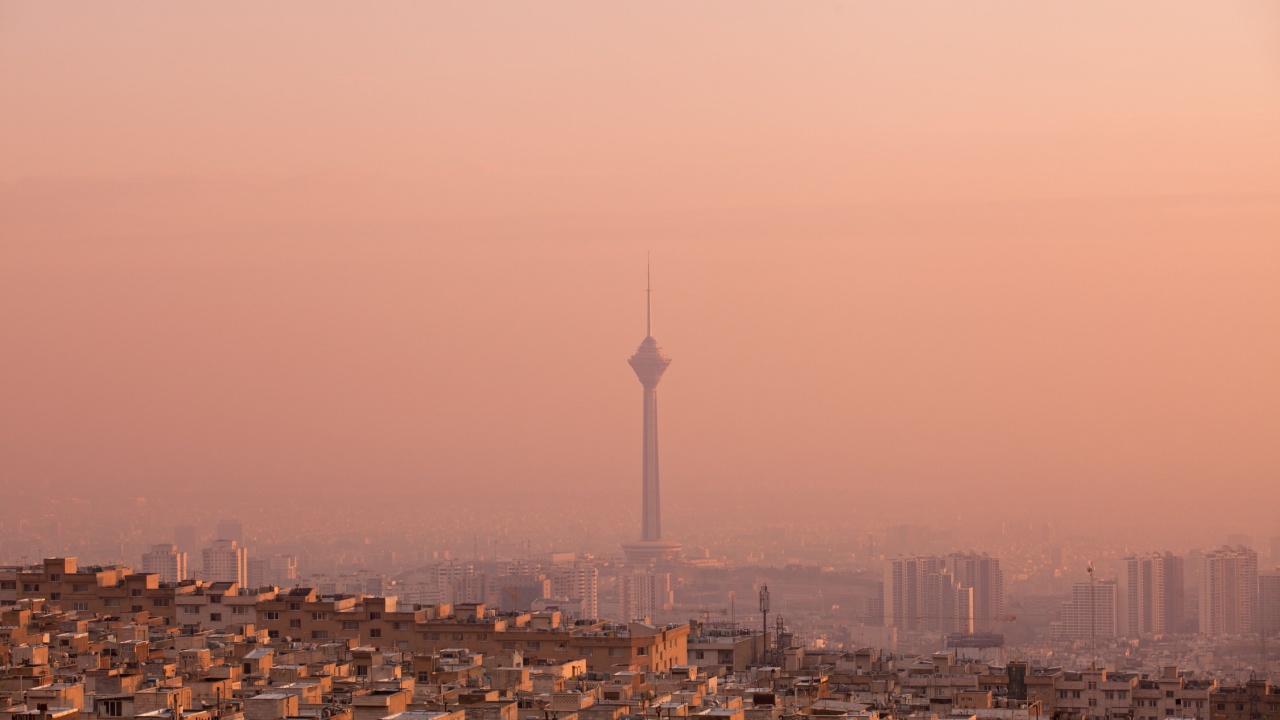
Tehran, a metropolis of more than 10 million people, recorded Air Quality Index (AQI) readings exceeding 200 in recent weeks, placing the capital in the “very unhealthy” category for all residents. The government shuttered schools and universities, hospitals braced for an influx of respiratory emergencies, flights were disrupted by the dense haze, and citizens were urged to stay inside. The situation deteriorated to the point that the regime’s officials felt compelled to acknowledge its severity, with the vice president stating that Tehran’s pollution had reached life-threatening levels.
This is not just a Tehran problem; it is a nationwide suffocation. From Arak and Karaj to the religious center of Mashhad, the lack of air quality has become a hazard. Ahvaz and Isfahan now routinely suffer “hazardous” pollution levels that force repeated lockdowns, while Tabriz faces frequent disruptions to municipal services. No corner of the country is immune to the fallout of the state’s energy mismanagement.
Environmental researchers and experts have warned for decades that pollution levels in cities have become “unbreathable,” and hospitalizations for respiratory illness began to spike. The crisis is fueled by deliberate regime choices. The regime prioritizes export revenue, ideological projects, and military funding over upgrading its energy grid. Similarly, the domestic automotive market remains a hostage of IRGC-linked monopolies. By banning quality imports, limiting competition, and churning out obsolete, high-emission vehicles, these entities profit directly from the very smog that is choking Iranians. Millions of aging vehicles still operate on streets nationwide, many lacking even the most basic emissions controls. Fuel quality is far below global standards, with high sulfur content and significant regional variation.
Every winter, as energy demand rises, power plants are pushed to burn mazut, a low-quality, high-sulfur heavy fuel oil whose combustion generates dense particulate matter linked to severe respiratory disease. Industrial zones across the country lack modern filtration and emissions management. In cities already crowded and geographically trapped, prone to temperature inversions, these emissions can accumulate for weeks. Increasingly frequent dust storms, fueled by the drying of lakes and wetlands caused by the regime’s destructive policies, now compound an already severe air-quality crisis.
The 2017 Clean Air Law, intended as a nationwide framework to curb pollution, has seen minimal implementation, with fewer than half of its 174 mandates across 23 agencies carried out. Weak coordination among the Ministry of Health, the Ministry of Petroleum, the Ministry of Energy, and municipal authorities has further impeded progress, even though the law classifies current pollution indicators as an emergency requiring joint action. Yet government resources and administrative attention have been directed toward social enforcement and broader ideological agendas, leaving environmental responsibilities largely unaddressed.
The social consequences are severe and growing. This year, Tehran recorded only a handful of clean-air days. Students lose educational time as schools are closed repeatedly. Workers lose productivity and wages when offices close or transportation slows. Parents keep children indoors for days, knowing that ordinary outdoor play carries real risk. Pregnant women, the elderly, and people with heart or lung conditions face dangerous exposure simply walking outside.
These are the hallmarks of a society living under environmental siege, yet the government’s response remains confined to temporary measures. One-day traffic restrictions, short-term closures, and vague appeals for calm have replaced the structural actions needed. Meanwhile, the underlying causes, outdated energy systems, lack of vehicle regulation, obsolete factories, poor fuel standards, and weak oversight remain unaddressed.
The economic costs are also immense. Annual economic damage is estimated at more than $17 billion as pollution undermines productivity, overwhelms hospitals, damages public health, and forces emergency closures. But the human cost is even heavier. Tens of thousands of preventable deaths, hundreds of thousands living with chronic respiratory or cardiac disease, and millions of children at risk of growing up with permanently weakened lungs. In any functioning system, this combination of human and economic loss would prompt emergency national actions. Yet in Iran, the conditions worsen every year as a visible consequence of a state that has been unable to protect its people.
Iran’s air pollution emergency is not happening despite the government’s policy. It is happening because of it. Decades of failed and ideologically driven policies, compounded by systemic corruption, lack of transparency, mismanaged energy systems, sustained underinvestment in modern infrastructure and clean energy, and refusal to enforce environmental standards, have produced a crisis that grows more deadly each year.
Air pollution may not command headlines the way political crises do, but it kills far more people, far more quietly. Iran’s toxic air is already shaping dynamics beyond its borders. Deteriorating conditions push more people toward emigration, first internally and then to other countries, leaving others facing mounting pressure, heightening the potential for unrest and harsh state reactions.
The crisis exposes a deeper truth: the Islamic Republic is not merely failing to manage a modern state; it is actively cannibalizing it. A government that sacrifices its citizens’ lungs to protect the profits of its corrupt monopolies and ideological adventures has lost not only its competence but also its legitimacy. If a regime cannot provide the most basic necessity of life, breathable air, it has no future, and both the people and the regime know it.
About the Authors: Shirin Goli, Mohammad Nayeb Yazdi, and Saeed Ghasseminejad
Shirin Goli is an environmental engineering consultant. She has previous experience as a graduate research assistant at the Desert Research Institute and Middle East Technical University, and as a civil engineer at Sharif University of Technology. Shirin holds a PhD in Environmental Engineering from the University of Nevada, Reno, an MS from Middle East Technical University, and a BS in Civil Engineering from Sharif University of Technology.
Mohammad Nayeb Yazdi is a water resources engineer with a local government agency in Virginia. He holds a Ph.D. in water resources engineering from Virginia Tech and completed two years of postdoctoral research at The Ohio State University, focusing on water quality and agricultural water management. He also earned degrees in civil and environmental engineering from Sharif University of Technology and Noshirvani University of Technology.
Saeed Ghasseminejad is a senior Iran and financial economics advisor at FDD, specializing in Iran’s economy and financial markets, sanctions, and illicit finance. Saeed’s work has been published in The Wall Street Journal, CNBC, Fox News, Foreign Policy, The Hill, Business Insider, The Weekly Standard, The National Interest, National Post (Canada), Hurriyet (Turkey), Arab News, and The Jerusalem Post.
Image: Borna Mirahmadian / Shutterstock.com.