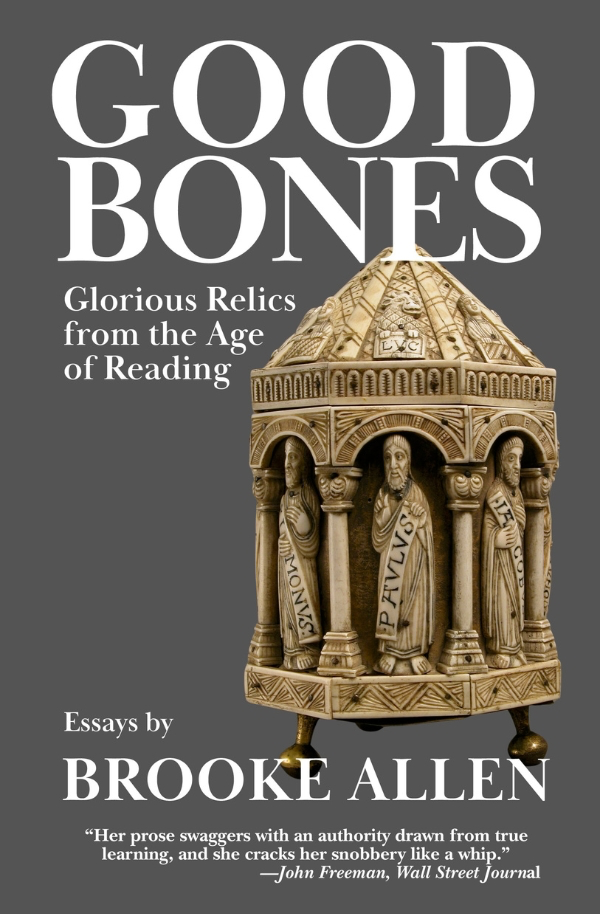
Good Bones: Glorious Relics from the Age of Reading, by Brooke Allen (Tivoli Books): The essayist Brooke Allen strikes an elegiac tone in the preface to her new collection Good Bones: “here are a few beautiful relics,” she writes, gleanings from the ruins of a quickly fading literary culture. Yet not all is sepulchrally dark when we dig into Good Bones, in whose pages we find a soirée of great writers and their works brought to life, from Updike and Betjeman to Capote and Powell and Welty. (Some fourteen of these twenty-two essays first appeared in The New Criterion, to which Allen has contributed since 1992.) Good Bones is a tribute as much to the lost art of deep, attentive reading as it is to great writing—for, as Allen rightly points out, the two are inextricably linked. Join the Friends of The New Criterion to attend a book party with Allen in New York on January 22. —IS
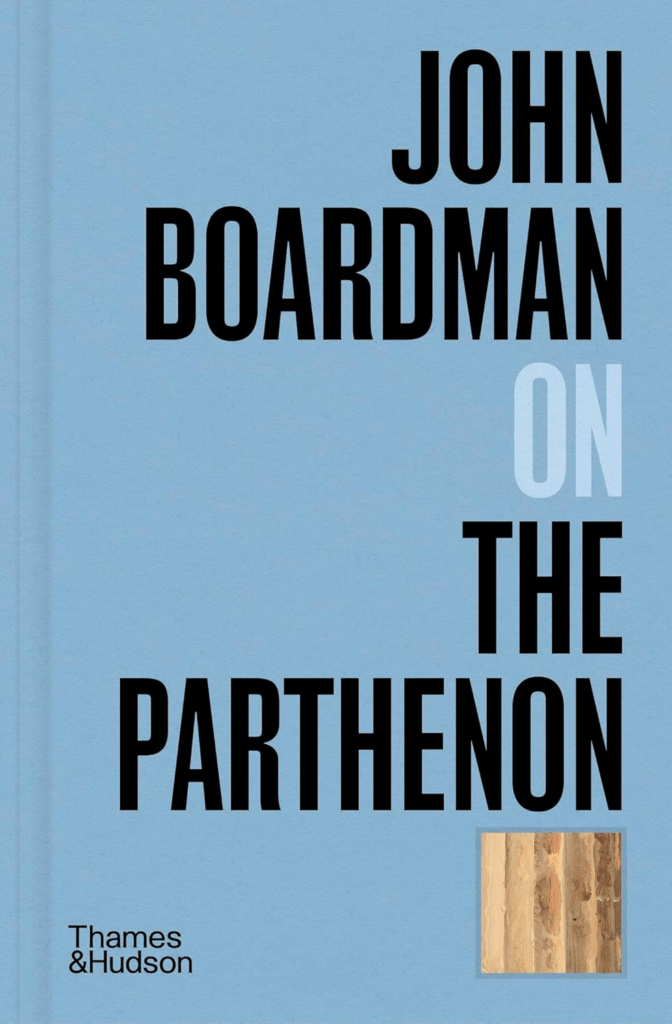
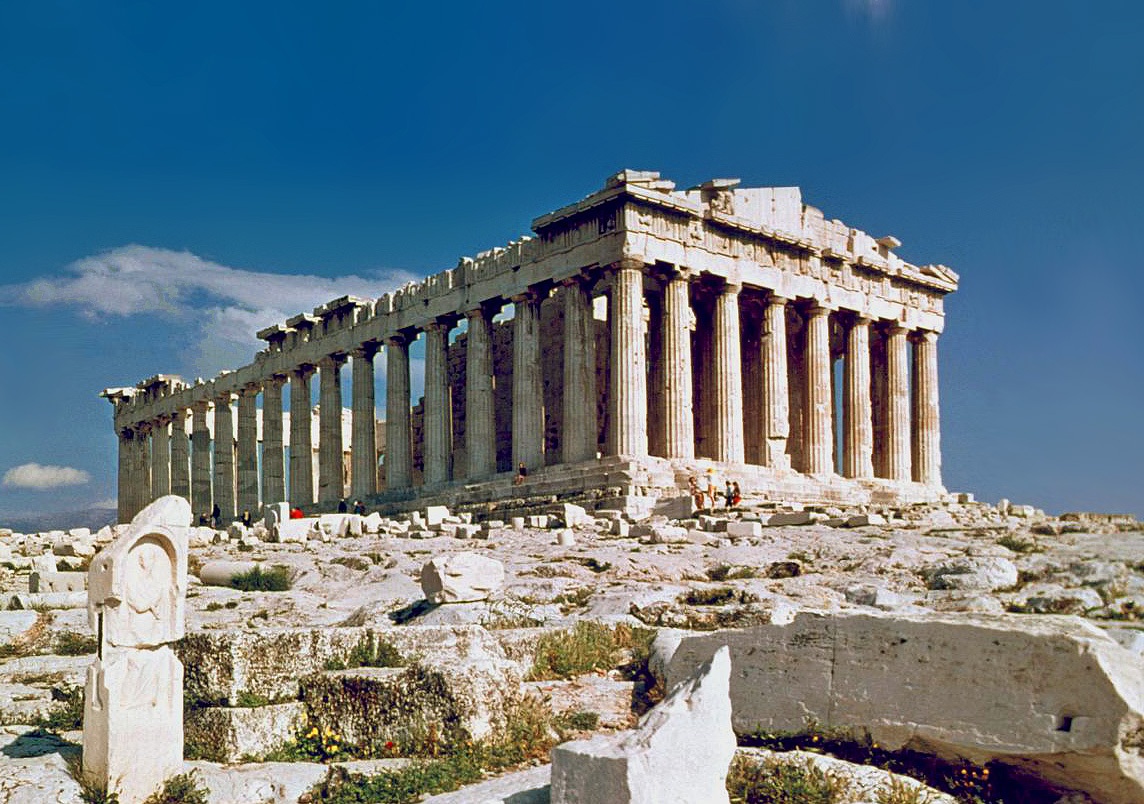
John Boardman on the Parthenon, by John Boardman (Thames & Hudson): In John Boardman’s brief book about the Parthenon and its meaning in ancient Athens, the late British archaeologist and historian stays blessedly away from contemporary debates about the location of the marbles. Instead, Boardman attempts to reconstruct the circumstances surrounding the creation of the Parthenon’s sculptural program. He does so knowledgeably and stylishly, making this book, an adaptation of text he published alongside David Finn’s photographs of the sculptures in 1985, an essential pocket companion for those interested in the ancient world. —BR
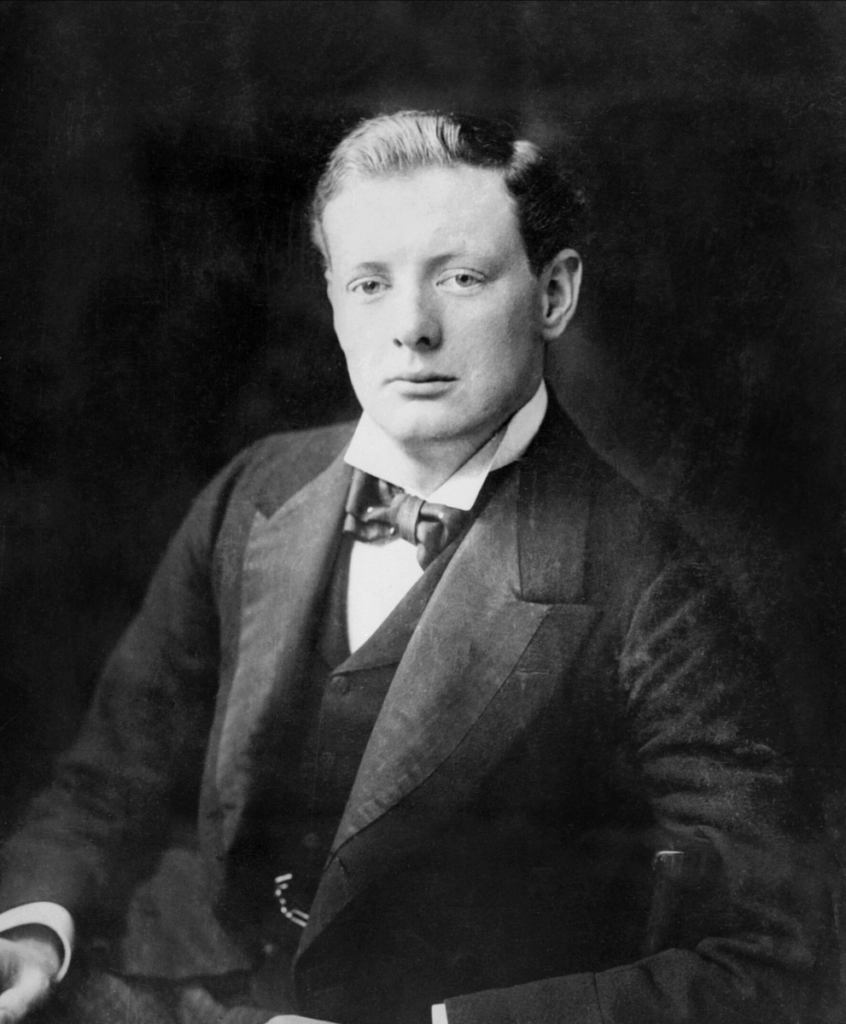
“New Discoveries about Winston Churchill’s Autobiography,” presented by Gary L. Stiles, at the Grolier Club (December 9): It goes without saying that Winston Churchill is among the greatest statesmen of the modern world. So to claim that his writings were “[n]ot a whit less important than his deeds and speeches,” as Leo Strauss said after his death in 1965, is quite the recommendation for the Old Lion’s prose. Perhaps the most prominent of his books, his autobiography My Early Life (1930) is now the subject of a monograph by the Churchill aficionado and Grolier Club member Gary L. Stiles, titled A Prelude to Immortality (slated for U.S. publication in January 2026). This Tuesday, December 9, Stiles will be on hand at the Grolier to discuss the autobiography’s great virtues as well as the circumstances of its composition. Attendance is free with registration, and a livestream is also available. —RE
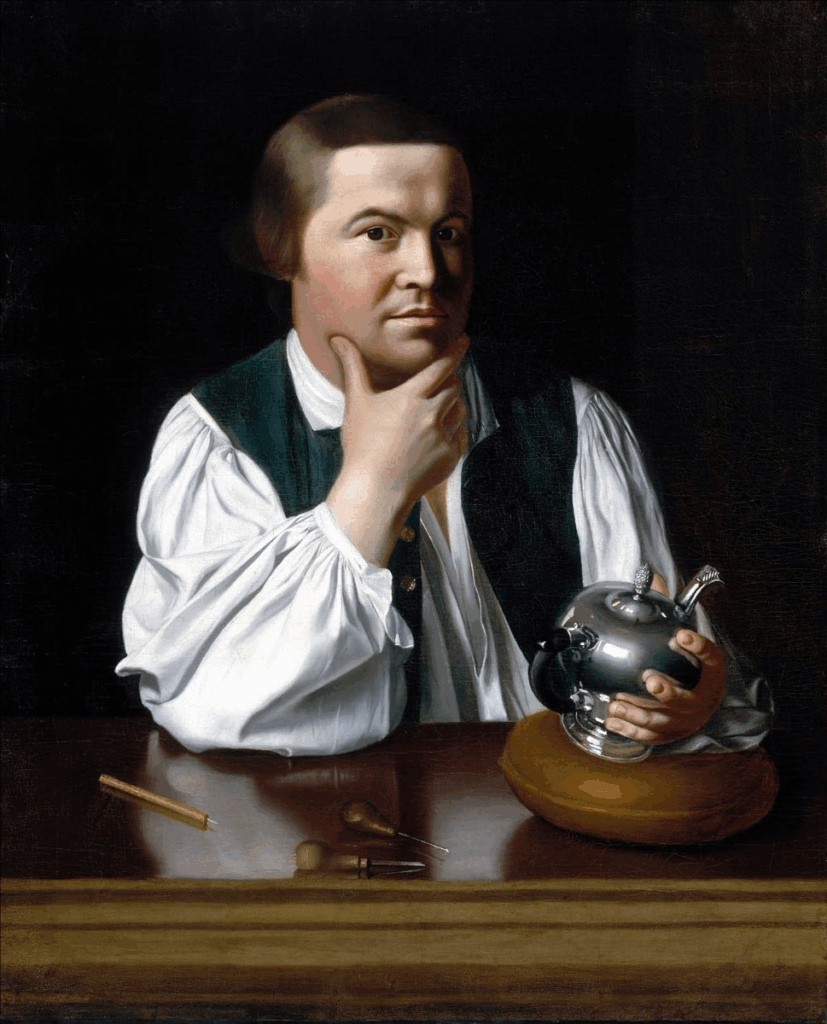
“The Ride: Paul Revere and the Night That Saved America,” featuring Kostya Kennedy and David M. Rubinstein, at the New York Historical Society (December 14): “And yet, through the gloom and the light,/ The fate of a nation was riding that night.” Henry Wadsworth Longfellow’s “Paul Revere’s Ride” (1860) immortalized Paul Revere and his great midnight gallop on April 18, 1775, when he sought to warn the residents of Lexington and Concord of the impending march of the British. Although every American knows, or at least should know of, Paul Revere, there is more to his story, and, as we celebrate the anniversary of the founding, there has never been a better time to revisit one of the greatest heroes of the American Revolution. This Sunday, the journalist Kostya Kennedy, who has recently written a book on Paul Revere’s ride, will discuss lesser-known aspects of the man and his momentous feat with the author David M. Rubinstein at the New York Historical Society. —AG
Dispatch:
“Dealer’s choice,” by David Platzer. On “The Art of Transmitting: The Antoine Béal Collection” and “The Marcille Chardin Family” at the Orléans’ Fine Arts Museum.
By the Editors:
“Federal judges crave the spotlight”
Roger Kimball, The Spectator World
From the Archives:
“The busybody: the Duc de Saint-Simon remembers,” by Joseph Epstein (September 2008). On the memoirs of Louis de Rouvroy, Duc de Saint-Simon, newly translated by Lucy Norton.